
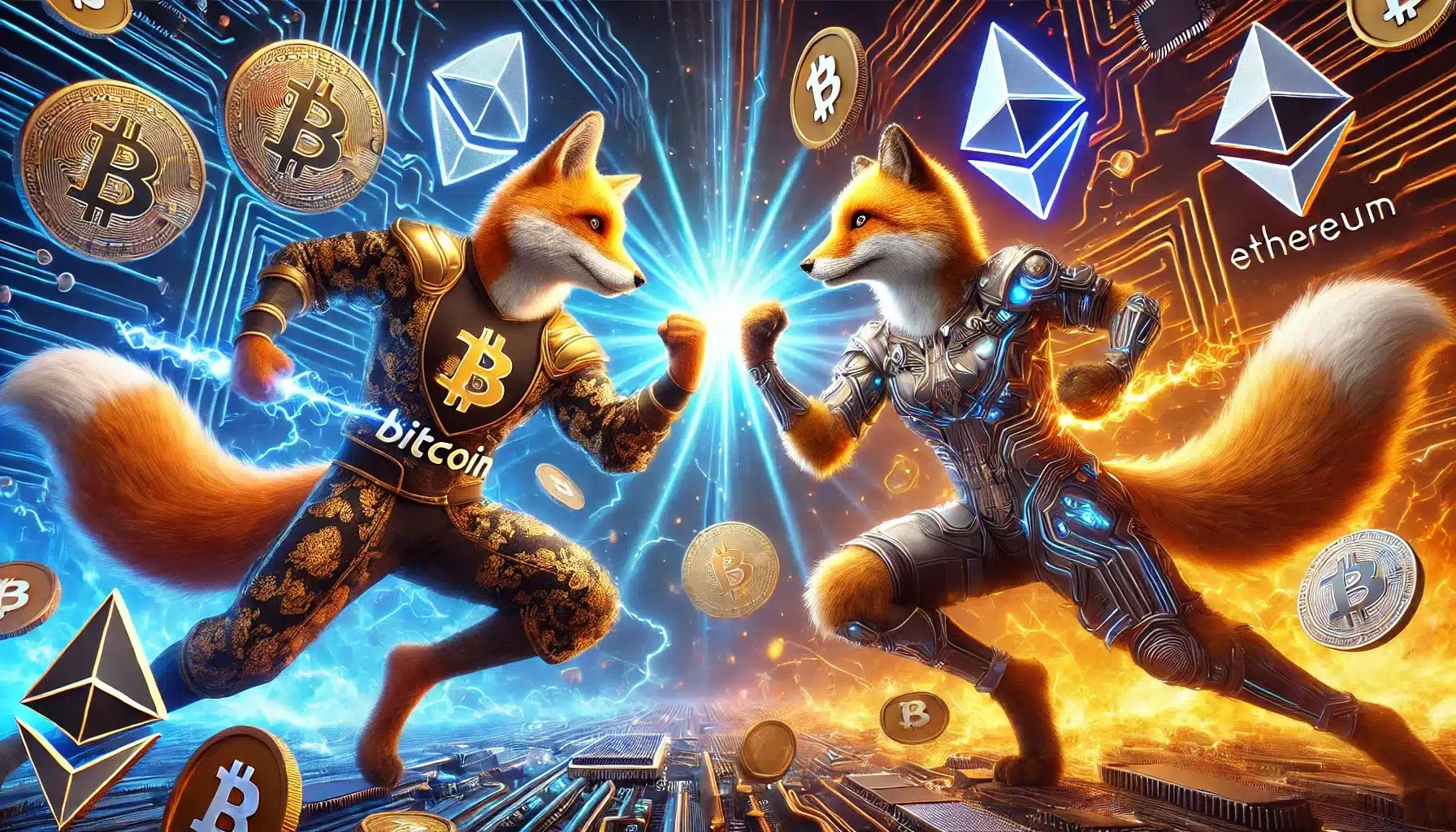
Bitcoin and Ethereum are often referred to as the giants of the cryptocurrency world, each dominating its space in unique ways. Bitcoin, the pioneer of digital currency, is hailed as “digital gold,” while Ethereum, with its programmable blockchain, has become the foundation of decentralized applications (dApps) and innovations like DeFi and NFTs.
As we approach 2025, the crypto landscape continues to evolve, with both Bitcoin and Ethereum adapting to market demands and technological advancements. If you’re wondering which one to choose for your portfolio, this blog is here to help. Let’s explore their histories, differences, and potential trajectories to make an informed investment decision.
A Brief History of Bitcoin and Ethereum
Bitcoin
Bitcoin, created in 2009 by the pseudonymous Satoshi Nakamoto, was designed as a decentralized digital currency to eliminate the need for intermediaries like banks. It introduced blockchain technology, a revolutionary system for recording transactions transparently and securely.
Also read the history of blockchain!
Over the years, Bitcoin has evolved from being an experimental currency for tech enthusiasts to a globally recognized store of value. Milestones such as the 2021 Bitcoin ETF approval and adoption by institutional players like Tesla and MicroStrategy have solidified its reputation as “digital gold.”
Ethereum
Ethereum emerged in 2015, founded by Vitalik Buterin and a team of visionary developers. Unlike Bitcoin, Ethereum wasn’t just about transactions it introduced the concept of smart contracts, enabling developers to build decentralized applications on its blockchain.
Ethereum has been the driving force behind major crypto trends, including DeFi, NFTs, and now Web3. The 2022 Ethereum 2.0 upgrade, which transitioned the network to a Proof of Stake (PoS) consensus mechanism, marked a significant step toward scalability and energy efficiency.
Key Differences Between Bitcoin and Ethereum
1. Purpose and Use Case
- Bitcoin: Primarily a store of value and medium of exchange, Bitcoin’s simplicity and focus on financial decentralization have made it a trusted asset.
- Ethereum: Ethereum goes beyond transactions, acting as a programmable platform for dApps, smart contracts, and decentralized ecosystems.
2. Consensus Mechanisms
- Bitcoin: Operates on Proof of Work (PoW), which requires significant computational power to secure the network.
- Ethereum: Transitioned to Proof of Stake (PoS) with Ethereum 2.0, reducing energy consumption and allowing validators to secure the network by staking ETH.
3. Supply and Tokenomics
- Bitcoin: Capped supply of 21 million coins, making it inherently deflationary. Its scarcity model drives long-term value.
- Ethereum: No fixed supply, but recent upgrades (e.g., EIP-1559) introduced a deflationary mechanism by burning transaction fees.
4. Transaction Speed and Scalability
- Bitcoin: Processes around 7 transactions per second, with higher fees during congestion.
- Ethereum: Processes 15-30 transactions per second, with potential for thousands via Layer-2 solutions and sharding.
5. Ecosystem and Adoption
- Bitcoin: Recognized as digital gold with growing institutional adoption.
- Ethereum: Powers the DeFi ecosystem, NFTs, and Web3 applications, making it more versatile but complex.
Pros and Cons of Bitcoin and Ethereum
Bitcoin
Pros:
- Highly secure and decentralized network.
- Strong store of value supported by institutional interest.
Cons:
- Limited programmability.
- Energy-intensive mining process.
Ethereum
Pros:
- Supports a wide range of decentralized applications.
- Active development and scalability improvements with Ethereum 2.0.
Cons:
- Complexity and higher risks for beginners.
- Historically higher transaction fees, though improvements are underway.
Predictions for Bitcoin and Ethereum in 2025
Bitcoin
Bitcoin is expected to maintain its position as a premier store of value. With increasing adoption by institutional investors and its potential to become a global reserve asset, Bitcoin’s price trajectory remains optimistic. Analysts speculate that Bitcoin could reach $100,000 or higher by 2025 if macroeconomic conditions favor digital assets.
Ethereum
Ethereum’s future lies in its ability to scale and continue driving innovations in DeFi, NFTs, and Web3. As more developers and institutions build on Ethereum, its utility could significantly boost adoption and value. Predictions for Ethereum’s price vary, but many believe it could surpass $10,000 if the ecosystem continues its upward momentum.
Conclusion
Choosing between Bitcoin and Ethereum in 2025 depends on your investment goals and risk tolerance. Bitcoin offers stability and a proven track record as a store of value, making it ideal for conservative investors. On the other hand, Ethereum’s versatility and growth potential appeal to those seeking exposure to cutting-edge technologies like DeFi and Web3.
The good news? You don’t have to choose just one. A diversified portfolio can help balance risks and rewards in the ever-evolving crypto market.
But no matter which one you invest in, security is key. If you’re serious about protecting your crypto, consider using a Ledger hardware wallet to keep your assets safe from hacks and online threats. Get yours here: Ledger Wallet.
Want to maximize your trading potential? Sign up on Bybit with my referral and access up to $30,050 in Welcome Rewards, including a $50 sign-up bonus and VIP trading perks. Plus, you’ll get an exclusive “Supporter” role in my Discord server! Start trading smarter here: Join Bybit.
FAQs
Which is better for long-term investment: Bitcoin or Ethereum?
Bitcoin is ideal for long-term stability, while Ethereum offers growth potential through innovation. Consider your goals when deciding.
How do Ethereum’s upgrades impact its investment potential?
Ethereum 2.0 improves scalability, energy efficiency, and transaction speeds, enhancing its utility and long-term value.
What are the risks of investing in Bitcoin compared to Ethereum?
Bitcoin faces fewer technical risks but offers slower growth. Ethereum, while innovative, carries higher risks due to its complexity and evolving ecosystem.
Can I invest in both Bitcoin and Ethereum?
Absolutely! Diversifying between Bitcoin and Ethereum can balance your portfolio and provide exposure to different opportunities.
How do I stay updated on Bitcoin and Ethereum market trends?
Follow reputable crypto news platforms, join online forums, and use tools like TradingView for market analysis.
“Guess what? When you click and buy through our links, you’re doing more than improving your journey. You’re supporting us in a way that doesn’t cost you extra but helps us keep bringing you the best blockchain posts. It’s a pump for both of us!”
-0xteumessia