

What Is Crypto Lending?
Crypto Lending is one of the fastest-growing sectors within the digital asset economy. It allows crypto holders to lend their assets in exchange for regular interest payments. By providing liquidity to borrowers—whether individuals, institutions, or trading platforms—lenders can earn passive income without selling their crypto. This practice is reshaping how decentralized finance (DeFi) and centralized crypto services operate globally.
How Does Crypto Lending Work?
Lending Assets, Earning Returns
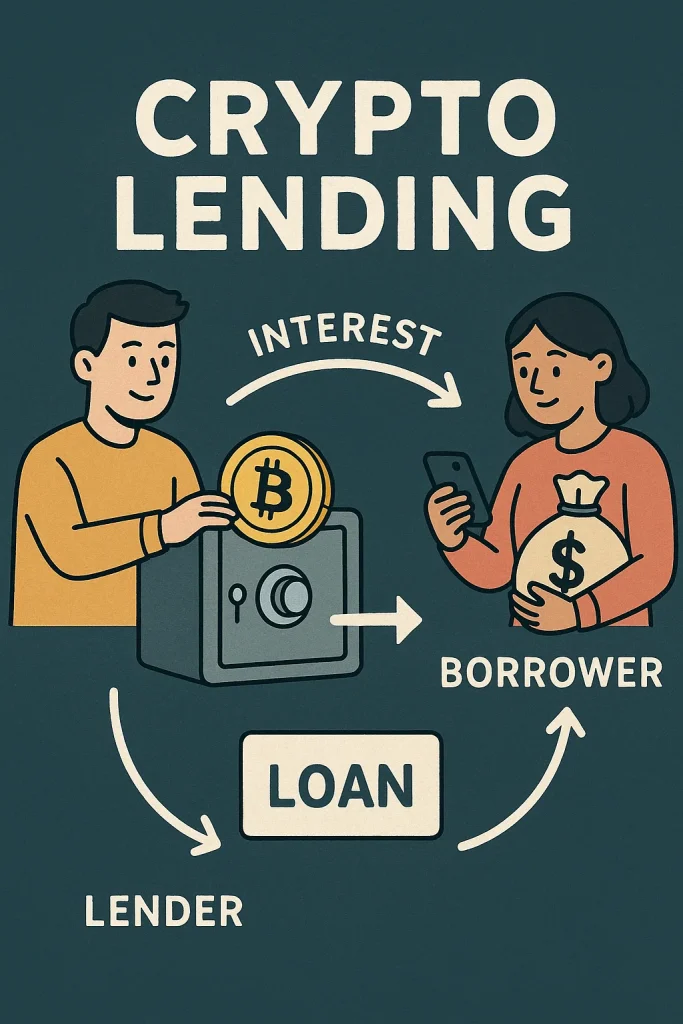
The process of crypto lending is simple yet powerful. Lenders deposit digital assets—such as Bitcoin, Ethereum, or stablecoins—into a platform. These assets are then lent out to borrowers who pay interest for access. The platform handles interest distribution, collateral management, and borrower-lender matching.
The Lifecycle of a Crypto Loan
- Deposit: Lenders choose a platform and deposit supported crypto assets.
- Match: The platform allocates those assets to borrowers or pools them via smart contracts.
- Collateralization: Most platforms require borrowers to lock up more value than they borrow.
- Interest Payments: Borrowers repay the loan with interest over time.
- Repayment: After maturity, the original lender receives their funds plus earned interest.
Types of Crypto Lending Models
Centralized (CeFi) Platforms
CeFi platforms like BlockFi and Nexo operate much like traditional financial institutions. They hold custody of your funds, require identity verification (KYC), and offer fixed APYs. While they are convenient and easy to use, they also come with platform risk.
Decentralized (DeFi) Platforms
DeFi platforms such as Aave, Compound, and MakerDAO rely on smart contracts to automate lending. Users maintain self-custody through wallets like MetaMask and can lend or borrow without any central authority. These systems promote transparency and accessibility but require users to manage their own risks.
Peer-to-Peer (P2P) Lending
P2P lending connects individual lenders and borrowers directly, offering customizable loan terms. While less common, platforms like YouHodler or alternative Nexo models allow this flexibility.
Benefits of Crypto Lending
- Earn Passive Income: Instead of letting your crypto sit idle, you can earn APYs ranging from 2% to 15% depending on market conditions and the asset type.
- Keep Long-Term Holdings: You don’t need to sell crypto to access liquidity. Loans allow you to retain exposure while unlocking funds.
- DeFi Ecosystem Growth: Lending contributes to the functionality of DeFi protocols and supports liquidity across the ecosystem.
- Customizable Terms: Choose between fixed or flexible lending periods based on your strategy and risk appetite.
Key Platforms for Crypto Lending
| Platform | Type | Highlights |
|---|---|---|
| Aave | DeFi | Offers flash loans and supports many tokens with noncustodial access |
| Compound | DeFi | Algorithmic interest rates and wallet integrations |
| BlockFi | CeFi | Simple UI and interest-bearing accounts (KYC required) |
| Nexo | CeFi/P2P | Instant crypto credit lines, fiat withdrawals, and EU integration |
Risks and Considerations
Platform Risk
With CeFi services, your funds are held in custodial wallets. This introduces risks such as platform failure, mismanagement, or bankruptcy—seen in cases like Celsius and Voyager. Always research platform history and legal compliance.
Smart Contract Vulnerabilities
On DeFi platforms, loans are governed by code. If smart contracts are poorly written or not audited, they become targets for exploits. Millions of dollars have been lost to bugs and protocol failures.
Liquidation Risk
Borrowers must maintain a healthy loan-to-value (LTV) ratio. If the value of collateral falls below the required threshold, the platform will trigger liquidation, potentially causing losses.
Regulatory Uncertainty
Some countries have begun regulating crypto lending as a financial service. Sudden legal shifts can impact platform operations, user access, or even freeze accounts. Always stay updated on local laws.
What to Check Before You Lend
Choose the Right Platform
Decide if you prefer the transparency and control of DeFi or the ease and support of CeFi. Research user reviews, platform audits, and insurance policies.
Analyze Loan-to-Value Ratios
A lower LTV (e.g., 50%) provides greater protection against liquidation but may reduce borrowing power.
Evaluate Token Volatility
Stablecoins are a safer choice for lending if you’re risk-averse, while volatile assets may bring higher APYs with added risk.
Study Historical Rates
Interest rates vary by platform, asset, and market demand. Platforms like Aave and Compound adjust rates in real time.
Confirm Insurance and Audits
Protocols audited by firms like CertiK or OpenZeppelin offer more security. Some platforms also have insurance funds to cover potential losses.
Getting Started with Crypto Lending
Step-by-Step Guide
- Buy and Secure Your Assets: Purchase crypto from reputable exchanges. Store it on secure wallets like Ledger for cold storage or MetaMask for DeFi access.
- Pick a Platform: Use comparison tools or reviews to find the best platform based on your needs.
- Deposit and Allocate: Transfer your assets to the chosen platform. In DeFi, this means interacting with a smart contract.
- Monitor Performance: Keep track of your positions, interest accrual, and LTV ratios.
- Withdraw or Renew: At term end, withdraw your funds or reinvest to continue earning.
Future of Crypto Lending
As crypto lending evolves, we may see integration with real-world assets like tokenized real estate or equities. Cross-chain lending could become standard, with seamless borrowing across multiple blockchains. More platforms are likely to adopt DAO governance, user insurance programs, and better risk management protocols.
Institutional interest is also growing, with hedge funds and asset managers seeking exposure to DeFi yield opportunities. Regulatory frameworks, once clearer, could open the door to mainstream adoption while enhancing user protection.
Real-World Use Cases
- Retail Investors: Earning yield on idle assets like USDT or ETH while holding long-term.
- Traders: Borrowing funds to enter leveraged positions without selling their holdings.
- Startups: Using token holdings as collateral to access operational capital.
- DAOs: Lending treasury funds to earn yield and fund ecosystem growth.
Tips to Maximize Your Lending Strategy
- Diversify Platforms: Avoid putting all your assets on one protocol.
- Reinvest Earnings: Compound your returns by re-lending interest payouts.
- Use Stablecoins in Volatile Markets: Protect your portfolio from downturns while still earning.
- Track Gas Fees (DeFi): On Ethereum, lending and withdrawal transactions may have high gas costs—factor this into your ROI.
- Set Alerts for Liquidation Thresholds: Tools like DeFi Saver can help automate risk management.
Final Thoughts on Crypto Lending
Crypto Lending unlocks powerful earning potential for both beginners and seasoned investors. It provides an alternative to traditional finance, enabling borderless lending and borrowing with transparent mechanisms. However, it’s not a risk-free strategy. Whether you’re lending on a centralized platform or diving into DeFi protocols, smart decision-making, research, and active monitoring are essential.
If used wisely, crypto lending can become a cornerstone of your crypto wealth strategy—fueling passive income, maximizing capital efficiency, and supporting decentralized ecosystems.
Is crypto lending safe?
It can be, but it depends on platform security, collateral quality, and code audits. Always assess risk before lending.
What interest rates can I expect?
Rates vary by asset, platform, and demand: typically 2–12% APY, though yield can go higher in some DeFi pools.
Do I have to lock up my crypto?
Not always. CeFi platforms often let you withdraw anytime, but DeFi pools may require fixed-term locking.
What happens if the collateral value drops?
Platforms use liquidation thresholds. If collateral loses too much value, it may be automatically sold to repay the loan.
Can I withdraw my lent crypto anytime?
Withdrawal terms depend on platform. CeFi tends to be flexible; DeFi may have fixed lock-up or high withdrawal fees.
“Guess what? When you click and buy via our links, you’re not just enhancing your experience
you‘re also supporting our content creation for free, so we can keep sharing useful blockchain insights. It‘s a pump for both of us!”
– Edo