
What Is a Crypto Vanity Address?
In the world of cryptocurrency, wallet addresses are fundamental. They serve as unique identifiers, similar to account numbers in traditional banking systems, allowing users to send, receive, and store digital assets securely. These addresses typically appear as long, random strings of alphanumeric characters, which can be intimidating and impossible to memorize. Yet, a unique concept has emerged that adds personality and usability to this complexity: the Crypto Vanity Address.
A Crypto Vanity Address is a wallet address that has been customized to include specific, human-readable elements. Instead of relying on the default random sequence, users can generate an address that incorporates meaningful words, initials, or phrases. For example, a Bitcoin address might begin with 1Coffee, while an Ethereum address might feature something like 0xCoolGuy. These personalized identifiers, while often cosmetic, carry real value in branding, trust-building, and memorability.
How Do Crypto Vanity Addresses Work?
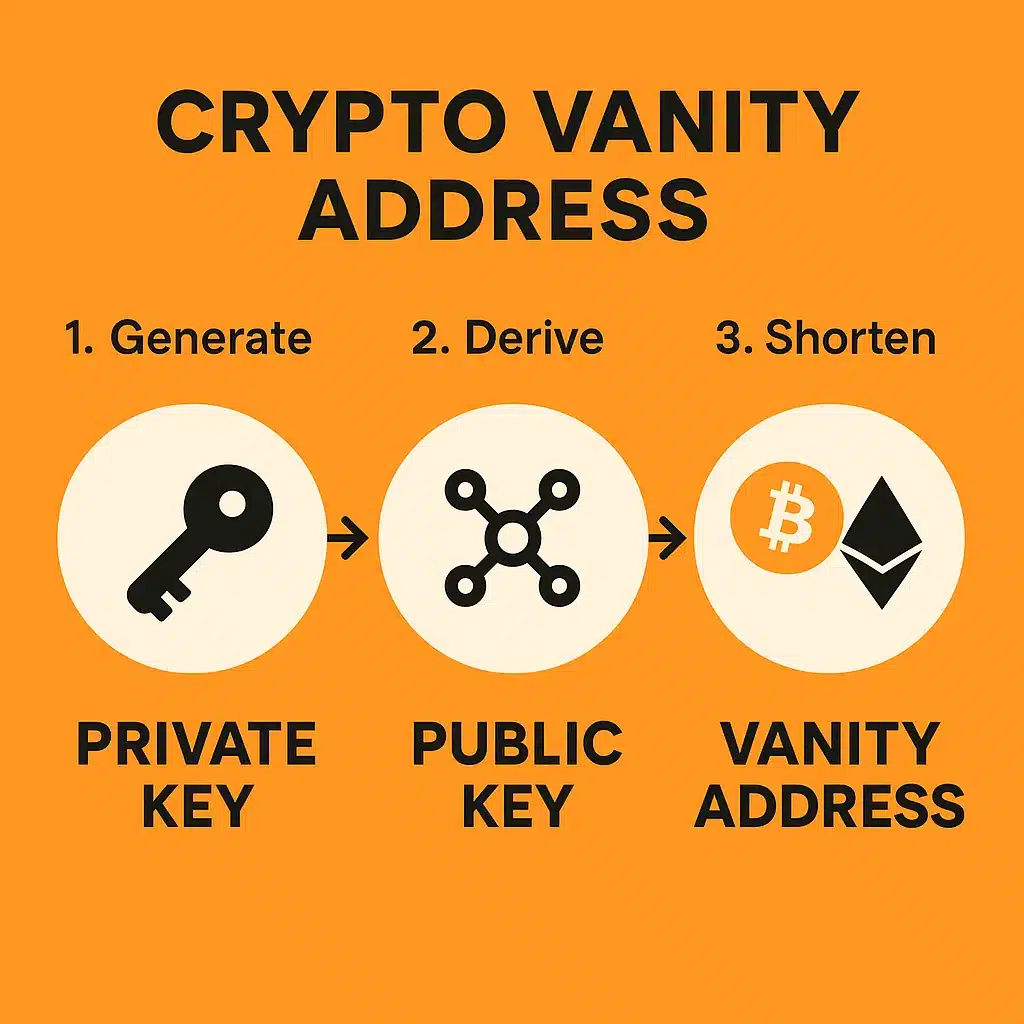
Crypto addresses are mathematically derived from a public-private key pair. To create a Crypto Vanity Address, the process involves repeatedly generating keys until one fits the desired pattern. This is a brute-force operation that tests millions of possibilities until a match is found.
Example of Brute Force Generation
Suppose you want a Bitcoin address starting with 1Ocean. The process would involve:
- Generating new private keys continuously.
- Deriving public keys and addresses from them.
- Checking if the address begins with
1Ocean. - Stopping once a match is discovered.
This process could take seconds for simple patterns or days for complex ones. The longer the string, the more time and computational resources are needed.
Tools to Generate Vanity Addresses
Since manual creation is impractical, several tools exist to generate vanity addresses efficiently.
- Bitcoin Vanity Generator (Vanitygen): One of the most popular tools for Bitcoin. It uses CPU or GPU power to search for the required pattern.
- Vanity-ETH: Built specifically for Ethereum, allowing users to create vanity address Ethereum with prefixes or recognizable hexadecimal sequences.
- MyEtherWallet (MEW): Offers limited vanity functionality directly in its interface.
- Custom Scripts: Advanced developers often write scripts in Python, C, or Go to build a custom crypto address for different blockchains.
Important: Always use offline or open-source tools to avoid private key leaks. Web-based generators are risky and should be avoided.
Why Use a Crypto Vanity Address?
While they might look like a novelty, vanity addresses serve many practical purposes.
1. Branding and Marketing
A personalized blockchain address reinforces identity. Crypto businesses, influencers, and projects often use vanity addresses for recognition. For instance, 0xBrandName is far more memorable than a random string.
2. Donations and Fundraising
Organizations or charities can use vanity addresses to build trust. A donation address like 1SaveTheOcean feels more authentic than a default sequence.
3. Memorability and Usability
Using vanity addresses makes transactions easier. Instead of copying long strings, users can recognize and remember short customized prefixes.
4. Personalization and Fun
Vanity addresses allow self-expression. Just as people personalize emails, gamertags, or license plates, they can craft wallet addresses that reflect personality.
Charities and campaigns can use a Crypto Vanity Address to establish trust and transparency. For example, a donation address like 1SaveTheOcean feels more authentic than a random string. If you want to see how we manage contributions in practice, check out our donation page.
The Risks of Using Vanity Addresses
Despite their advantages, vanity addresses also come with significant risks.
Private Key Exposure
If you use third-party services for generation, you may unknowingly reveal your private key. This is one of the biggest crypto vanity risks. Always generate offline.
Brute Force Challenges
The more complex the vanity pattern, the longer it takes to generate. Addresses like 1CryptoRevolution may require months or even years.
Address Spoofing
Attackers may use lookalike addresses (e.g., 1Crypt0King vs. 1CryptoKing) to deceive users into sending funds to the wrong wallet.
Loss of Anonymity
A Crypto Vanity Address can make you more identifiable, reducing the pseudonymity usually enjoyed in blockchain transactions.
Best Practices for a Secure Vanity Wallet
To minimize risks, follow these security steps:
- Use offline tools: Always generate vanity addresses without internet connection.
- Opt for short patterns: Stick to 4–6 characters for a balance between uniqueness and efficiency.
- Use hardware wallets: Store private keys in a secure vanity wallet such as Ledger or Trezor.
- Verify before sending: Double-check every character of the address.
- Beware of impersonators: Confirm vanity addresses from official sources before transferring funds.
Real-World Examples of Vanity Addresses
The concept of Crypto Vanity Address has appeared in various real-life scenarios:
- Donations for Ukraine (2022): Semi-vanity addresses were used to make it easier for contributors to verify authenticity.
- Influencers: Many crypto content creators use vanity addresses that mirror their usernames or brands.
- Developers: Some showcase vanity addresses as technical achievements to demonstrate their brute-force programming skills.
How Long Does It Take to Generate a Vanity Address?
The time depends on the string length and computational power:
- 3–4 characters: Seconds to minutes.
- 5–6 characters: Minutes to hours.
- 7+ characters: Days to months.
Using a Bitcoin vanity generator with GPU acceleration can shorten the process, but extremely long vanity strings remain impractical for individuals.
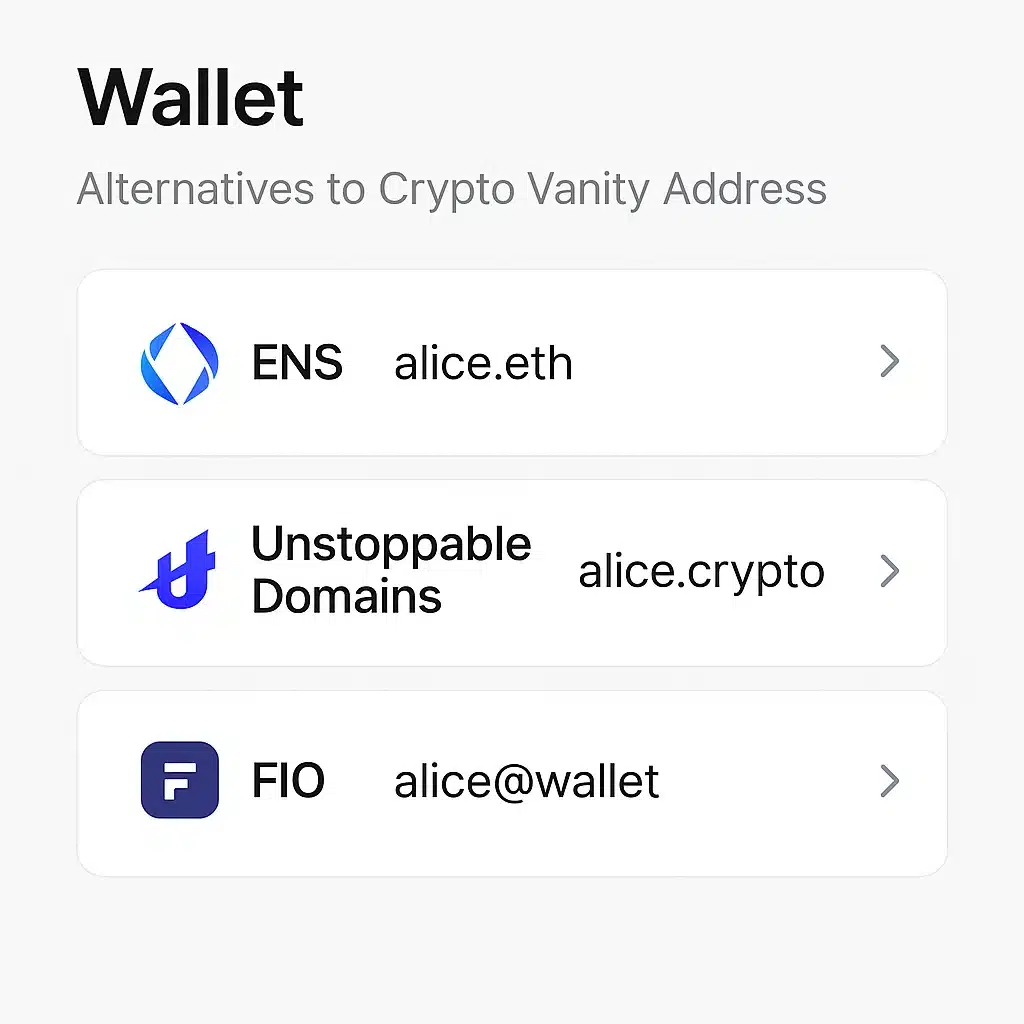
Alternatives to Crypto Vanity Addresses
If readability and personalization are your goals, modern solutions offer alternatives without brute-force requirements:
- ENS (Ethereum Name Service): Translates
yourname.ethinto your Ethereum address. - Unstoppable Domains: Links wallet addresses to domains like
yourname.crypto. - FIO Protocol: Provides email-style identifiers such as
alice@wallet.
While these are user-friendly, they don’t have the same on-chain mathematical authenticity as a Crypto Vanity Address.
Conclusion
A Crypto Vanity Address combines the worlds of cryptography and personal identity. It allows individuals, businesses, and charities to reinforce branding, improve usability, and add a human touch to blockchain addresses. However, vanity addresses also introduce dangers such as crypto vanity risks—from private key exposure to spoofing attempts.
If you decide to generate one, always prioritize security. Use offline tools, rely on open-source software, and store private keys in a secure vanity wallet. For many, generating a vanity address is both a technical challenge and a branding opportunity. For others, alternatives like ENS or Unstoppable Domains may provide a safer, simpler solution.
In the end, vanity addresses represent more than just novelty. They embody the intersection of personalization and blockchain technology, proving that even in a decentralized digital economy, human identity and expression still matter. Whether you use a Bitcoin vanity generator, decide to create vanity address Ethereum, or explore ENS, remember: style is powerful, but security must always come first.
Whether you use a Bitcoin vanity generator, decide to create vanity address Ethereum, or explore ENS alternatives, remember that style should never compromise security. If you’re curious about practical ways to grow your crypto journey, visit our earn page for more insights
What is a crypto vanity address?
A crypto vanity address is a custom wallet address that includes a recognizable string, like a name or brand, instead of being entirely random.
Are vanity addresses safe to use?
They are safe if generated offline with trusted tools. Avoid online services that may expose your private key.
How long does it take to generate a vanity address?
It depends on the desired pattern length—short strings can take minutes; longer ones might take days or longer.
What tools can generate vanity addresses?
Popular tools include Vanitygen for Bitcoin and Vanity-ETH for Ethereum. Use them offline for security.
Can vanity addresses be used for scams?
Yes, attackers may spoof popular vanity addresses to deceive users. Always double-check full addresses before sending funds.
Guess what? When you click and buy via our links, you’re not just enhancing your experience—you‘re also supporting our content creation for free, so we can keep sharing useful blockchain insights. It‘s a pump for both of us!
— Black