


Inflation has always been a looming threat to the purchasing power of traditional currencies. As the cost of goods and services rises, the value of money decreases, eroding wealth over time. Traditionally, investors have turned to assets like gold, real estate, and treasury inflation-protected securities (TIPS) to hedge against inflation. However, with the rise of cryptocurrencies, a new asset class has entered the discussion.
The growing interest in Bitcoin, Ethereum, and stablecoins as inflation hedges stems from their unique characteristics decentralization, scarcity, and accessibility. This blog will delve into how cryptocurrencies can serve as a hedge against inflation, the associated benefits, risks, and tips for incorporating them into your financial strategy.
Understanding Inflation
Inflation refers to the gradual increase in the prices of goods and services over time, which decreases the purchasing power of money. It is typically caused by factors such as increased production costs, rising demand, or excessive money supply in the economy. Central banks often combat inflation by adjusting interest rates or controlling the money supply, but these measures are not always effective.
Inflation impacts everyone. As the cost of living increases, savings lose value if not invested in assets that outpace inflation. Traditionally, gold and real estate have been preferred inflation hedges due to their intrinsic value and limited supply. However, these assets have limitations, such as lower liquidity and high entry barriers, which cryptocurrencies aim to address.
Why Cryptocurrencies Are Considered an Inflation Hedge
1. Decentralization
Cryptocurrencies like Bitcoin operate independently of central banks and governments, making them less susceptible to inflationary policies. Unlike fiat currencies, which can be printed at will, cryptocurrencies function on decentralized networks where monetary policy is dictated by code, not political influence. This independence gives them an edge in maintaining value.
2. Scarcity and Supply Cap
Bitcoin’s fixed supply of 21 million coins is often compared to gold’s scarcity. This built-in limit prevents excessive issuance, ensuring that Bitcoin remains deflationary over time. Similarly, other cryptocurrencies use tokenomics rules governing supply and demand to create value. Ethereum, for instance, has introduced mechanisms like EIP-1559 to burn transaction fees, reducing its overall supply.
3. Accessibility and Global Reach
Cryptocurrencies are inherently digital and borderless, making them easily transferable and accessible worldwide. For individuals in countries experiencing hyperinflation or currency instability, cryptocurrencies offer a way to preserve wealth and bypass capital controls. They provide a lifeline for financial independence in regions with failing monetary systems.
4. Transparency and Security
The blockchain’s transparency ensures every transaction is publicly recorded, adding trust to the system. Immutable records eliminate concerns about fraud or manipulation, making cryptocurrencies a secure alternative to traditional hedges.
Cryptocurrencies Most Commonly Used as Inflation Hedges
1. Bitcoin (BTC)
Bitcoin, often called “digital gold,” is the most well-known cryptocurrency for inflation protection. Its capped supply and decentralization make it a strong store of value. Historically, Bitcoin’s price has surged during periods of economic uncertainty, solidifying its reputation as an inflation hedge.
2. Ethereum (ETH)
Ethereum’s utility extends beyond a simple store of value. It powers decentralized applications (dApps) and DeFi platforms, offering a use case beyond speculative investment. Ethereum’s transition to Proof of Stake (PoS) and its token-burning mechanism enhance its scarcity, making it increasingly attractive for hedging purposes.
3. Stablecoins
Stablecoins like USDT and USDC maintain a peg to fiat currencies, providing stability during volatile times. While they do not offer significant growth potential, their ability to preserve purchasing power during inflationary periods makes them a practical choice for risk-averse investors.
Benefits of Using Cryptocurrencies as an Inflation Hedge
- Portfolio Diversification: Adding cryptocurrencies to a portfolio introduces a non-correlated asset class that can reduce overall risk.
- Potential for High Returns: Unlike traditional hedges, cryptocurrencies offer opportunities for significant capital appreciation.
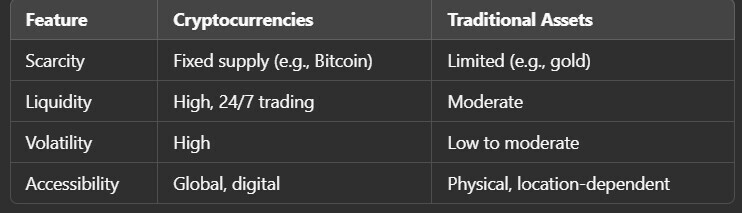
- Increased Liquidity: Cryptocurrencies trade 24/7 on global platforms like Bybit, providing unmatched liquidity compared to physical assets like gold or real estate.
Challenges and Risks
- Volatility: Cryptocurrencies are known for their price swings, which may deter conservative investors.
- Regulatory Uncertainty: The evolving regulatory landscape poses risks for long-term adoption and market stability.
- Adoption Barriers: New users may struggle with the technical aspects of acquiring, storing, and managing cryptocurrencies.
Comparing Cryptocurrencies to Traditional Inflation Hedges
Real-World Examples
In countries like Venezuela and Zimbabwe, where hyperinflation has decimated local currencies, cryptocurrencies have emerged as a reliable store of value. Citizens have used Bitcoin and stablecoins to preserve wealth and conduct cross-border transactions, highlighting their potential as practical inflation hedges.
Tips for Using Cryptocurrencies as an Inflation Hedge
- Start Small: Begin with a manageable amount to test the waters.
- Diversify: Include a mix of established coins like Bitcoin and Ethereum alongside stablecoins.
- Secure Your Assets: Use reputable wallets like hardware wallets and exchanges to protect your investments.
- Stay Informed: Follow market trends and regulatory developments to make informed decisions.
The Future of Cryptocurrencies in Combating Inflation
Looking ahead, cryptocurrencies are poised to play a larger role in global finance. Increased institutional adoption, advancements in blockchain technology, and integration with traditional financial systems could enhance their viability as inflation hedges. As innovations continue, the potential for cryptocurrencies to revolutionize wealth preservation grows stronger.
Conclusion
Cryptocurrencies offer a modern approach to hedging against inflation. Their unique features scarcity, decentralization, and global accessibility position them as a compelling alternative to traditional assets. While challenges like volatility and regulatory uncertainty persist, the potential rewards make them worth exploring for those seeking to diversify their investments.
By staying informed and approaching crypto investments strategically, you can harness the power of this innovative asset class to protect your wealth in an ever-changing economic landscape.
FAQs
Why is Bitcoin often referred to as “digital gold”?
Bitcoin shares properties with gold, such as scarcity and being a store of value, earning it the nickname “digital gold.
Are stablecoins a good option for hedging against inflation?
Yes, stablecoins can preserve purchasing power, especially during volatile periods, as they are pegged to fiat currencies.
What are the risks of using cryptocurrencies for inflation protection?
Risks include high volatility, regulatory uncertainty, and the technical knowledge required for secure management.
How do cryptocurrencies compare to traditional inflation hedges?
Cryptocurrencies offer higher liquidity and growth potential but come with greater volatility compared to traditional hedges like gold.
Can cryptocurrencies maintain their value during prolonged inflationary periods?
While their value can fluctuate, cryptocurrencies like Bitcoin have shown resilience during economic uncertainty, making them viable for inflation hedging.
“Guess what? When you click and buy through our links, you’re doing more than improving your journey. You’re supporting us in a way that doesn’t cost you extra but helps us keep bringing you the best blockchain posts. It’s a pump for both of us!”
-0xteumessia