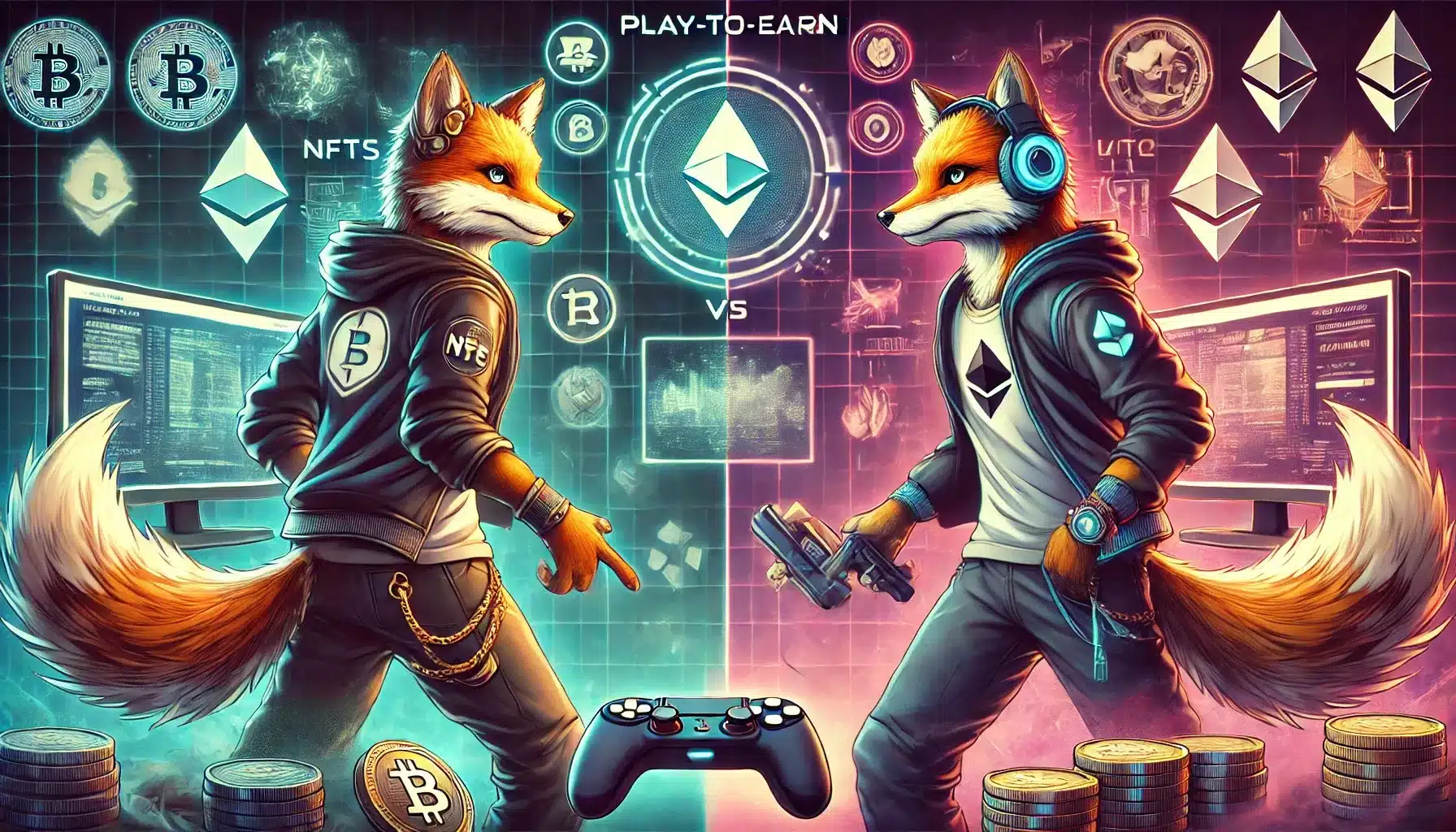
The gaming industry has undergone tremendous transformations over the years, evolving from simple arcade games to complex, immersive experiences that connect millions of players globally. Recently, a new trend known as play-to-earn (P2E) gaming has disrupted the traditional gaming model. When examining Play-To-Earn Vs Traditional Gaming, unlike traditional games that primarily focus on entertainment, P2E games offer players the opportunity to earn real-world rewards through gameplay.
In this blog, I’ll explore the core differences between play-to-earn and traditional gaming models, examining their features, benefits, and challenges. Whether you’re a seasoned gamer or new to the world of gaming, this guide will help you understand how these two models compare and what they mean for the future of gaming.
What is Play-To-Earn Gaming?
Play-to-earn (P2E) gaming represents a paradigm shift in how games are played and monetized. At its core, P2E gaming allows players to earn tangible rewards, often in the form of cryptocurrency or NFTs (non-fungible tokens), for their participation and achievements within the game.
Key Features of P2E Games
- Blockchain Integration: P2E games utilize blockchain technology to secure transactions, verify ownership of assets, and facilitate decentralized economies.
- Ownership of In-Game Assets: Players can own and trade in-game items, such as characters, weapons, or skins, as NFTs. These assets have real-world value and can often be sold on external marketplaces.
- Earning Potential Through Gameplay: Players are rewarded for their time and effort, with some games allowing users to earn cryptocurrency or fiat money through various in-game activities.
Examples of Popular P2E Games
- Axie Infinity: A blockchain-based game where players breed and battle creatures called Axies. Earnings come from winning battles and selling Axies or other in-game items.
- The Sandbox: A virtual metaverse where players can buy, sell, and build on virtual land, represented as NFTs.
- Gods Unchained: A trading card game that rewards players with blockchain-based cards that hold real-world value.
Also look for the future of play to earn games?
What is Traditional Gaming?
Traditional gaming encompasses the established model of video games, where players typically purchase a game or subscribe to a service to access the experience. The primary goal of these games is entertainment, with limited opportunities for financial gain.
Key Features of Traditional Games
- Centralized Game Economies: In-game assets, currencies, and items are managed and controlled entirely by the game developers. Players cannot trade or monetize these assets outside the game’s ecosystem.
- Limited Financial Incentives: Players do not earn directly through gameplay. Instead, monetization opportunities are usually restricted to professional tournaments, content creation, or streaming.
Examples of Popular Traditional Games
- Call of Duty: A first-person shooter franchise offering competitive gameplay and immersive campaigns.
- Fortnite: A battle royale game with a massive player base, known for its engaging mechanics and frequent updates.
- The Legend of Zelda: A franchise celebrated for its narrative-driven gameplay and captivating worlds.
Key Differences Between Play-To-Earn and Traditional Gaming
While both models share the goal of engaging players, their underlying principles and opportunities vary significantly.
Ownership of In-Game Assets
- P2E Games: Players own their in-game assets as NFTs, giving them the freedom to trade or sell these items outside the game’s ecosystem.
- Traditional Games: Assets are tied to the game’s ecosystem and cannot be transferred or monetized externally. Players do not truly own the items they purchase or earn.
Economic Opportunities
- P2E Games: Offer direct earning potential, allowing players to generate income through gameplay, trading, or staking in-game assets.
- Traditional Games: Financial opportunities are limited to indirect methods like streaming, creating content, or participating in professional esports tournaments.
Game Economies
- P2E Games: Feature decentralized, player-driven economies where market dynamics are influenced by supply and demand.
- Traditional Games: Operate centralized economies controlled by developers, limiting player influence.
Accessibility and Barriers to Entry
- P2E Games: Often require an initial investment, such as purchasing NFTs or tokens, creating a barrier for some players.
- Traditional Games: Typically involve upfront costs for the game or console, but do not require blockchain-related investments.
Longevity and Replayability
- P2E Games: Replayability may depend on the earning potential and market value of assets, which can fluctuate over time.
- Traditional Games: Replayability is often driven by engaging narratives, competitive mechanics, or multiplayer experiences.
Benefits of Play-To-Earn Gaming
Play-to-earn gaming has introduced a host of advantages that are reshaping the gaming landscape:
Financial Empowerment for Players
P2E games allow players to earn cryptocurrency or real-world money simply by engaging with the game. This model has proven particularly impactful in regions where additional income opportunities are limited, giving gamers a chance to monetize their time and skills.
True Ownership of Digital Assets
Unlike traditional games where items remain locked within the game’s ecosystem, P2E games grant players full ownership of their in-game assets as NFTs. This ownership enables trading, selling, or even utilizing these assets in other compatible games or platforms.
Global Participation and Income Opportunities
P2E games often have low technical barriers to entry, making them accessible to players worldwide. This inclusivity fosters a diverse and vibrant player base, with some games even contributing to players’ livelihoods.
Drawbacks of Play-To-Earn Gaming
Despite its advantages, P2E gaming comes with notable challenges (ps: if you are new to play to earn, look for this beginners guide to play to earn games on blockchain):
High Entry Costs
Many P2E games require players to purchase NFTs or tokens to start playing. These costs can be prohibitive, especially for popular games with valuable in-game assets.
Market Volatility
The value of in-game assets and earnings is often tied to cryptocurrency markets, which are notoriously volatile. Players face risks of significant value fluctuations.
Dependence on Blockchain Technology
P2E games rely heavily on blockchain infrastructure, which can introduce scalability issues, high transaction fees during peak demand, and potential security vulnerabilities.
Benefits of Traditional Gaming
Traditional gaming remains a dominant force in the entertainment industry for several reasons:
Focus on Entertainment
The primary goal of traditional games is to provide immersive, enjoyable experiences. Developers prioritize storytelling, gameplay mechanics, and graphics to create compelling worlds for players.
Established Communities
Traditional games often boast large, dedicated player bases. These communities foster camaraderie and competitive spirit, enhancing the overall gaming experience.
No Dependency on Cryptocurrency Knowledge
Players can jump into traditional games without needing to understand blockchain technology, making them more accessible to a broader audience.
Drawbacks of Traditional Gaming
While traditional games have their strengths, they also come with limitations:
Lack of Financial Rewards
Players invest time and money into traditional games without the expectation of earning financial rewards. This one-sided model can feel limiting compared to P2E games.
Centralized Control
Game developers maintain full control over in-game economies and assets, leaving players with little influence over their purchases or the game’s direction.
Limited Monetization Opportunities
Beyond professional gaming or content creation, traditional games offer few avenues for players to monetize their skills or time.
The Future of Gaming: A Hybrid Model?
The gaming industry is evolving rapidly, and many experts predict a convergence of traditional and P2E models. This hybrid approach could blend the best of both worlds:
Integration of Blockchain Features
Traditional games are beginning to explore blockchain technology, integrating features like NFTs and decentralized economies to enhance player experiences while maintaining their entertainment focus.
Expanded Monetization Opportunities
A hybrid model could offer players more ways to earn without compromising the gameplay quality traditional games are known for.
Broader Adoption of Web3 Technology
As blockchain becomes more mainstream, we’re likely to see increased collaboration between traditional gaming studios and Web3 developers, driving innovation and inclusivity.
Conclusion
Play-to-earn gaming and traditional gaming offer distinct experiences, each with its own set of benefits and challenges. While P2E games empower players with financial rewards and asset ownership, traditional games excel in delivering immersive entertainment and established communities.
If you’re looking to take full control of your in-game assets and explore the world of crypto gaming, securing your digital wealth is essential. That’s why I recommend the Ledger hardware wallet, the most secure way to store your crypto and NFTs. Get yours today through my affiliate link: Ledger Wallet.
And if you want to start trading crypto with exclusive benefits, sign up on Bybit through my referral link and access up to $30,050 in Welcome Rewards, including a $50 sign-up bonus and VIP trading perks. Plus, you’ll get an exclusive “Supporter” role in my Discord server! Don’t miss out on this opportunity: Join Bybit Now.
FAQs
- What is the main advantage of play-to-earn games over traditional games?
Play-to-earn games allow players to earn real-world rewards and own their in-game assets, offering financial incentives beyond entertainment.
- Are there risks associated with investing in P2E games?
Yes, P2E games often involve high entry costs and exposure to cryptocurrency market volatility, which can impact asset values.
- Can traditional games adopt blockchain features in the future?
Many traditional games are beginning to integrate blockchain elements, such as NFTs and decentralized economies, to enhance player engagement.
- How do P2E games generate income for players?
Players earn through in-game activities, trading assets, and participating in decentralized economies powered by blockchain technology.
- Is play-to-earn gaming sustainable in the long run?
The sustainability of P2E gaming depends on the stability of its economies, player retention, and the broader adoption of blockchain technology.
“Guess what? When you click and buy through our links, you’re doing more than improving your journey. You’re supporting us in a way that doesn’t cost you extra but helps us keep bringing you the best blockchain posts. It’s a pump for both of us!”
-0xteumessia