Introduction: The Rise of Real-World Assets
In the evolving landscape of blockchain and decentralized finance, Real-World Assets have become a key driver of innovation. These are tangible or financial assets that exist outside the blockchain but are brought on-chain through tokenization. The concept of tokenizing Real-World Assets such as real estate, commodities, and intellectual property is not just a trend—it’s a fundamental shift toward a more accessible, efficient, and transparent financial system.
What Are Real-World Assets?
Real-World Assets (RWAs) refer to physical or financial items that hold value in the traditional economy. These include things like real estate properties, cars, gold, art, invoices, bonds, and even carbon credits. Once tokenized, these assets are represented on a blockchain as cryptographic tokens that can be traded, owned, or used as collateral.
Types of Real-World Assets
- Real Estate: Residential and commercial properties turned into tokenized investment opportunities.
- Commodities: Gold, silver, oil, and other natural resources represented by 1:1-backed tokens.
- Financial Instruments: Loans, bonds, insurance contracts, or invoices made tradable on-chain.
- Art and Collectibles: Fine art, rare items, and NFTs tied to physical collectibles.
- Intellectual Property: Royalties, patents, and copyrights made fractional and tradable.
Why Tokenize Real-World Assets?
Tokenizing Real-World Assets brings a multitude of benefits to both investors and asset issuers. The goal is to create a liquid, accessible, and transparent financial ecosystem.
Fractional Ownership and Liquidity
Tokenization allows assets that are typically illiquid and high-value to be divided into small, tradable units. For example, a $5 million building can be tokenized so that investors can buy in for as little as $100. This fractional ownership model drastically improves liquidity.
Global Access and Inclusion
Once Real-World Assets are tokenized, anyone with an internet connection can invest. This breaks down geographical barriers and democratizes finance, opening up opportunities for global participation in asset classes once limited to institutional investors.
Increased Transparency
Every transaction involving tokenized Real-World Assets is recorded on a public ledger. This makes ownership and transfer of assets traceable, immutable, and transparent, reducing fraud and increasing investor trust.
Faster Settlements and Lower Costs
By automating processes through smart contracts, tokenization reduces settlement times from days to seconds. It also cuts out intermediaries, saving time and money for all parties involved.
Start using bybit for powerful tools, deep liquidity, and fast execution. Whether you’re arbitraging or yield farming, Bybit gives you the edge
How Real-World Asset Tokenization Works
Tokenizing Real-World Assets involves a multi-step process that ensures both legal compliance and blockchain compatibility.
Step 1: Identify the Asset and Legal Structure
The asset is identified, and a legal entity—often an SPV (Special Purpose Vehicle) or trust—is created to hold it. This entity then issues digital tokens representing fractional ownership.
Step 2: Custody and Verification
Licensed custodians or trustees manage the real-world asset. Independent audits confirm the asset’s existence, value, and compliance with regulations.
Step 3: Smart Contract Development
Smart contracts using standards like ERC-20, ERC-721, or ERC-3643 are developed to govern the token’s behavior—transfers, ownership rights, and payout rules.
Step 4: Token Issuance
Tokens are minted and offered to investors via Security Token Offerings (STOs), centralized platforms, or decentralized exchanges (DEXs). Investors complete KYC and AML checks before participating.
Step 5: Governance and Management
Post-issuance, token holders may vote on asset-related decisions such as buybacks, dividends, or liquidation. Smart contracts automate governance mechanisms.
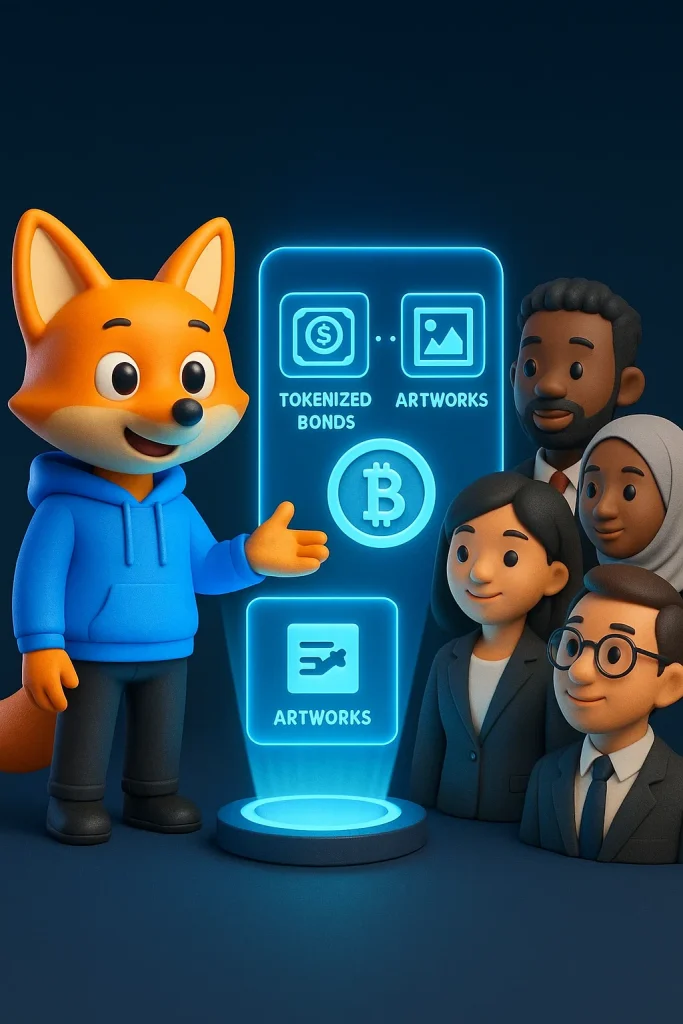
Use Cases of Real-World Assets in Blockchain
The tokenization of Real-World Assets is already being applied in multiple industries, from real estate to commodities.
Real Estate
Platforms like RealT tokenize rental properties, allowing holders to earn crypto denominated rental income. In Europe, regulators are working with startups to tokenize multi-million-euro commercial properties.
Commodities
Tokens like PAXG (Paxos Gold) and XAUT (Tether Gold) are backed by physical gold, giving global users exposure to precious metals without managing physical storage.
Debt and Bonds
Institutions like the World Bank have issued tokenized bonds, raising millions through blockchain-based offerings. This improves transparency and reduces issuance costs.
Trade Finance and Invoicing
SMEs are now tokenizing unpaid invoices to access instant liquidity. These tokenized invoices can be purchased by investors or used as collateral.
Art and Collectibles
Platforms like Maecenas tokenize ownership of fine art, enabling fractional participation in the high-end art market without needing millions in capital.
Don’t let your profits sit on centralized platforms. Secure your flash loan gains and DeFi tokens with Ledger, the trusted hardware wallet for true self-custody
Benefits and Challenges of Real-World Assets
Key Advantages
- Accessibility: Anyone can invest in high-value Real-World Assets with small amounts.
- Liquidity: Tokens can be traded on secondary markets, improving asset turnover.
- Transparency: Blockchain records are public and immutable.
- Efficiency: Smart contracts reduce paperwork and manual processing.
Key Challenges
- Legal Ambiguity: Regulatory classification (security vs utility) varies across jurisdictions.
- Custodial Risk: Trust is placed in off-chain custodians to manage the real asset.
- Compliance Load: KYC/AML, licensing, and taxation are complex and jurisdiction-specific.
- Market Readiness: Adoption among institutional players is still growing and depends on trust and proven performance.
Leading Platforms and Token Standards
Token Standards for Real-World Assets
- ERC-20: Standard for fungible tokens.
- ERC-1400: Designed for security tokens with compliance features.
- ERC-3643: Ideal for permissioned transfers and restricted access.
Notable Platforms
- Polymath: Offers an end-to-end solution for issuing security tokens with integrated compliance.
- Securitize: A leader in RWA tokenization with tools for issuance, investor onboarding, and lifecycle management.
- Tokeny: Based in Europe, it enables compliant issuance and secondary trading of Real-World Assets.
Integration With DeFi
DeFi platforms like Aave and Centrifuge are exploring RWA-backed lending pools, allowing users to borrow against tokenized invoices, real estate, or commodities. This bridges traditional assets with decentralized finance infrastructure.
Real-World Assets in the Broader Crypto Ecosystem
Real-World Assets bring tangible value to the crypto world. They serve as stable collateral, offer consistent yields, and introduce new ways to diversify crypto portfolios.
As more protocols and institutions recognize the potential of Real-World Assets, tokenized versions of everything from farmland to patents may become common across decentralized applications. This not only diversifies the types of assets in the crypto economy but also stabilizes it with real-world backing.
The Future of Real-World Assets
Regulatory Development
Governments around the world are working on regulatory frameworks for tokenized assets. Jurisdictions like Singapore, Switzerland, and the EU are taking the lead in offering clarity for legal compliance and investor protection.
Institutional Entry
Banks, pension funds, and asset managers are showing interest in tokenizing portfolios and launching their own asset-backed tokens. Expect to see blue-chip partnerships focused on tokenized real estate, commodities, and even private equity.
Tech Advancements
Future improvements will include better cross-chain interoperability, advanced custody solutions, and programmable compliance through AI and smart contracts.
New Asset Classes
We’re seeing early experiments in tokenizing carbon credits, music royalties, luxury goods, and agricultural outputs. As supply chains become increasingly transparent, tokenization will offer proof of origin and ESG tracking as added value.
Conclusion: Embracing the Power of Real-World Assets
The tokenization of Real-World Assets is revolutionizing finance by making once illiquid, exclusive, and static assets tradable, accessible, and programmable. It creates an intersection between legacy finance and blockchain innovation, unlocking liquidity, enhancing transparency, and promoting global financial inclusion.
While legal, technical, and adoption challenges remain, the trajectory is clear: Real-World Assets will be at the heart of the next financial revolution. As technology and regulation evolve, tokenizing everything from homes to harvests may soon become standard in both institutional and retail portfolios.
What exactly is a Real‑World Asset (RWA)?
A Real‑World Asset is any physical or traditional financial asset—like property, gold, bonds—represented on-chain via a token that reflects ownership.
How is tokenized real estate different from REITs?
REITs are centralized funds, regulated and managed by institutions. Tokenized real estate is on-chain, often fractional, transparent, and tradable 24/7 without fund manager intermediation.
Are tokenized assets safe to invest in?
Safety depends on legal structuring, custody practices, jurisdictional compliance, and smart contracts. Choose platforms with licensed custodians, regular audits, and clear legal frameworks.
Can I use tokenized RWAs as collateral in DeFi?
Yes—several DeFi platforms (like Centrifuge & Aave) allow using tokenized real-world assets as on-chain collateral to access decentralized credit.
What are the biggest challenges facing RWA tokenization?
Major hurdles include complex legal frameworks, cross-border regulations, trusted custody, valuations, interoperability, and liquidity in secondary markets.
“Guess what? When you click and buy via our links, you’re not just enhancing your experience—you‘re also supporting our content creation for free, so we can keep sharing useful blockchain insights. It‘s a pump for both of us!”
– Edo