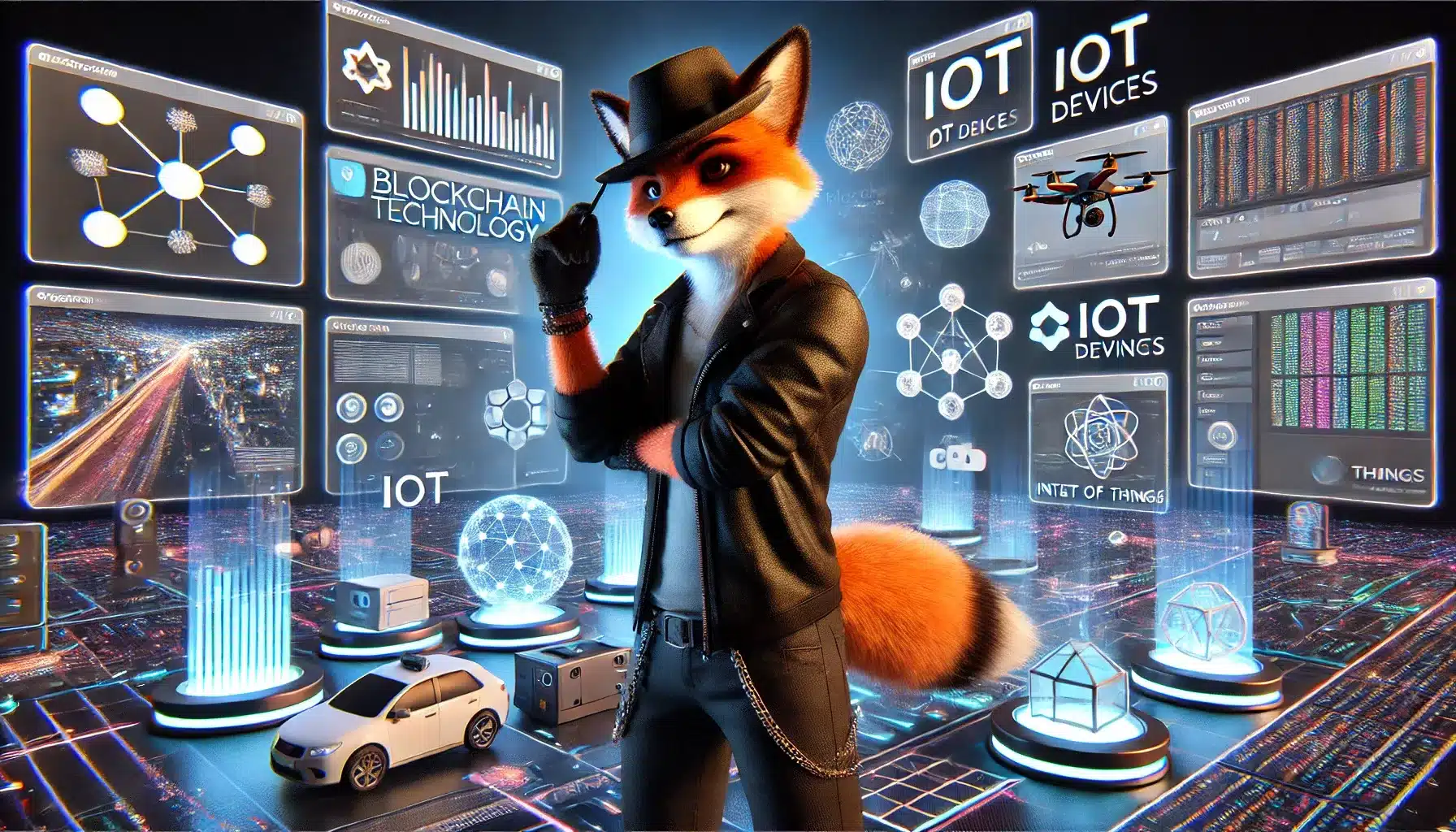
The Internet of Things (IoT) has revolutionized how we interact with the digital and physical world. From smart homes to industrial automation, IoT devices are transforming everyday life and driving efficiency across various sectors. The role of blockchain in IoT is becoming increasingly important as these technologies evolve. However, as IoT adoption grows, it also brings significant challenges, including security vulnerabilities, scalability issues, and interoperability hurdles. Managing the vast amount of data generated by billions of IoT devices is a complex task, often requiring innovative solutions.
This is where blockchain technology comes into play. With its unique attributes of decentralization, transparency, and immutability, blockchain offers powerful tools to address IoT’s challenges and unlock its full potential. In this blog, we’ll explore how blockchain enhances IoT systems, discuss real-world applications, and consider the benefits and limitations of this integration.
Understanding IoT and Blockchain
What is IoT?
The Internet of Things (IoT) refers to a network of interconnected devices that communicate and share data with one another. These devices, equipped with sensors and software, range from smart thermostats in homes to complex machinery in factories.
Key Applications of IoT:
- Smart Homes: Devices like smart lights, locks, and security cameras offer convenience and automation.
- Industrial IoT (IIoT): Enhances efficiency in manufacturing, energy management, and logistics.
- Healthcare: Wearable devices monitor patient health in real-time.
- Transportation: IoT powers smart traffic management and fleet optimization systems.
While IoT has become integral to many industries, its reliance on centralized servers and proprietary protocols often leads to security risks, inefficiencies, and limited scalability.
What is Blockchain?
Blockchain is a decentralized digital ledger that records transactions across a network of computers. It ensures data immutability and transparency by organizing information into secure, cryptographically linked blocks.
Learn more about blockchain technology.
Key Attributes of Blockchain:
- Decentralization: Eliminates the need for a central authority by distributing control across the network.
- Immutability: Once recorded, data on the blockchain cannot be altered.
- Transparency: All participants have access to the same version of the ledger, ensuring accountability.
When integrated with IoT, blockchain provides a secure and efficient foundation for managing device interactions, data sharing, and automation.
How Blockchain Enhances IoT
Security and Data Integrity
One of the most significant concerns in IoT is security. Devices are often vulnerable to cyberattacks due to weak passwords, outdated firmware, and centralized control points. Blockchain’s decentralized architecture mitigates these risks by removing single points of failure.
- Immutable Ledger: Blockchain ensures that data recorded by IoT devices cannot be tampered with, protecting against fraud and unauthorized changes.
- Cyberattack Prevention: Decentralization makes it difficult for hackers to target the entire network.
Decentralized Infrastructure
Traditional IoT systems rely on centralized servers for processing and storage, which can lead to bottlenecks and inefficiencies. Blockchain decentralizes these processes, distributing tasks across a network of nodes.
- No Central Authority: Reduces dependence on centralized servers, increasing system resilience.
- Distributed Data Management: Ensures redundancy and availability even during server outages.
Transparency and Traceability
Blockchain’s transparency is particularly useful in applications requiring accountability. By recording every transaction on a public ledger, blockchain enables stakeholders to trace data origins and monitor device interactions.
- Supply Chain Management: Blockchain tracks goods from production to delivery, ensuring authenticity and compliance.
- Asset Tracking: IoT sensors combined with blockchain ensure accurate monitoring of valuable assets.
Interoperability
IoT devices often come from different manufacturers and use various communication protocols, making seamless integration a challenge. Blockchain acts as a unifying layer, facilitating interoperability between disparate devices.
- Standardized Protocols: Blockchain provides a common framework for device communication.
- Seamless Integration: Enhances cross-platform collaboration in multi-vendor ecosystems.
Automated Processes via Smart Contracts
Smart contracts are self-executing agreements encoded on the blockchain. They enable automated workflows in IoT systems, reducing the need for manual intervention.
- Energy Trading: Smart contracts automate peer-to-peer energy transactions between IoT-enabled solar panels.
- Predictive Maintenance: Sensors trigger smart contracts to schedule repairs based on real-time performance data.
Real-World Applications of Blockchain in IoT
Smart Homes
In smart homes, IoT devices like thermostats, cameras, and appliances generate vast amounts of sensitive data. Blockchain ensures that this data is securely stored and shared only with authorized parties.
- Secure Automation: Blockchain prevents unauthorized access to smart home systems.
- Data Privacy: Homeowners maintain control over how their data is used and shared.
Supply Chain Management
IoT sensors monitor goods throughout the supply chain, while blockchain records their journey, creating a transparent and tamper-proof log.
- Product Authentication: Ensures goods are genuine and unaltered.
- Efficiency: Reduces paperwork and streamlines processes.
Healthcare
IoT devices like wearables and remote monitoring tools generate critical patient data. Blockchain secures this data, ensuring it’s accessible only to authorized healthcare providers.
- Data Security: Protects sensitive health records from breaches.
- Improved Trust: Enhances transparency in patient data sharing.
Industrial IoT (IIoT)
In industrial settings, IoT devices monitor equipment performance and optimize production processes. Blockchain adds an extra layer of security and reliability.
- Predictive Maintenance: Blockchain records sensor data, enabling proactive maintenance.
- Energy Management: IoT and blockchain facilitate efficient energy usage in factories.
Transportation and Logistics
Blockchain and IoT work together to improve fleet management, optimize routes, and ensure delivery authenticity.
- Fleet Optimization: Real-time tracking and route adjustments improve efficiency.
- Delivery Verification: Blockchain confirms goods’ authenticity upon arrival.
Benefits of Integrating Blockchain with IoT
Blockchain integration brings several key benefits to IoT ecosystems:
- Enhanced Security: Protects IoT networks from cyber threats by leveraging blockchain’s decentralized nature and immutable ledger.
- Improved Efficiency: Automates processes through smart contracts, reducing the need for intermediaries and manual interventions.
- Lower Costs: Decentralized systems eliminate the expense of maintaining centralized infrastructure and intermediaries.
- Increased Trust: Blockchain’s transparency ensures accountability in multi-party IoT networks, fostering confidence among stakeholders.
Learn now how to integrate IoT with blockchain.
Challenges and Limitations
Despite its potential, integrating blockchain with IoT is not without challenges:
Scalability Issues
Blockchain’s limited transaction throughput can be a bottleneck for large-scale IoT networks. High-volume data from IoT devices may overwhelm the blockchain, leading to delays.
Energy Consumption
Some blockchain protocols, particularly proof-of-work (PoW) systems, are energy-intensive. This conflicts with IoT’s need for low-power devices and sustainable solutions.
Integration Complexity
Connecting IoT devices with blockchain systems requires standardization and interoperability. Without common protocols, integration efforts can be fragmented and inefficient.
Future Trends in Blockchain and IoT
The convergence of blockchain and IoT is still in its early stages, but several trends point to a promising future:
Growth of Hybrid Blockchain Models
Hybrid blockchains combine the benefits of public and private blockchains, offering scalability and security tailored for IoT applications.
Energy-Efficient Consensus Mechanisms
Advancements like proof-of-stake (PoS) and delegated proof-of-stake (DPoS) are reducing blockchain’s energy requirements, making it more compatible with IoT ecosystems.
Decentralized Autonomous Organizations (DAOs)
DAOs powered by IoT devices could enable fully autonomous systems for tasks like energy distribution and resource management.
Take Control of Your Digital Assets
To fully leverage the potential of blockchain and IoT, securing your crypto assets is crucial. Protect your investments with a Ledger hardware wallet, known for its top-tier security and user-friendly interface. By purchasing through this affiliate link, you support our work at no extra cost to you.
Maximize Your Crypto Journey with Bybit
Unlock up to $30,050 in Welcome Rewards, including a $50 sign-up bonus and VIP trading perks, when you register on Bybit through my referral link. Plus, you’ll gain an exclusive “Supporter” role in my Discord server, giving you access to insider tips and strategies. Don’t miss out on these exclusive benefits!
Conclusion
Blockchain technology is a game-changer for the Internet of Things, addressing critical challenges like security, scalability, and interoperability. By leveraging blockchain’s decentralization, transparency, and automation capabilities, IoT ecosystems can achieve greater efficiency, reliability, and trust.
While there are challenges to overcome, the future of blockchain-IoT integration looks bright. As new technologies and standards emerge, the synergy between these two transformative fields will continue to unlock innovative applications and reshape industries. If you’re exploring blockchain or IoT, now is the perfect time to dive in and discover their combined potential.
FAQs
How does blockchain improve IoT security?
Blockchain enhances IoT security by eliminating single points of failure and ensuring data integrity through its immutable ledger.
What are the key use cases of blockchain in IoT?
Key use cases include smart homes, supply chain management, healthcare, industrial IoT, and transportation and logistics.
Can blockchain solve scalability issues in IoT systems?
While blockchain offers improvements, scalability remains a challenge. Solutions like hybrid blockchains and Layer-2 protocols are being developed to address this issue.
Which industries benefit most from blockchain-IoT integration?
Industries like manufacturing, healthcare, transportation, and energy management see significant benefits from integrating blockchain with IoT.
What are the challenges of implementing blockchain in IoT networks?
Challenges include scalability limitations, energy consumption of blockchain protocols, and the complexity of integrating diverse IoT devices with blockchain systems.
“Guess what? When you click and buy through our links, you’re doing more than improving your journey. You’re supporting us in a way that doesn’t cost you extra but helps us keep bringing you the best blockchain posts. It’s a pump for both of us!”
-0xteumessia