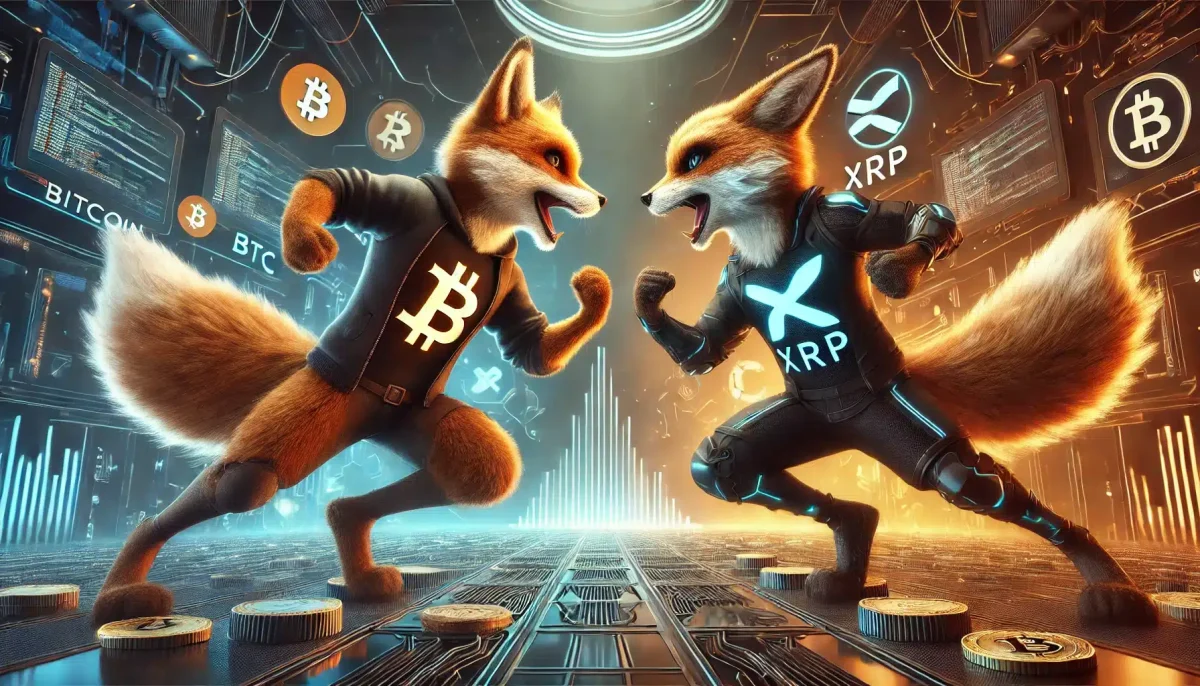
XRP and Bitcoin are two of the most popular cryptocurrencies, each offering unique investment opportunities. Dive into this comparison of XRP Vs Bitcoin to help decide which is the better investment for your portfolio in 2024.
The cryptocurrency market continues to evolve, and with it comes the growing debate among investors: Which is the better investment XRP or Bitcoin? As two of the top contenders in the crypto world, both offer intriguing opportunities, but for very different reasons. Bitcoin is often considered “digital gold” for long-term holders, while XRP is gaining traction for its practical use in cross-border payments.
In this post, we’ll break down the differences between XRP and Bitcoin, looking at their histories, technology, market performance, and future potential. By the end, you’ll have a better understanding of which might be the smarter investment for you in 2024.
1. What is Bitcoin?
Bitcoin, the world’s first cryptocurrency, has become synonymous with the entire digital currency movement. It was created in 2009 by an anonymous individual or group known as Satoshi Nakamoto. Since its inception, Bitcoin has led the charge as the most valuable and widely recognized cryptocurrency.
Brief History
Bitcoin’s origin dates back to the aftermath of the 2008 financial crisis. It was designed as a decentralized, peer-to-peer currency that would function independently of banks and traditional financial systems. Bitcoin’s first real-world transaction occurred in 2010, when a user famously spent 10,000 BTC to buy two pizzas an amount worth hundreds of millions today.
Over the years, Bitcoin has grown exponentially, not just in price but in adoption. It is now viewed by many as a hedge against inflation and a store of value, much like gold.
Key Features
Bitcoin’s biggest strength lies in its decentralization. No single entity controls the Bitcoin network, and its transactions are verified through a process called Proof of Work (PoW) if you want to earn free bitcoin you could mine btc, where miners use computational power to validate and secure the blockchain. While this makes the network secure and decentralized, the PoW mechanism is energy-intensive, leading to environmental concerns.
Another key feature is Bitcoin’s scarcity only 21 million bitcoins will ever be created, which drives its demand as a deflationary asset. Investors often view Bitcoin as “digital gold,” appreciating its long-term potential as a store of value rather than just a currency for transactions.
Investment Appeal
Bitcoin has a proven track record as a strong investment over the past decade. Early adopters have seen massive returns, and its limited supply adds to its appeal for long-term holders. Institutions have also begun to pour into Bitcoin, with the rise of Bitcoin ETFs and large corporations holding Bitcoin on their balance sheets. For many investors, Bitcoin represents a safe, long-term hedge against traditional financial markets.
2. What is XRP?
XRP is a cryptocurrency created by Ripple Labs in 2012 with a very different purpose from Bitcoin. While Bitcoin is designed as a decentralized currency, XRP was built to solve specific issues within the traditional banking system, particularly with cross-border payments.
Brief History
Ripple Labs, the company behind XRP, was founded with the vision of creating a faster and more efficient way to move money globally. XRP is the cryptocurrency that powers the Ripple network, enabling instant, low-cost cross-border transactions. Unlike Bitcoin, which was developed to disrupt financial institutions, XRP was designed to work alongside them, facilitating quick and affordable international payments.
I also wrote an article about the history of xrp.
Over the years, XRP has gained popularity with financial institutions, and Ripple has formed partnerships with several large banks and payment providers. However, XRP’s journey has not been without its challenges, particularly with its ongoing legal battle with the U.S. Securities and Exchange Commission (SEC), which has created uncertainty around the coin’s regulatory future.
Key Features
XRP’s key advantage lies in its speed and low transaction costs. Transactions on the Ripple network are settled in just a few seconds, compared to Bitcoin’s average transaction time of 10 minutes or more. This makes XRP an attractive option for financial institutions looking to reduce the time and cost of cross-border payments.
Another difference from Bitcoin is XRP’s centralized governance model. While Bitcoin is completely decentralized, Ripple Labs plays a significant role in the development and governance of the XRP ecosystem. Ripple’s control over the release of XRP tokens and its centralization has raised concerns for some investors about the true decentralization of XRP.
Investment Appeal
XRP’s appeal lies in its utility within the Ripple ecosystem. Financial institutions and banks are drawn to XRP because it facilitates fast, low-cost international payments, making it ideal for cross-border financial transfers. For investors looking for a cryptocurrency with real-world use cases, XRP offers an exciting opportunity, especially if Ripple resolves its legal issues and continues expanding its partnerships with banks globally.
3. XRP vs. Bitcoin: Key Differences
Now that we’ve covered the basics of Bitcoin and XRP, let’s dive into some of the key differences that set these two cryptocurrencies apart.
Technology and Consensus Mechanism
One of the biggest differences between XRP and Bitcoin lies in their consensus mechanisms. Bitcoin uses Proof of Work (PoW), a decentralized system where miners solve complex cryptographic puzzles to validate transactions. While secure, PoW is energy-intensive and can result in slower transaction times and higher fees, especially during times of network congestion.
XRP, on the other hand, uses the Ripple Protocol Consensus Algorithm (RPCA), which is faster and more energy-efficient than PoW. XRP transactions take just a few seconds to process, and the network can handle a much higher volume of transactions per second compared to Bitcoin. This makes XRP ideal for scalability and use in payment networks.
Decentralization
Bitcoin is fully decentralized, meaning no single entity has control over the network. Its open-source nature allows anyone to contribute to the development and operation of the Bitcoin network. This decentralization is a major reason why Bitcoin is trusted by long-term holders, as it is immune to manipulation by a central authority.
XRP, however, is often criticized for being more centralized. Ripple Labs holds a significant portion of XRP’s supply and exerts a large influence over its ecosystem. While Ripple argues that this centralization allows for better governance and faster innovation, some investors see it as a potential risk, as it contradicts the decentralized ethos of most cryptocurrencies.
Use Case
Bitcoin’s primary use case has evolved into that of a store of value. Many investors treat it as “digital gold” and see it as a hedge against inflation and economic instability. Its scarcity and decentralized nature make it a strong choice for long-term investment.
XRP, however, is focused on solving real-world problems in the financial industry, specifically in the area of cross-border payments. Ripple’s partnerships with banks and payment providers highlight XRP’s utility in facilitating faster and cheaper transactions than traditional banking systems.
Supply and Tokenomics
Bitcoin’s supply is capped at 21 million coins, and this scarcity is one of the factors driving its price higher as demand increases. Every four years, Bitcoin undergoes a halving event, where the number of new bitcoins issued to miners is cut in half. This further reduces the available supply and increases Bitcoin’s value over time.
XRP, on the other hand, was pre-mined, meaning all of its 100 billion tokens were created at the launch, with Ripple Labs controlling a large portion of the supply. Ripple periodically releases XRP into the market, which has led to concerns about oversupply and its impact on price stability.
A Key Aspect of Securing Your Investment: Protecting Your Assets
Regardless of whether you’re considering Bitcoin or XRP, ensuring the security of your cryptocurrency is crucial. That’s where hardware wallets like Ledger come in. When you store your crypto on an exchange or online wallet, you’re susceptible to hacking. However, with a Ledger hardware wallet, your private keys remain offline, greatly enhancing your security.
If you’re looking for a secure way to protect your cryptocurrency, click here to purchase a Ledger wallet through my affiliate link. Not only will you keep your crypto safe, but you’ll also be supporting the content here without any extra cost to you!
Bitcoin: A Long-Term Investment Opportunity
Bitcoin, the world’s first cryptocurrency, has become synonymous with the entire digital currency movement. It’s considered a hedge against inflation, much like gold. With its decentralized nature and limited supply, Bitcoin is ideal for long-term holders.
But how do you take part in the Bitcoin market securely? Bybit is one of the best platforms for buying, trading, and managing Bitcoin. Plus, by signing up with my referral link, you gain access to up to $30,050 in Welcome Rewards, including a $50 sign-up bonus and VIP trading perks. You’ll also get an exclusive “Supporter” role in my Discord server, where we discuss all things crypto!
To claim your bonuses, sign up with Bybit.
XRP: A High-Utility Investment in the Payments Space
XRP is a cryptocurrency built to facilitate cross-border payments with speed and low fees. Unlike Bitcoin, which operates in a decentralized fashion, XRP’s centralization through Ripple Labs provides more controlled and efficient governance, particularly for financial institutions looking to optimize global payments.
If you’re planning to invest in XRP, you need to ensure that your crypto assets are stored securely. As previously mentioned, a hardware wallet like Ledger is your best option. You can protect your investment in XRP by keeping it offline, away from the risk of hacks.
Don’t forget to purchase your Ledger wallet through this link to keep your crypto secure!
4. Price History and Market Performance
Another crucial factor in deciding whether to invest in XRP or Bitcoin is understanding their price history and how each cryptocurrency has performed over time.
Bitcoin’s Price History
Bitcoin’s price history is legendary. From trading at just a few cents in 2010 to reaching an all-time high of nearly $69,000 in 2021, Bitcoin has seen dramatic growth. Along with that growth, Bitcoin has experienced extreme volatility, with its price sometimes falling by more than 50% during market corrections. However, many investors view this volatility as part of Bitcoin’s market cycle, which has historically resulted in higher highs after each downturn.
Despite its ups and downs, Bitcoin’s long-term performance has made it the top choice for investors seeking significant returns over time.
XRP’s Price History
XRP’s price performance has been a bit more turbulent. After reaching an all-time high of around $3.84 in early 2018, XRP has struggled to maintain its momentum. Several factors have contributed to its price fluctuations, including Ripple’s legal issues with the SEC, which have cast a shadow over the coin’s regulatory future. However, XRP still remains one of the top cryptocurrencies by market capitalization, and its price could rebound significantly depending on the outcome of the SEC lawsuit.
Comparison of Volatility
When it comes to volatility, both Bitcoin and XRP are known for their price swings, but Bitcoin has shown more consistent upward momentum over the years. XRP, while still volatile, is often more affected by external factors such as regulatory news, partnerships, and market sentiment. This can make XRP a riskier short-term investment but with potentially higher rewards if key milestones (such as the resolution of the SEC lawsuit) are achieved.
In the debate of XRP vs. Bitcoin, the question of which is the better investment ultimately depends on your investment goals and risk tolerance.
- Bitcoin is the go-to choice for long-term holders seeking a reliable store of value. Its scarcity, growing institutional interest, and historical performance make it a safe bet for those looking for steady growth over time.
- XRP offers a more speculative investment opportunity, especially for those who believe in Ripple’s mission of transforming the cross-border payments industry. If XRP overcomes its regulatory hurdles, it could see significant price appreciation and adoption by financial institutions.
Whichever you choose, remember that the cryptocurrency market is inherently volatile, and it’s crucial to diversify your portfolio and make investment decisions based on thorough research. Both XRP and Bitcoin have their merits, and incorporating both into your strategy could offer a balanced approach to capturing potential gains while managing risk.
FAQs
What’s the difference between XRP and Bitcoin?
Bitcoin is a decentralized cryptocurrency primarily used as a store of value, while XRP is designed for fast, low-cost cross-border payments and has a more centralized governance model.
Is Bitcoin a safer investment than XRP?
Bitcoin is generally considered a safer, long-term investment due to its scarcity and decentralized nature, while XRP carries more risk due to regulatory challenges.
Can XRP overtake Bitcoin in the future?
While XRP has potential for growth in the payments industry, it is unlikely to overtake Bitcoin as a store of value or in terms of market dominance.
How does the SEC lawsuit affect XRP’s investment potential?
The SEC lawsuit has created uncertainty around XRP’s regulatory status, but a positive outcome could significantly boost XRP’s price and adoption.
Which cryptocurrency is better for long-term holding: XRP or Bitcoin?
For long-term holding, Bitcoin is generally the safer bet due to its proven track record and position as a store of value. XRP offers more speculative upside, especially in the short to medium term.
“Guess what? When you click and buy through our links, you’re doing more than improving your journey. You’re supporting us in a way that doesn’t cost you extra but helps us keep bringing you the best blockchain posts. It’s a pump for both of us!”
-0xteumessia