Introduction
In recent years, the concept of Zero-Knowledge Revolutionizing the way we think about trust, privacy, and security has moved from niche academic discussions to real-world blockchain adoption. Zero-knowledge proofs (ZKPs) are no longer just mathematical curiosities. They are now at the center of innovation in privacy-preserving transactions, scalable blockchain rollups, identity verification, and compliance solutions. By enabling verification without revealing sensitive information, zero-knowledge is transforming the digital landscape and laying the foundation for the next era of Web3.
What Is Zero-Knowledge?
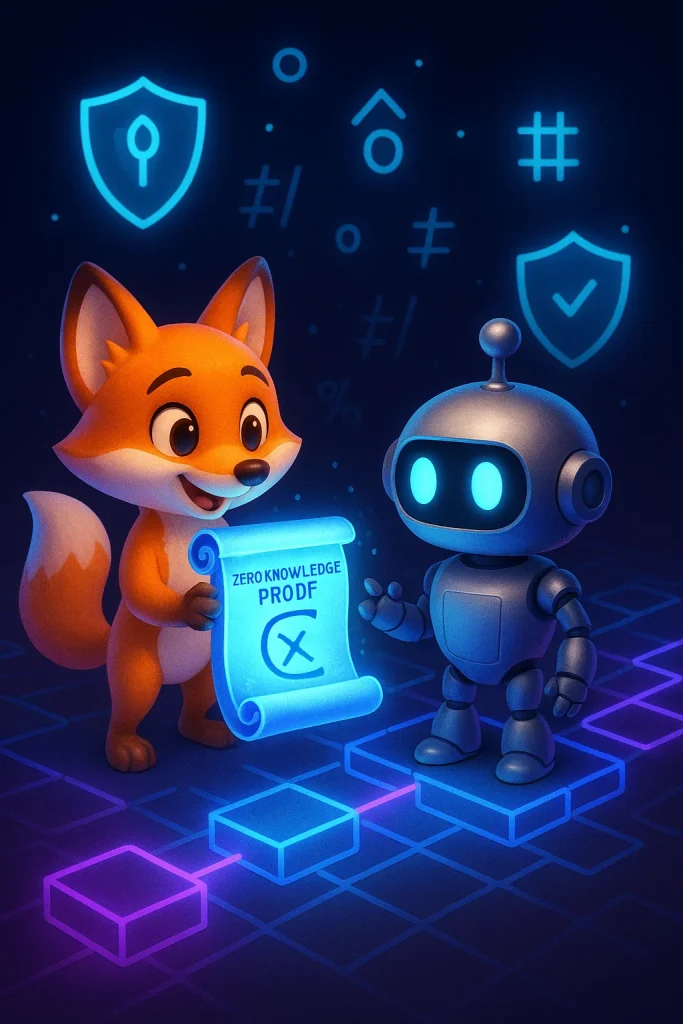
A zero-knowledge proof is a cryptographic protocol that allows one party, known as the prover, to convince another party, the verifier, that a statement is true without revealing any additional information.
Core Properties of Zero-Knowledge
To fully understand why experts describe this as the Zero-Knowledge Revolutionizing moment for cryptography, it is essential to consider the three fundamental properties:
- Completeness: If the statement is true, the prover can always convince the verifier.
- Soundness: If the statement is false, no cheating prover can trick the verifier into accepting it.
- Zero-Knowledge: The verifier learns nothing beyond the fact that the statement is true.
These properties allow zero-knowledge systems to provide maximum security while protecting user data.
“Ledger is the gold standard for hardware crypto wallets. Store your coins offline, safely.”
How Zero-Knowledge Works
Interactive vs Non-Interactive Proofs
Early systems required multiple rounds of communication between the prover and verifier. These are interactive proofs. Non-interactive proofs, such as zk-SNARKs, only require a single message and are far more practical for blockchain applications.
zk-SNARKs
zk-SNARKs (Succinct Non-Interactive Arguments of Knowledge) are small, efficient proofs that can be verified quickly. They are widely used but often rely on a trusted setup, which introduces certain risks.
zk-STARKs
zk-STARKs (Scalable Transparent Arguments of Knowledge) avoid trusted setups and are highly scalable. However, their proofs are larger, and computation can be more demanding.
Bulletproofs
Bulletproofs are designed for specific use cases such as range proofs. They allow a user to prove that a value lies within a certain range without revealing the actual value, making them ideal for privacy-focused cryptocurrencies.
Why Zero-Knowledge Is Revolutionizing
Privacy and Confidentiality
The Zero-Knowledge Revolutionizing effect is most visible in the field of privacy. Users can prove ownership, eligibility, or account balances without exposing personal details, protecting against identity theft and surveillance.
Scalability and Efficiency
By enabling computations to be done off-chain and only submitting succinct proofs, zero-knowledge reduces on-chain data, increases throughput, and lowers transaction fees. This makes it one of the most powerful scaling solutions available.
Regulatory Alignment
Zero-knowledge proofs also help reconcile blockchain systems with strict privacy laws like GDPR. They make it possible to provide proof of compliance without revealing confidential data.
Trust Without Exposure
Transparency is preserved because proofs can be verified by anyone, but raw data remains hidden. This balance is why the phrase Zero-Knowledge Revolutionizing has become so common in blockchain discussions.
Real-World Applications of Zero-Knowledge
Privacy Coins
Zcash is the most well-known cryptocurrency using zk-SNARKs. Its shielded transactions hide amounts, senders, and receivers, setting a standard for privacy in blockchain.
Rollups and Scalability
Zero-knowledge rollups are a game-changer for Ethereum and other blockchains. They bundle thousands of transactions into a single proof, dramatically improving throughput.
Identity and Authentication
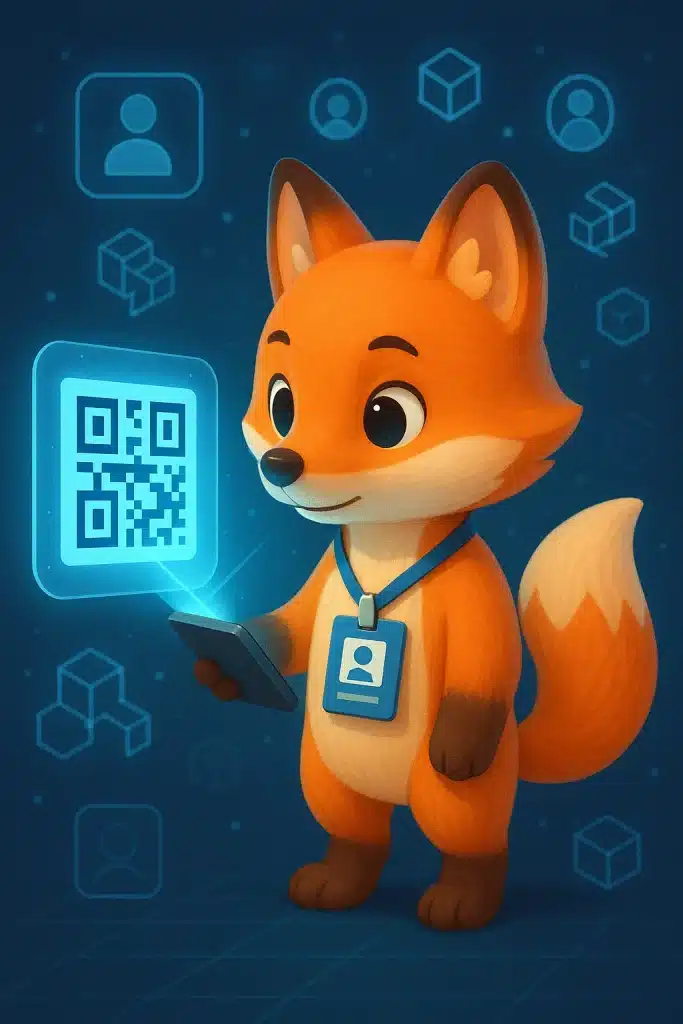
Zero-knowledge enables systems where users prove credentials like age or citizenship without disclosing full identity information. This is essential for privacy-preserving identity systems.
Voting Systems
Voting mechanisms benefit from anonymity and verifiability. Zero-knowledge makes it possible to build election systems where votes remain secret but results are still auditable.
Regulated Finance
Banks and exchanges are experimenting with proofs of solvency, anti-money laundering checks, and other compliance requirements using ZKPs. This allows institutions to satisfy regulators while respecting client privacy.
Off-Chain Computation
In supply chains, IoT networks, and data marketplaces, zero-knowledge allows large computations to be verified without moving vast datasets on-chain.
Challenges and Limitations
Trusted Setup Risks
Systems like zk-SNARKs require trusted setup ceremonies. If compromised, attackers could generate false proofs.
Computational Costs
Proof generation, especially for zk-STARKs, can be resource-intensive, though verification is relatively efficient.
Proof Size
While proof sizes are shrinking with new research, bandwidth constraints can still limit adoption in certain environments.
Usability and Tooling
Developers must design circuits, debug cryptographic systems, and integrate proofs into existing platforms. This remains complex.
Regulatory Concerns
Some regulators fear that too much privacy could enable illicit finance. Striking a balance between transparency and confidentiality will be key.
“Want more crypto knowledge? Join our newsletter for weekly insights, free guides, and tools.”
Recent Advances in Zero-Knowledge
Transparent zk-SNARKs
New research is reducing or eliminating the need for trusted setups. Protocols like Halo and LUMEN are pioneering secure and efficient alternatives.
Institutional Adoption
Governments, banks, and even the U.S. White House have recognized Zero-Knowledge Revolutionizing as a transformative technology for privacy-preserving compliance.
Middleware and SDKs
New frameworks, sometimes referred to as zkFi, are emerging to make ZK tools more accessible for developers who lack deep cryptographic expertise.
Optimized Proof Systems
Recursive proofs, batching, and hardware acceleration are cutting costs and proof sizes dramatically.
Selective Disclosure
Projects are now building selective disclosure mechanisms, letting users reveal only what’s necessary for compliance while preserving overall privacy.
Future Outlook for Zero-Knowledge
Wider Adoption of Rollups
In the next decade, many major blockchains are expected to integrate ZK rollups at the base layer, making them standard for scalability.
Privacy as Default
Users will come to expect privacy by default. The Zero-Knowledge Revolutionizing movement will normalize privacy as an essential feature rather than a niche option.
Regulatory Standardization
Laws and compliance frameworks will adapt to embrace zero-knowledge. Auditable ZK systems could become a requirement for financial platforms.
Interoperability
Cross-chain zero-knowledge systems will allow proofs and credentials to move seamlessly between blockchains and services.
Hardware Improvements
Specialized GPUs, FPGAs, and ASICs will continue to make proof generation faster and cheaper. This will lower barriers for mainstream adoption.
Conclusion
Zero-knowledge proofs are not just another cryptographic tool. They are a complete paradigm shift. The phrase Zero-Knowledge Revolutionizing is no exaggeration. By allowing verification without revealing raw data, these proofs make possible a digital ecosystem that is private, scalable, and compliant. Already, they are reshaping privacy coins, blockchain scalability, identity solutions, voting systems, and regulated finance.
However, challenges remain. Trusted setups, computational costs, usability hurdles, and regulatory concerns are real issues that must be addressed. The future leaders of Web3 will be those who solve these problems while pushing innovation forward.
For developers, businesses, and policymakers, there has never been a better time to dive into zero-knowledge technology. The next decade will see Zero-Knowledge Revolutionizing blockchain, cybersecurity, and digital trust itself. The revolution is already underway and it is only accelerating.
Ledger is still considered the gold standard for secure hardware crypto wallets. Keeping your private keys offline is one of the best ways to protect your digital assets. If you want to stay ahead of the curve in blockchain, cryptography, and scaling technologies like zero-knowledge proofs, subscribing to a newsletter filled with weekly insights, free guides, and tools is the smartest move.
What is the difference between zk‑SNARKs and zk‑STARKs?
zk‑SNARKs are non‑interactive, succinct proofs that require a trusted setup; they tend to have smaller proof sizes and faster verification but weaker assumptions regarding trusted setup. zk‑STARKs, on the other hand, aim for transparency (no trusted setup), stronger cryptographic assumptions, but often larger proof sizes and higher computational load.
Are zero‑knowledge proofs completely private? Can data still leak?
While ZKPs hide specific contents (e.g. identity, balances), metadata (such as timing, network patterns) can still leak information. Also, implementations may be flawed, or trusted setup compromised. Privacy is not just math, but also system design and operational security.
How do zero‑knowledge proofs help blockchain scale?
By allowing many transactions or computations to be done off‑chain or in batches, then generating one succinct proof attesting to correctness. This reduces on‑chain data and verification work, increasing throughput and reducing cost. Rollups are one prominent example.
What are practical use cases for businesses?
Businesses can use ZKPs for identity verification without collecting sensitive data, for proving regulatory compliance, for secure audits, supply chain trust, private transactions, and for enhancing user privacy in apps without compromising security.
What are the risks or limitations to watch out for?
Risks include: flaws in implementation, reliance on trusted setup (if applicable), computational cost (especially for proof generation), legal/regulatory uncertainty, and the need for robust tooling. Also, scaling proof generation resources can be an issue.
“Guess what? When you click and buy via our links, you’re not just enhancing your experience—you‘re also supporting our content creation for free, so we can keep sharing useful blockchain insights. It‘s a pump for both of us!”
— Edo