
Introduction
In the face of growing global crises ranging from natural disasters to humanitarian emergencies innovative technologies are needed more than ever. Among these, Blockchain in Disaster Relief is emerging as a revolutionary tool. With its decentralized, transparent, and tamper-proof architecture, blockchain offers unprecedented efficiency, accountability, and agility in crisis response operations. From food distribution to refugee identity verification, the use of blockchain emergency response tools is transforming how the world approaches humanitarian challenges.
This in-depth guide explores how Blockchain in Disaster Relief is being used, the benefits it brings, the challenges it must overcome, and how NGOs and governments can implement it successfully. We will also examine real-world applications and discuss what the future holds for blockchain-based humanitarian solutions.
As global emergencies increase in both frequency and complexity, Blockchain in Disaster Relief emerges as a crucial innovation for more reliable and equitable aid distribution.
What Is Blockchain in Disaster Relief?
At its core, Blockchain in Disaster Relief refers to the use of decentralized ledger technology to improve how aid is delivered, tracked, and managed during and after a crisis. Instead of relying on centralized databases and manual paperwork, blockchain provides a secure, distributed, and transparent way to handle transactions, manage identities, and monitor logistics.
Key Features
- Immutable transaction history shared across nodes for maximum transparency
- Smart contracts that automate fund disbursements and supply approvals
- Decentralized identity management for displaced individuals
- Real-time relief tracking that provides instant visibility to donors and partners
By implementing blockchain emergency response platforms, organizations gain the ability to reduce delays, cut administrative costs, and ensure that help reaches those in need quickly and fairly.
Benefits of Blockchain for Humanitarian Aid
Enhanced Transparency and Accountability
One of the most powerful features of Blockchain in Disaster Relief is its ability to offer complete transparency in aid funding. Every transaction is permanently recorded and publicly verifiable. This eliminates the risk of double-spending, fraud, or resource misallocation common problems in traditional aid programs.
For both governments and blockchain NGOs, this transparency builds donor trust and ensures that funds are spent exactly as promised. It also provides a real-time audit trail, which is vital during emergencies when oversight is often limited.
Faster Aid Distribution Through Automation
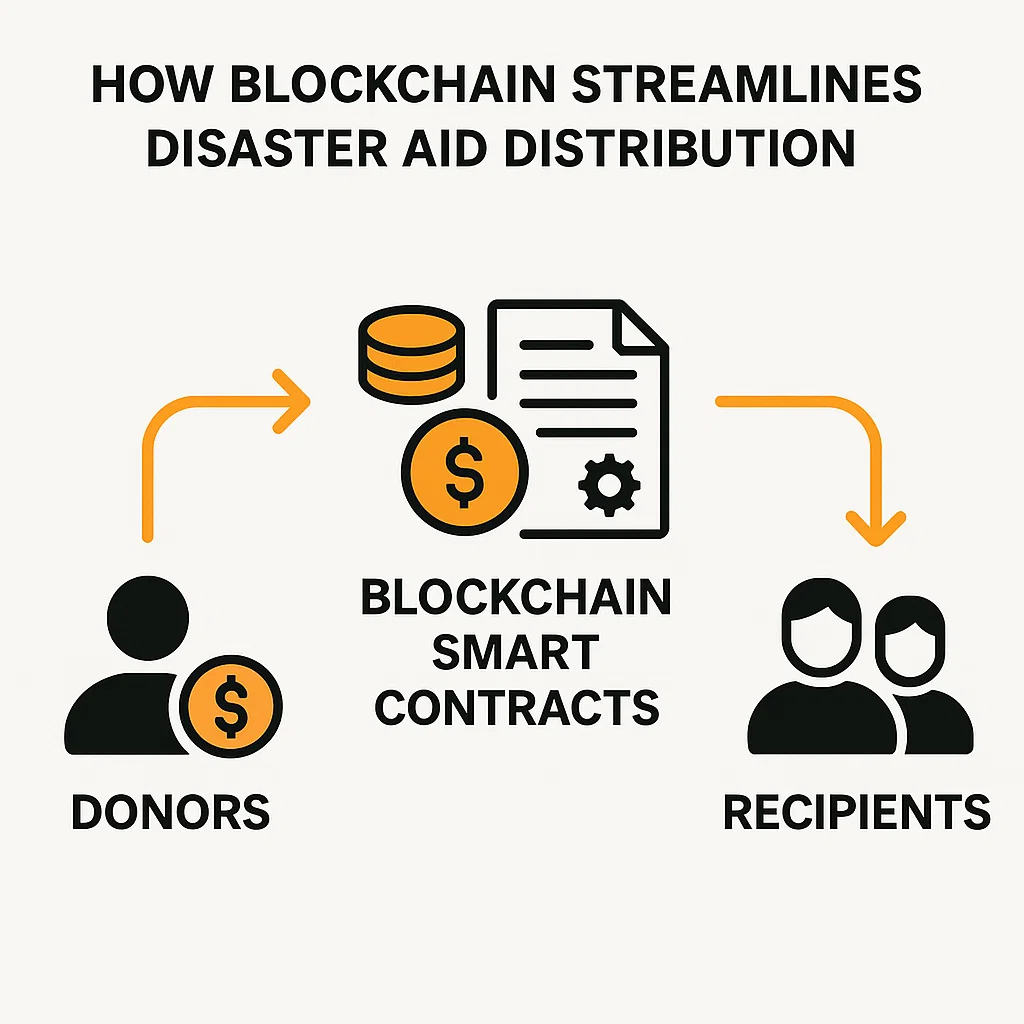
Speed is everything in a disaster. Smart contracts on blockchain platforms automate fund distribution once pre-set criteria are met. For example, once a beneficiary’s identity is verified and their location confirmed, funds or goods can be released instantly eliminating the delays caused by manual approvals and red tape.
This type of automation in blockchain emergency response reduces wait times from days to minutes, potentially saving lives during critical early hours.
This ability to automate payments and resource allocation under tight timelines is one of the most compelling advantages of using Blockchain in Disaster Relief.
Cost Savings and Operational Efficiency
By removing intermediaries and automating workflows, Blockchain in Disaster Relief reduces administrative burdens and transaction costs. Aid organizations can reallocate these savings toward actual relief efforts, maximizing the impact per donated dollar.
Unlike traditional financial systems, crypto disaster donations can be sent and received globally with minimal fees. These borderless payments are especially useful in areas with poor banking infrastructure or capital controls.
At BlockchainDudes, we actively support transparent aid systems. Discover how you can contribute directly through our dedicated donation page.
Real-World Use Cases of Blockchain in Disaster Relief
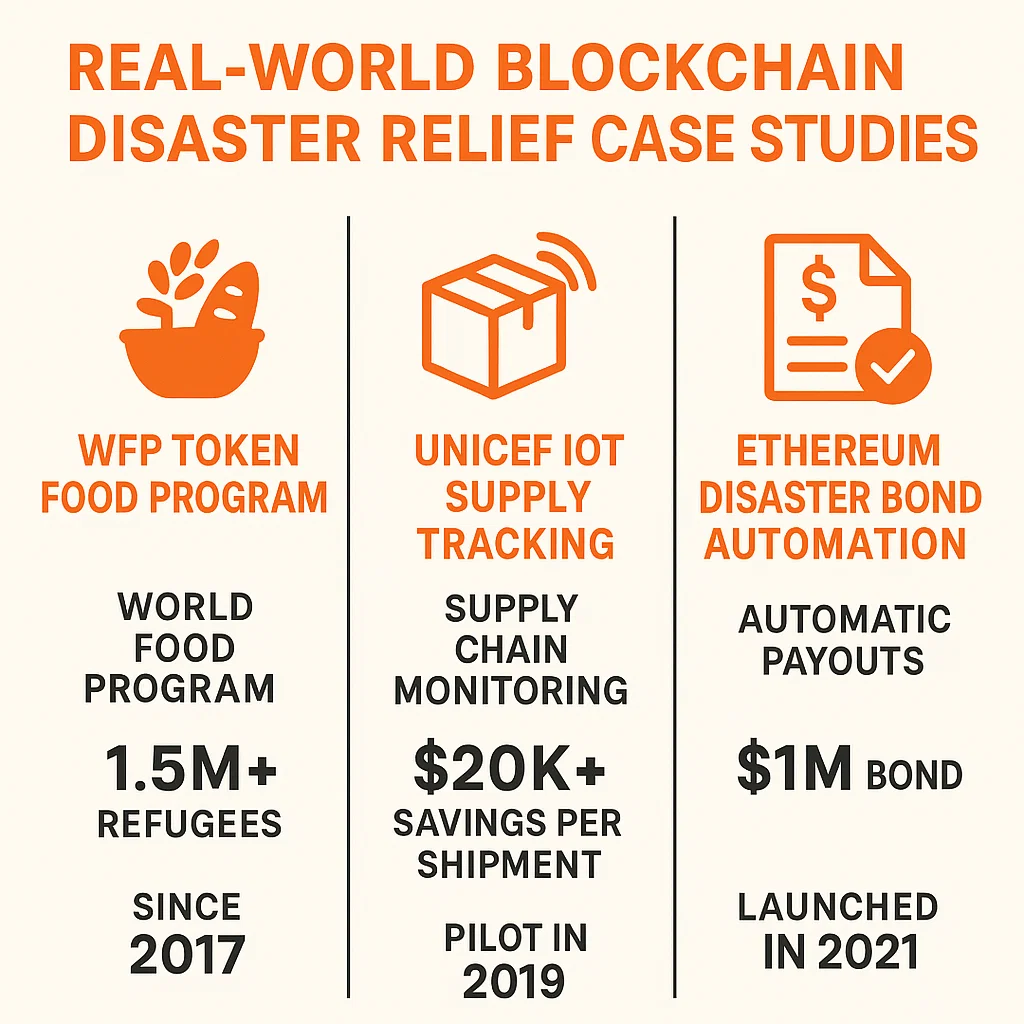
World Food Programme: Building Blocks Project
The World Food Programme launched “Building Blocks,” a blockchain platform piloted in Jordan’s Azraq camp. Syrian refugees used digital tokens to purchase food directly from local vendors secured through iris scans.
- Reduced transaction fees by over 98%
- Enabled refugee purchases without bank accounts
- Offered real-time relief tracking of distributed goods
This case is often cited among the Top Crypto Projects With Real-World Use Cases and is a textbook example of how blockchain can bypass traditional banking systems to serve vulnerable communities.
These examples not only prove the technical feasibility but also the transformative power of Blockchain in Disaster Relief when applied in real humanitarian scenarios.
UNICEF’s Magic Box and IoT Integration
UNICEF combined blockchain with IoT technology to create “Magic Box,” an innovation piloted after Hurricane Maria in Puerto Rico. Sensors collected data on weather and supply usage, while blockchain recorded this data for full transparency.
This integration allowed for real-time relief tracking, improved logistics, and provided data-driven insights into what resources were needed most. The system significantly reduced waste and duplication of efforts.
Smart Contract-Based Disaster Bonds on Ethereum
Another example comes from humanitarian aid blockchain projects experimenting with Ethereum-based disaster bonds. These financial tools automatically release funds when specific climate triggers occur like seismic activity or hurricane-force winds allowing for quicker funding after disasters.
Such innovations are reshaping disaster finance, showing How Blockchain Is Changing the World Beyond Finance by creating more responsive and efficient financial safety nets.
Challenges and Limitations
Despite its promise, Blockchain in Disaster Relief is not without challenges.
Infrastructure and Connectivity Issues
Most blockchain platforms require internet access to function. In disaster zones, however, connectivity may be limited or entirely down. This makes it difficult to deploy or maintain digital systems.
Solutions such as offline-capable wallets, mesh networks, or SMS-based interfaces are being explored to solve this issue, especially in remote or developing regions.
Regulatory Uncertainty
Many jurisdictions lack legal frameworks for blockchain-based identity, payments, or data privacy. For international aid, compliance across multiple countries complicates deployment. In some regions, crypto disaster donations may even be restricted or taxed.
NGOs and aid providers must work closely with legal experts to ensure compliance and avoid violating local laws.
Fragmentation and Interoperability
With many organizations developing proprietary systems, a lack of standardization can lead to blockchain silos. Without interoperability, the effectiveness of blockchain NGOs working together is significantly reduced.
Adopting open protocols like Hyperledger or Corda can help bridge this gap and promote collaborative innovation.
User Trust and Digital Literacy
In many communities, blockchain is still seen as complex or untrustworthy. Education is essential both for beneficiaries and frontline workers. Simpler interfaces and hands-on training are critical to successful adoption.
Especially when managing decentralized identity systems, transparency and clarity must be prioritized to prevent confusion or misuse.
Best Practices for Successful Implementation
Partner with Local Stakeholders
Local partnerships are crucial for successful blockchain rollouts. Community organizations understand cultural sensitivities and logistical realities better than any external team. Co-developing solutions ensures relevance and builds trust.
Prioritize Accessibility
Tools must work on low-end smartphones or even basic feature phones. SMS verification, QR codes, and offline-first design are essential to make systems usable in real-world crisis scenarios.
Use Open Standards
Interoperability between aid groups can be improved by using open-source tools and standardized data models. Blockchain protocols like Ethereum, Hyperledger, or Avalanche allow NGOs to build modular, connected systems.
This also aligns with the broader goals of Web3 technology. If you’re new to the concept, check out What Is Web3 and Why It Matters to understand how these open systems are designed to empower users.
Ensure Compliance and Data Protection
Humanitarian aid blockchain systems handle sensitive identity and financial data. This requires robust governance, data encryption, and audit controls. Define compliance protocols early and involve legal and cybersecurity experts.
Start Small and Scale Gradually
Pilot programs should be deployed in contained environments with clear KPIs like cost per transaction, delivery time, or satisfaction scores. Use feedback to iterate before rolling out at scale.
Want to stay ahead in Web3 innovation and blockchain use cases?
Join our newsletter to get exclusive insights, tutorials, and free educational resources every week.
The Future of Blockchain in Disaster Relief
As blockchain matures and adoption spreads, its use in disaster relief will become more widespread and impactful. New trends are emerging:
- Decentralized identity (DID) for refugees and displaced persons
- Smart oracles feeding real-time disaster data directly into aid platforms
- Tokenized vouchers for food, water, and shelter
- Multi-organization platforms for shared logistics and fund tracking
With continued development, Blockchain in Disaster Relief could evolve into a foundational layer for global humanitarian infrastructure. Governments, nonprofits, and private-sector partners are increasingly recognizing its potential to address gaps in emergency response.\
Want to discover how blockchain is creating new income opportunities? Explore our Earn section with practical strategies and real-world use cases.
Conclusion
Blockchain in Disaster Relief represents a paradigm shift in how we approach humanitarian aid. By offering unmatched transparency, efficiency, and accountability, blockchain empowers NGOs, donors, and recipients alike. Whether through crypto disaster donations, decentralized identity, or real-time relief tracking, blockchain solutions are creating faster, fairer, and more effective systems.
While implementation is not without hurdles such as infrastructure, regulation, and adoption these challenges are being tackled through innovation, collaboration, and education. As more stakeholders embrace humanitarian aid blockchain platforms, the future of disaster response will be smarter, more agile, and deeply rooted in transparency.
As we move into a more connected and crisis-prone world, investing in Blockchain in Disaster Relief is not just beneficial it’s essential.
How does blockchain improve transparency in disaster relief?
Blockchain’s immutable ledger records every transaction publicly, enabling donors and agencies to verify that funds and resources are distributed as intended.
Can beneficiaries use blockchain tools without a bank account?
Yes. Blockchain systems like WFP’s Building Blocks allow users to transact using blockchain wallets or token-based systems without needing traditional bank accounts.
What are common challenges deploying blockchain in crises?
Key challenges include limited infrastructure connectivity, legal and regulatory hurdles, user adoption education, and the need for interoperability between organizations.
How does blockchain help manage digital identities in disaster zones?
Blockchain-based digital IDs allow displaced individuals to securely verify their identity and access aid, even if traditional documents are lost or destroyed
Are there any real-world blockchain disaster relief projects already working?
Yes, examples include the World Food Programme’s Building Blocks in Jordan and UNICEF’s Magic Box project, both of which use blockchain to improve aid delivery and efficiency.
Guess what? When you click and buy via our links, you’re not just enhancing your experience you‘re also supporting our content creation for free, so we can keep sharing useful blockchain insights. It‘s a pump for both of us!
— Black