
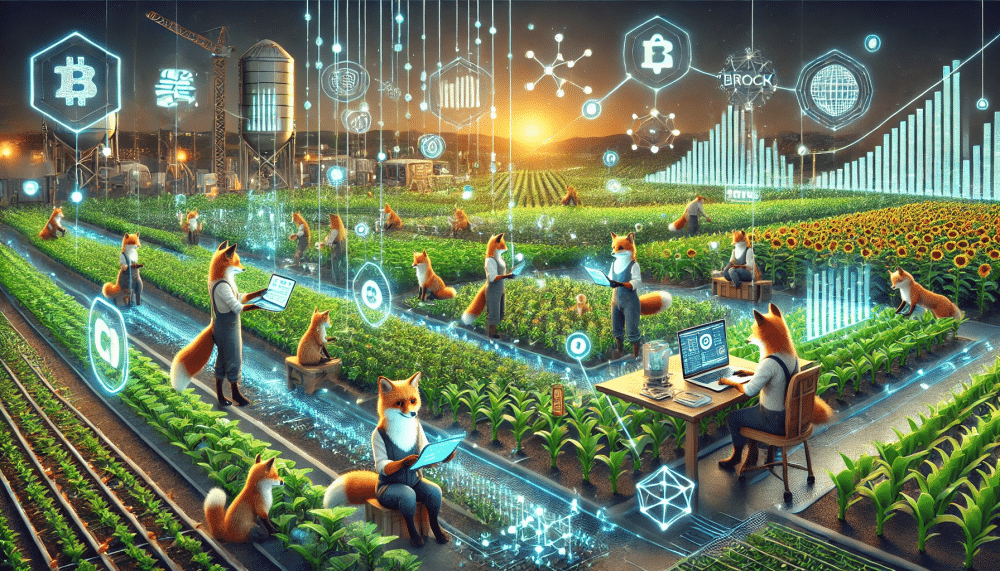

Blockchain technology is making waves in agriculture, revolutionizing everything from supply chain transparency to lending, insurance, and data-driven decision-making. Discover how Blockchain Innovations In Agriculture are reshaping the farming industry for the better.
Blockchain technology might sound like something straight out of a tech startup’s playbook, but it’s actually making a big splash in agriculture too. Imagine knowing exactly where your food comes from, ensuring farmers get paid fairly, and even helping farmers make better decisions with data-driven insights. That’s what blockchain is bringing to the table literally and figuratively. In this blog post, we’ll dive deep into how blockchain is revolutionizing agriculture in four key areas: supply chain transparency, smart contracts, agricultural lending and insurance, and empowering farmers with data. Let’s get started!
Also look for the blockchain impact in the music industry!
Revolutionizing Supply Chain Transparency
When you think about the journey your food takes from the farm to your table, it’s kind of like a complex relay race. Each handoff whether it’s from the farmer to the distributor, the distributor to the retailer, or the retailer to you carries with it potential pitfalls like fraud, inefficiency, and even safety risks. That’s where blockchain steps in, revolutionizing the entire process by making it all transparent and traceable.
How Blockchain Ensures Traceability from Farm to Table
Imagine scanning a QR code on your package of strawberries and instantly seeing where they were grown, who harvested them, and even when they were picked. That’s traceability, and blockchain makes it possible by recording every transaction in an immutable digital ledger. This means that each step your food takes is permanently documented, and no one can tamper with the data. So, whether it’s the farm, the transportation process, or the grocery store, blockchain ensures that every piece of information is accounted for.
Benefits of Transparent Supply Chains for Consumers
As consumers, we’re becoming more and more conscious of where our food comes from. Is it organic? Is it fair trade? Blockchain helps answer these questions with complete transparency. By offering consumers detailed information about the origin and journey of their food, blockchain builds trust and allows us to make more informed choices. Plus, if there’s ever a recall or safety issue, pinpointing the problem source is a breeze, minimizing health risks.
Case Studies of Blockchain Implementation in Agricultural Supply Chains
One fascinating example comes from Provenance, a UK-based company using blockchain to track tuna from Indonesian waters to supermarket shelves. By documenting every stage of the supply chain on a blockchain, Provenance ensures that the tuna is ethically sourced, and consumers can verify its journey with a simple scan. Another case is IBM’s Food Trust, which collaborates with big players like Walmart to enhance food safety by tracking everything from leafy greens to dairy products.
Addressing Fraud and Ensuring Food Safety through Blockchain
Food fraud is a real issue think mislabeled products, false organic claims, or even substitution with inferior ingredients. Blockchain tackles this head-on by making the supply chain tamper-proof. If every transaction and every movement of goods is recorded on a blockchain, there’s no room for fraud. In addition to fighting fraud, this technology is also a game-changer for food safety. In the event of a contamination outbreak, blockchain allows for the rapid tracing of the affected products, ensuring that they can be pulled from shelves before they cause harm.
Learn more deeply about Supply Cahins.
Smart Contracts and Efficient Transactions
The idea of a “smart contract” might seem like something out of a sci-fi movie, but in reality, it’s a simple yet powerful tool for automating agreements. In the world of agriculture, where multiple parties are constantly interacting think farmers, distributors, and retailers smart contracts can streamline transactions, reduce costs, and minimize fraud.
Introduction to Smart Contracts and Their Relevance in Agriculture
So, what exactly is a smart contract? In simple terms, it’s a self-executing contract where the terms of the agreement are written directly into code. Once the conditions are met, the contract automatically enforces the terms. For instance, if a farmer delivers a certain amount of produce to a distributor, the payment is automatically released without the need for a middleman. This is a big deal in agriculture, where trust and timely payments are crucial.
Streamlining Transactions Between Farmers, Distributors, and Retailers
In traditional agricultural transactions, there’s a lot of back-and-forth contracts are negotiated, payments are delayed, and sometimes, disputes arise. Smart contracts eliminate these headaches by automating the entire process. Once the agreed-upon conditions are fulfilled ike the delivery of goods payments are triggered automatically. This not only speeds up the process but also reduces the risk of disputes, as the terms are clear and executed as soon as they are met.
Reducing Costs and Minimizing Fraud in Agricultural Transactions
By removing intermediaries from the equation, smart contracts significantly reduce transaction costs. There’s no need to pay a lawyer to draft a contract or a banker to process a payment—everything is handled by the code. This also minimizes the risk of fraud because the contract is transparent, tamper-proof, and automatically enforced. In other words, it’s hard to cheat the system when the system is built to be foolproof.
Real-World Examples of Smart Contracts in Agricultural Practices
One notable example is the use of smart contracts by AgriDigital, an Australian startup that developed a blockchain-based platform for grain growers. Through their platform, farmers can automatically receive payments as soon as the grain is delivered and verified, eliminating the usual delays and uncertainties associated with traditional contracts. Another example is IBM’s work with the IBM Food Trust network, which not only tracks food but also uses smart contracts to automate payments once the produce reaches its destination, ensuring farmers are paid fairly and promptly.
Also look the integration between ai and blockchain.
Enhancing Agricultural Lending and Insurance
When it comes to farming, access to capital and insurance can make or break an operation. Unfortunately, traditional lending and insurance models are often riddled with inefficiencies, lack of transparency, and high costs. Enter blockchain a technology poised to revolutionize agricultural lending and insurance by providing immutable records and facilitating innovative models like microloans and peer-to-peer lending.
Challenges in Traditional Agricultural Lending and Insurance
Traditional lending and insurance processes in agriculture can be a nightmare. Farmers often face long approval times, high-interest rates, and mountains of paperwork. And when it comes to insurance, the situation isn’t much better claims can take forever to process, and the coverage might not fully address the farmer’s needs. These challenges often leave farmers vulnerable, especially smallholders who might not have access to traditional financial services.
How Blockchain Can Provide Immutable Records for Better Lending and Insurance Decisions
Blockchain’s ability to create an immutable ledger of transactions and records can be a game-changer for lending and insurance. For lenders, blockchain provides a transparent and tamper-proof record of a farmer’s financial history, crop yields, and even weather conditions. This allows for more accurate risk assessments and can lead to better lending terms. For insurance providers, blockchain ensures that all data related to a claim is accurate and verifiable, speeding up the claims process and reducing the potential for fraud.
Microloans and Peer-to-Peer Lending Through Blockchain
Blockchain is also enabling new financial models like microloans and peer-to-peer lending. With blockchain, farmers can access loans directly from investors, bypassing traditional banks altogether. Smart contracts can be used to automate the loan process, ensuring that payments are made on time and that the terms are enforced without needing a middleman. This is particularly beneficial for small farmers in developing countries, who might not have access to traditional banking services but can now secure the capital they need through blockchain-based platforms.
Insurance Claims Processing and Risk Management with Blockchain Technology
Insurance claims in agriculture are often complicated by the sheer number of variables weather conditions, crop yields, market prices, etc. Blockchain simplifies this by providing a transparent and immutable record of all relevant data. In the event of a claim, the insurer can quickly verify the facts and process the claim more efficiently. This reduces the time it takes for farmers to receive their payouts, which is crucial in times of crisis. Furthermore, blockchain can help insurers better manage risk by providing real-time data on a wide range of factors, allowing for more accurate pricing and coverage options.
Empowering Farmers with Data and Analytics
Farming isn’t just about getting your hands dirty anymore it’s also about data. Today, the most successful farmers are those who can leverage data to make better decisions, improve yields, and practice sustainable agriculture. Blockchain plays a crucial role here by ensuring the accuracy and availability of data, enabling farmers to make the most of the information at their fingertips.
Leveraging Blockchain for Accurate and Real-Time Data Collection
Data is only as good as its accuracy, and in farming, bad data can lead to disastrous outcomes. Blockchain helps by providing a secure and immutable platform for data collection. Whether it’s soil moisture levels, weather conditions, or market prices, blockchain ensures that the data is accurate, up-to-date, and available in real-time. This allows farmers to make informed decisions quickly, which is crucial in an industry where timing can make all the difference.
How Data Analytics Can Drive Better Decision-Making in Farming
Once the data is collected, the next step is making sense of it all. This is where data analytics comes into play. By analyzing data on everything from crop yields to market trends, farmers can identify patterns and make better decisions. For instance, data might reveal that a particular crop performs better under specific conditions, allowing the farmer to optimize planting and harvesting times. Blockchain ensures that the data used in these analyses is accurate and reliable, leading to better outcomes.
Blockchain’s Role in Precision Agriculture and Sustainable Practices
Precision agriculture is all about using data to manage farming practices more accurately and efficiently. Blockchain enhances this by providing a reliable source of data that farmers can use to optimize everything from irrigation to pesticide application. This not only boosts yields but also promotes sustainability by reducing the use of resources like water and chemicals. With blockchain, farmers can also track and verify their sustainable practices, providing proof to consumers who are increasingly concerned about the environmental impact of their food.
Case Studies on Data-Driven Farming Improvements Through Blockchain
One compelling case study comes from AgriLedger, a blockchain-based platform that helps farmers in developing countries track and sell their produce. By providing accurate and real-time data on everything from market prices to crop yields, AgriLedger empowers farmers to make better decisions, leading to improved incomes and livelihoods. Another example is the use of blockchain by startups like GrainChain, which offers farmers data-driven insights on their crops, helping them optimize their practices and increase yields.
Blockchain is more than just a buzzword it’s a powerful tool that’s transforming agriculture in ways we never thought possible. From ensuring supply chain transparency to streamlining transactions with smart contracts, enhancing lending and insurance, and empowering farmers with data, blockchain is revolutionizing the way we grow, distribute, and consume food. As this technology continues to evolve, it’s exciting to think about the possibilities that lie ahead for the agricultural industry and, ultimately, for all of us as consumers.
Want to dive deeper into blockchain technology while benefiting personally?
By signing up with Ledger, you can securely store your cryptocurrency, giving you full control over your assets with advanced security. Plus, you’ll be supporting us while enjoying extra peace of mind!
Additionally, when you join Bybit through my referral link, you’ll gain access to up to $30,050 in Welcome Rewards. This includes a $50 sign-up bonus, VIP trading perks, and an exclusive “Supporter” role in my Discord server. Don’t miss out on these fantastic offers — let’s level up together!
“Guess what? When you click and buy through our links, you’re doing more than improving your journey. You’re supporting us in a way that doesn’t cost you extra but helps us keep bringing you the best blockchain posts. It’s a pump for both of us!”
-0xteumessia