

Introduction to Crypto Escrow
Crypto Escrow Services Explained is one of the most relevant topics for anyone involved in blockchain transactions today. In the world of digital currencies, anonymity and decentralization are common, but trust between buyers and sellers is not guaranteed. Without a safety mechanism, one party could easily fail to meet obligations, leaving the other at a loss. Escrow provides the structure that makes secure crypto transactions possible.
A crypto escrow service acts as a neutral third party that holds digital assets until conditions are satisfied. By locking funds in a safe environment, the system ensures both sides of a deal can proceed confidently. This is why Crypto Escrow Services Explained is more than just a technical definition—it’s a foundation for modern digital commerce.
How Crypto Escrow Works
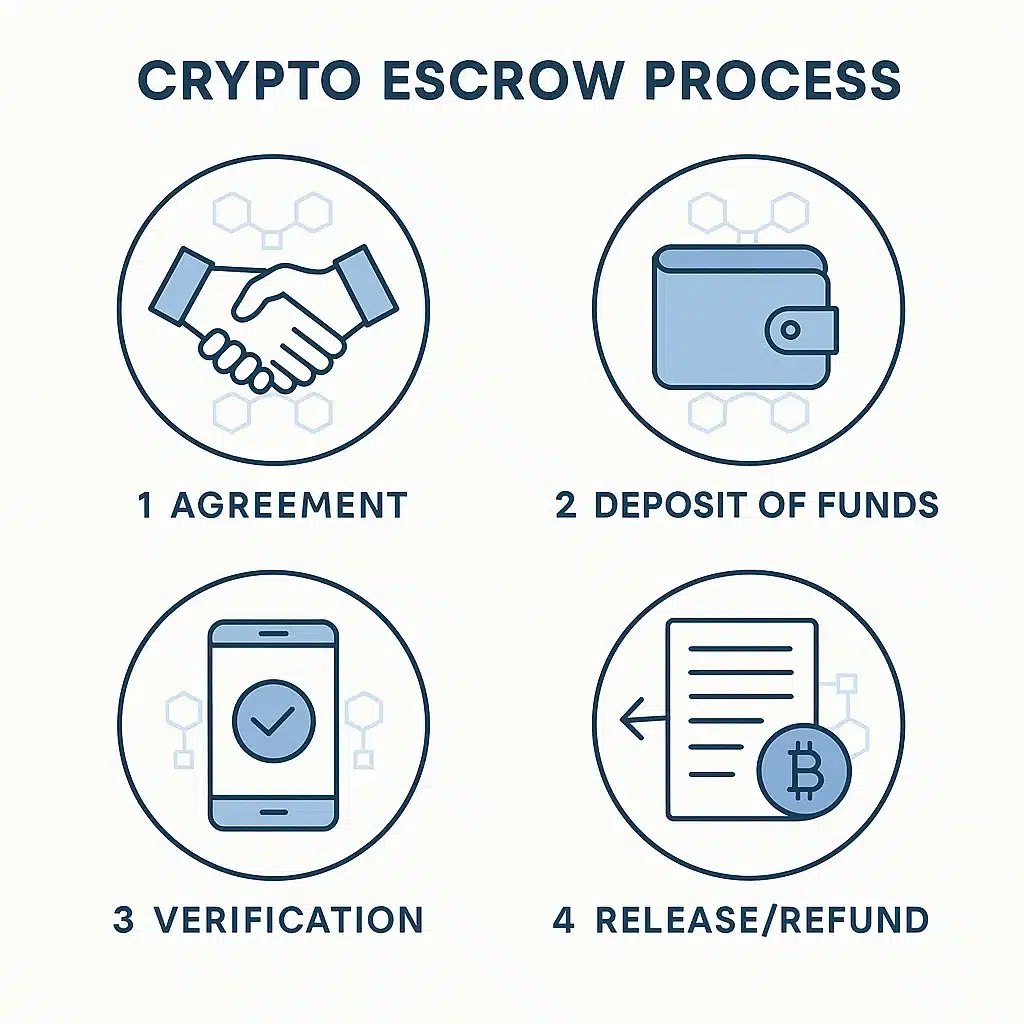
When discussing how crypto escrow works, it’s essential to look at the step-by-step process:
- The buyer and seller agree on transaction terms.
- The buyer deposits funds into escrow (custodial wallet, decentralized escrow wallet, or smart contract escrow system).
- The escrow verifies delivery or fulfillment of agreed conditions.
- If successful, funds are released to the seller. If not, they are returned to the buyer.
This workflow guarantees fairness, especially in P2P escrow crypto transactions where strangers trade goods or services without prior trust. By understanding Crypto Escrow Services Explained in this practical way, it becomes clear why so many platforms integrate it into their business models.
Types of Crypto Escrow Services
Traditional Custodial Escrow
A common model in the world of crypto escrow services is custodial escrow. Here, a trusted company holds the funds until conditions are met.
Pros: Simple, familiar, includes dispute resolution.
Cons: Centralized, requires trust, exposed to hacks or regulations.
Multisignature Escrow
Another model highlighted in Crypto Escrow Services Explained is multisignature escrow. In this setup, multiple keys are needed to release funds, usually 2-of-3 between buyer, seller, and escrow.
Pros: Decentralized trust, secure against single-party misconduct.
Cons: More complex, requires coordination.
Smart Contract Escrow
Perhaps the most important innovation in crypto escrow services is the smart contract escrow system. Terms are encoded directly into blockchain code, and funds are released automatically when criteria are met.
Pros: Transparent, efficient, tamper-proof.
Cons: Code vulnerabilities, reliance on oracles for real-world verification.
This type of automation is key to the future of secure crypto transactions.
Benefits of Crypto Escrow
The advantages of escrow are why so many search for the best crypto escrow platforms today. Some of the main benefits include:
- Fraud prevention: neither party can cheat undetected.
- Transparency: on-chain transactions are visible to all participants.
- Flexibility: works for large, small, and complex deals.
- Risk reduction: balances the interests of buyer and seller.
In short, Crypto Escrow Services Explained shows how this mechanism builds trust in otherwise risky environments.
Risks and Limitations
Even though crypto escrow services are powerful, they are not flawless.
- Centralization risk in custodial systems.
- Smart contract bugs that may cause permanent fund loss.
- Oracle issues for off-chain data.
- Privacy challenges on public blockchains.
- Fee and delay concerns, especially with gas-heavy networks.
Anyone researching Crypto Escrow Services Explained must be aware of these risks to make informed choices.
Supporting independent research and development in crypto security is essential—if you want to contribute, check out our donation page.
Use Cases
Escrow is especially useful in situations where direct trust is lacking:
- Peer-to-peer marketplaces for goods and services.
- Cross-border and cross-chain transactions.
- Real estate paid in cryptocurrency.
- Freelance and remote work contracts.
- Digital asset sales, including NFTs and licenses.
For many, P2P escrow crypto has become a preferred method to engage in global commerce.
Best Practices for Escrow Safety
If you want to apply what Crypto Escrow Services Explained teaches, best practices are critical:
- Define clear terms upfront.
- Choose reputable providers or audited smart contracts.
- Use decentralized escrow wallets or multisig setups.
- Ensure dispute resolution mechanisms exist.
- Factor in fees, gas costs, and timing.
Following these practices maximizes the security of secure crypto transactions.
Want more insights like this? Join our free BlockchainDudes Newsletter and never miss strategies for safer crypto.
Best Crypto Escrow Platforms
Choosing the best crypto escrow platforms depends on your priorities. Custodial platforms offer human support and arbitration, while decentralized ones emphasize transparency and automation. Some platforms now combine both, offering hybrid models.
Users seeking safe solutions should test small transactions, review audits, and confirm compliance before committing large amounts. By applying insights from Crypto Escrow Services Explained, you can identify the most suitable platform for your needs.
If you’re looking for ways to grow your portfolio safely while applying these practices, explore our Earn page.
Future Trends
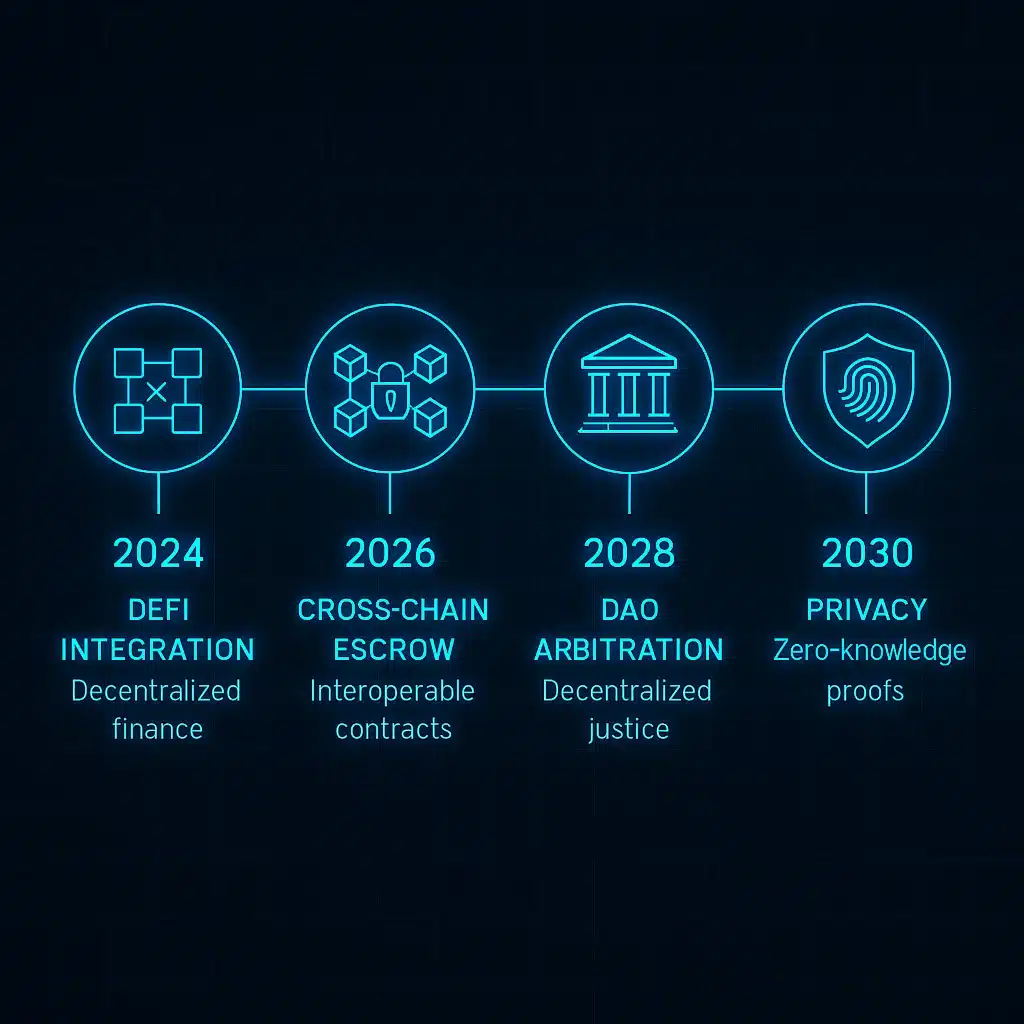
The evolution of crypto escrow services is linked to broader blockchain trends. Future developments include:
- DeFi protocols embedding escrow-like functions.
- Cross-chain swaps enabling direct transfers without intermediaries.
- DAO-based dispute resolution systems.
- Zero-knowledge proofs enhancing privacy.
- Automated AI-driven arbitration.
Each of these points reinforces why Crypto Escrow Services Explained is a topic of growing importance.
Conclusion
In conclusion, Crypto Escrow Services Explained is not just about defining escrow—it’s about showing how it transforms risky transactions into reliable ones. From traditional custodial setups to smart contract escrow systems and decentralized escrow wallets, these services empower both buyers and sellers.
Escrow is now a core part of secure crypto transactions, essential in P2P escrow crypto, real estate, freelancing, and digital asset exchanges. While there are risks, best practices and strong platforms make escrow one of the safest methods available in the blockchain economy.
As blockchain evolves, the role of escrow will expand, and those who understand Crypto Escrow Services Explained will be best positioned to transact confidently in the digital future.
What happens if one party disagrees about whether the terms were met?
That depends on the escrow model. With traditional escrow, there’s usually a human arbitrator or customer support. With smart contract escrow, you need predefined conditions that are difficult to interpret differently. If terms are vague or involve off‑chain facts, disputes can be harder to resolve.
Is smart contract escrow always safe?
No. Smart contracts are immutable, so bugs or vulnerabilities can be critical. Also, if off‑chain verification is needed (delivery, quality, etc.), you need trusted oracles. Audits help, but they’re not perfect.
Can escrow protect against crypto price volatility?
Not directly. Escrow protects contract performance, not market risk. If the value of crypto changes drastically between deposit and release, one party may gain or lose in fiat terms, but the escrow service doesn’t adjust for that unless it’s built into the agreement.
Guess what? When you click and buy via our links, you’re not just enhancing your experience—you’re also supporting our content creation for free, so we can keep sharing useful blockchain insights. It’s a pump for both of us!
— Black