
Introduction to Crypto Escrow
A crypto escrow holds cryptocurrency pending agreed release or refund conditions. For a purchase paid in crypto, it can reduce the risk of paying before delivery or delivering without payment. It does not guarantee an honest counterparty or recovery of funds.
Who controls the funds matters: a custodial service controls the keys, a multisignature arrangement requires specified signers, and a smart contract enforces programmed rules. Dispute resolution is a separate feature that must be agreed before funding.
How Crypto Escrow Works
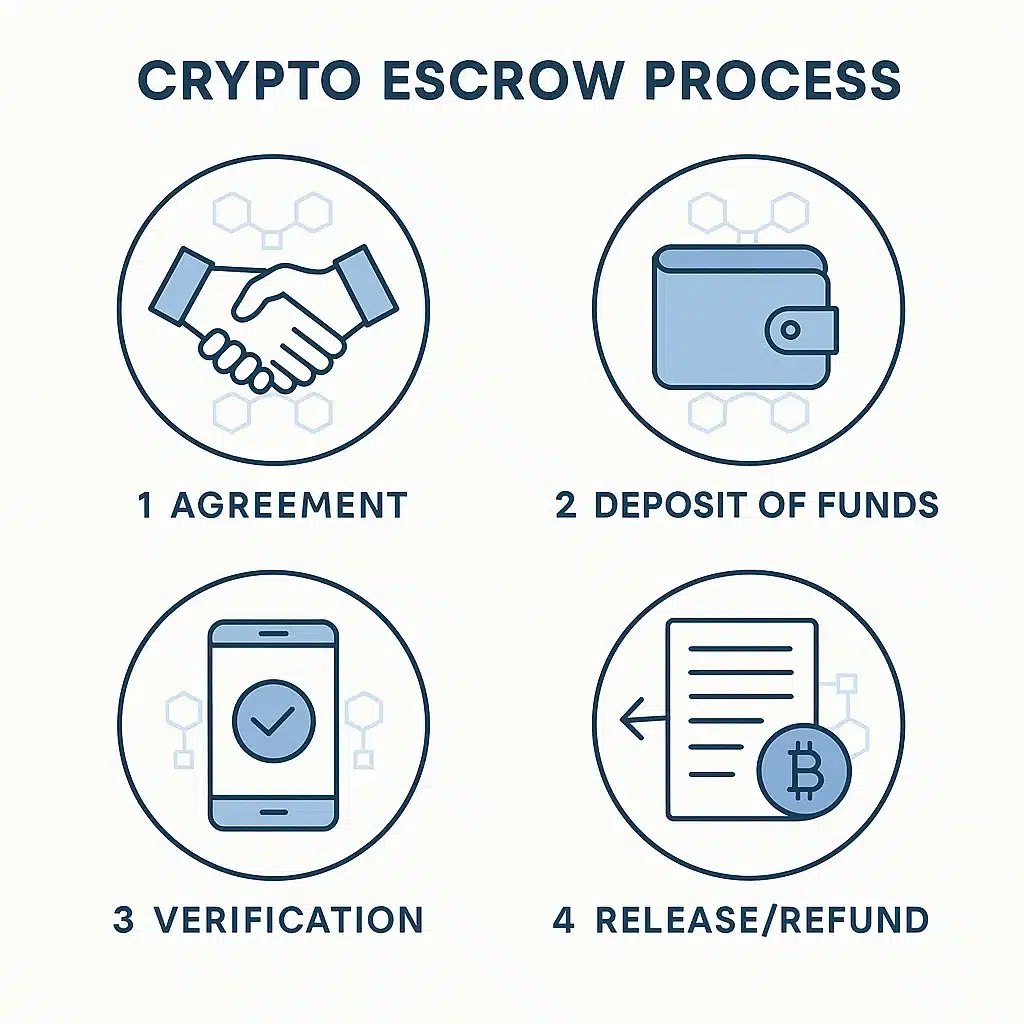
For a purchase paid in cryptocurrency, the process should establish four things:
- Agree on the asset, network, amount, delivery deadline, acceptance criteria, fees and dispute procedure.
- The buyer funds the agreed custodial wallet, multisignature address or smart contract. The seller checks the deposit before delivery.
- Specify who confirms delivery: the buyer, an agreed reviewer, or a data source the contract accepts. Blockchain records alone cannot establish the quality of off-chain work.
- Release or refund requires the agreed approval, signatures or contract transaction. Set deadlines and an escalation route for disagreement or silence; neither outcome is universal or automatic.
Hypothetical example: a buyer orders a logo for 0.05 ETH, excluding agreed fees. The parties choose a custodial escrow, a seven-day delivery deadline, specified file formats and a two-day review period. The service must support their agreed refund and dispute rules. The buyer deposits the funds; the seller delivers; the buyer accepts; the service releases payment. If both agree to cancel, the service refunds according to those rules. If delivery or quality is disputed, the parties submit the brief, files and messages to the designated reviewer. Funds remain held pending resolution under the service’s terms. These deadlines are example terms, not industry standards.
Types of Crypto Escrow Services
Traditional Custodial Escrow
In custodial escrow, a provider controls the private keys and administers release and refunds under its terms. Holding assets does not itself establish neutral arbitration: check who reviews disputes, what evidence is accepted and whether decisions can be challenged.
Pros: a managed process and support, where offered.
Cons: dependence on the provider, withdrawal restrictions, hacking and insolvency risk. Investor.gov explains third-party custody risks.
Multisignature Escrow
A 2-of-3 arrangement can give one key each to buyer, seller and an arbitrator. Buyer and seller can jointly authorize payment or refund; in a dispute, the arbitrator can sign with one party. The arbitrator alone cannot move funds in this setup.
Pros: no single key authorizes spending.
Cons: collusion between two signers, compromised keys or unavailable signers can undermine protection. Multisig defines signing authority, not how evidence is judged. See the Bitcoin developer guide’s escrow example.
Smart Contract Escrow
Smart contract escrow holds funds under programmed release and refund rules. Execution normally requires a transaction; a deadline alone does not send one. For delivery or quality outside the blockchain, the design needs an agreed confirmation or oracle input.
Pros: inspectable rules and on-chain records on public networks.
Cons: coding errors and dependence on any oracle, administrator or arbitrator. Check upgrade and withdrawal powers. Smart contract use does not by itself mean full decentralization. Ethereum’s documentation explains execution and its limits.
Benefits of Crypto Escrow
The advantages of escrow are why so many search for the best crypto escrow platforms today. Some of the main benefits include:
- Fraud reduction: conditional payment can limit some scams, but cannot eliminate deception or collusion.
- Transparency: on-chain transactions are visible to all participants.
- Flexibility: works for large, small, and complex deals.
- Risk reduction: balances the interests of buyer and seller.
In short, Crypto Escrow Services Explained shows how this mechanism builds trust in otherwise risky environments.
Risks and Limitations
Even though crypto escrow services are powerful, they are not flawless.
- Custody and intermediaries: a provider may restrict withdrawals, be hacked or fail; an unavailable or biased arbitrator can delay or distort a decision.
- Contract and key failures: bugs, unsafe upgrade powers or compromised signing keys can cause theft or locked funds.
- Fraud and external evidence: fake escrow sites, forged delivery evidence and incorrect oracle inputs can lead to loss or wrongful release.
- Privacy challenges on public blockchains.
- Fee and delay concerns, especially with gas-heavy networks.
An audit can help identify defects; it is not a guarantee. Check that its scope and version match the deployed contract. Price volatility also remains during escrow. Ethereum’s security guidance describes audit limitations.
Supporting independent research and development in crypto security is essential—if you want to contribute, check out our donation page.
Use Cases
Escrow is especially useful in situations where direct trust is lacking:
- Peer-to-peer marketplaces for goods and services.
- Cross-border and cross-chain transactions.
- Real estate paid in cryptocurrency.
- Freelance and remote work contracts.
- Digital asset sales, including NFTs and licenses.
For many, P2P escrow crypto has become a preferred method to engage in global commerce.
Best Practices for Escrow Safety
If you want to apply what Crypto Escrow Services Explained teaches, best practices are critical:
- Define clear terms upfront.
- Choose reputable providers or audited smart contracts.
- Choose the custody and signing model you understand; verify who can release, refund, upgrade or freeze funds.
- Read the dispute rules, evidence requirements, filing deadlines, reviewer’s powers and costs before depositing.
- Factor in fees, gas costs, and timing.
Verify the genuine service URL and deposit address, keep transaction records, and never share your seed phrase or private keys with an escrow agent.
Want more insights like this? Join our free BlockchainDudes Newsletter and never miss strategies for safer crypto.
Best Crypto Escrow Platforms
This guide does not rank providers. Compare who controls funds, supported assets and networks, withdrawal and refund rules, dispute authority, fees and any contract audit. Customer support, mediation and arbitration are different services; confirm which is actually offered.
Users seeking safe solutions should test small transactions, review audits, and confirm compliance before committing large amounts. By applying insights from Crypto Escrow Services Explained, you can identify the most suitable platform for your needs.
For separate articles about crypto earning activities, explore our Earn page. Escrow does not make investments safe.
Future Trends
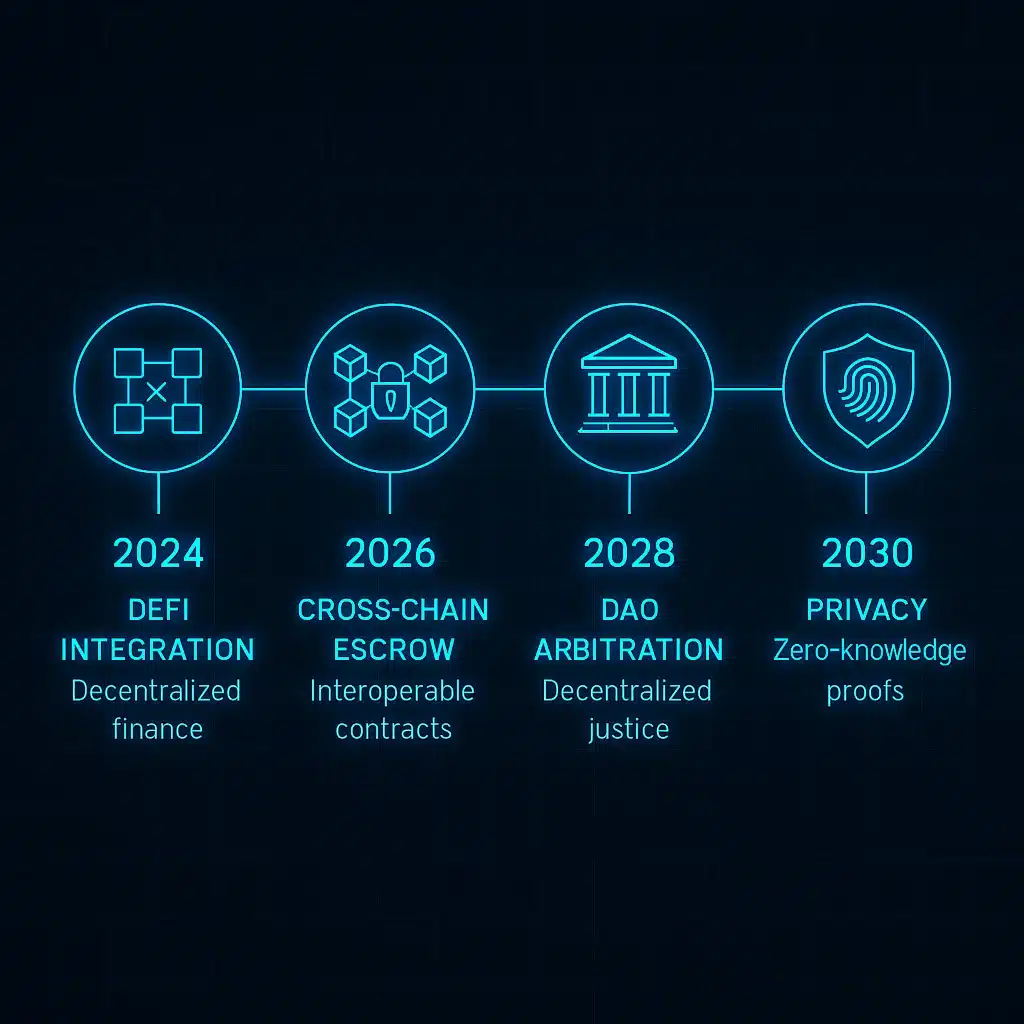
Areas being explored include the following; availability and safeguards must be verified for each implementation:
- DeFi protocols embedding escrow-like functions.
- Cross-chain swaps enabling direct transfers without intermediaries.
- DAO-based dispute resolution systems.
- Zero-knowledge proofs enhancing privacy.
- Automated AI-driven arbitration.
Each of these points reinforces why Crypto Escrow Services Explained is a topic of growing importance.
Conclusion
Escrow can reduce payment and delivery risks when its rules fit the transaction. The practical questions are who controls funds, who confirms completion and who can resolve disagreement.
For P2P purchases, freelance work and digital asset sales, check release, refund and dispute paths before funding. Protection depends on the implementation and counterparties, not the escrow label.
What happens if one party disagrees about whether the terms were met?
That depends on the escrow model. With traditional escrow, there’s usually a human arbitrator or customer support. With smart contract escrow, you need predefined conditions that are difficult to interpret differently. If terms are vague or involve off‑chain facts, disputes can be harder to resolve.
Is smart contract escrow always safe?
No. Smart contracts are immutable, so bugs or vulnerabilities can be critical. Also, if off‑chain verification is needed (delivery, quality, etc.), you need trusted oracles. Audits help, but they’re not perfect.
Can escrow protect against crypto price volatility?
Not directly. Escrow protects contract performance, not market risk. If the value of crypto changes drastically between deposit and release, one party may gain or lose in fiat terms, but the escrow service doesn’t adjust for that unless it’s built into the agreement.
Guess what? When you click and buy via our links, you’re not just enhancing your experience—you’re also supporting our content creation for free, so we can keep sharing useful blockchain insights. It’s a pump for both of us!
— Black