
Introduction
In the constantly evolving world of cryptocurrencies, Crypto Mining Pools have become an essential part of the Proof-of-Work (PoW) ecosystem. While solo mining once dominated the early days of Bitcoin, today the majority of miners join organized pools to increase their chances of earning consistent rewards. Understanding how mining pools function, the differences between mining pool vs solo mining, and the risks and benefits they bring is fundamental for anyone looking to enter the mining space. This guide provides crypto mining explained in detail, focusing on structure, payouts, decentralization, and how to choose the right pool.
What Are Crypto Mining Pools?
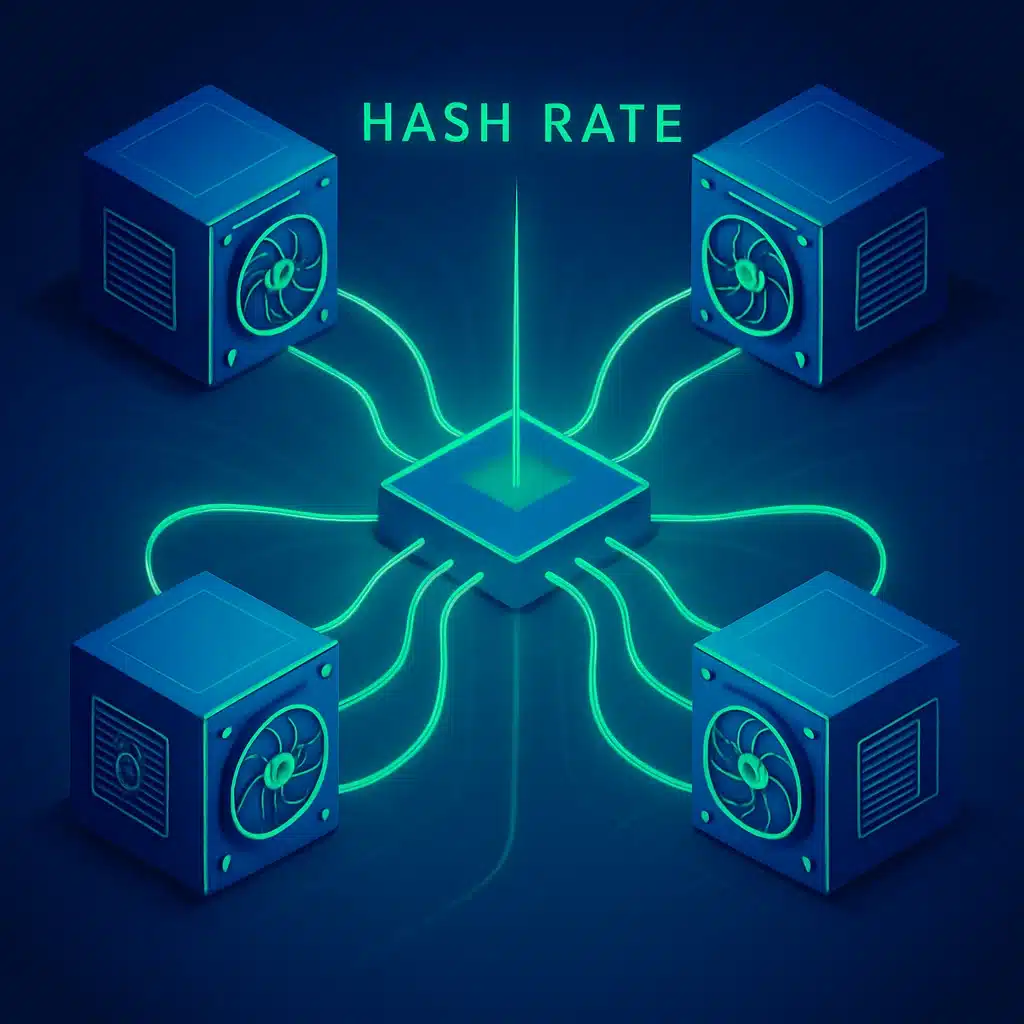
A crypto mining pool is a network of miners who combine their computing power, known as hash rate, to work together on mining blocks in a blockchain like Bitcoin. Instead of mining independently, where success depends entirely on one’s hardware and luck, pool members share the workload and split rewards based on contribution.
When a pool successfully mines a block, the rewards are distributed proportionally according to each miner’s submitted shares. This model creates stability, making mining pool rewards more predictable and accessible for smaller miners who cannot compete with large industrial operations.
This collective approach transformed the mining landscape, making bitcoin mining pool structure one of the most important aspects of the cryptocurrency ecosystem.
Mining Pool vs Solo Mining
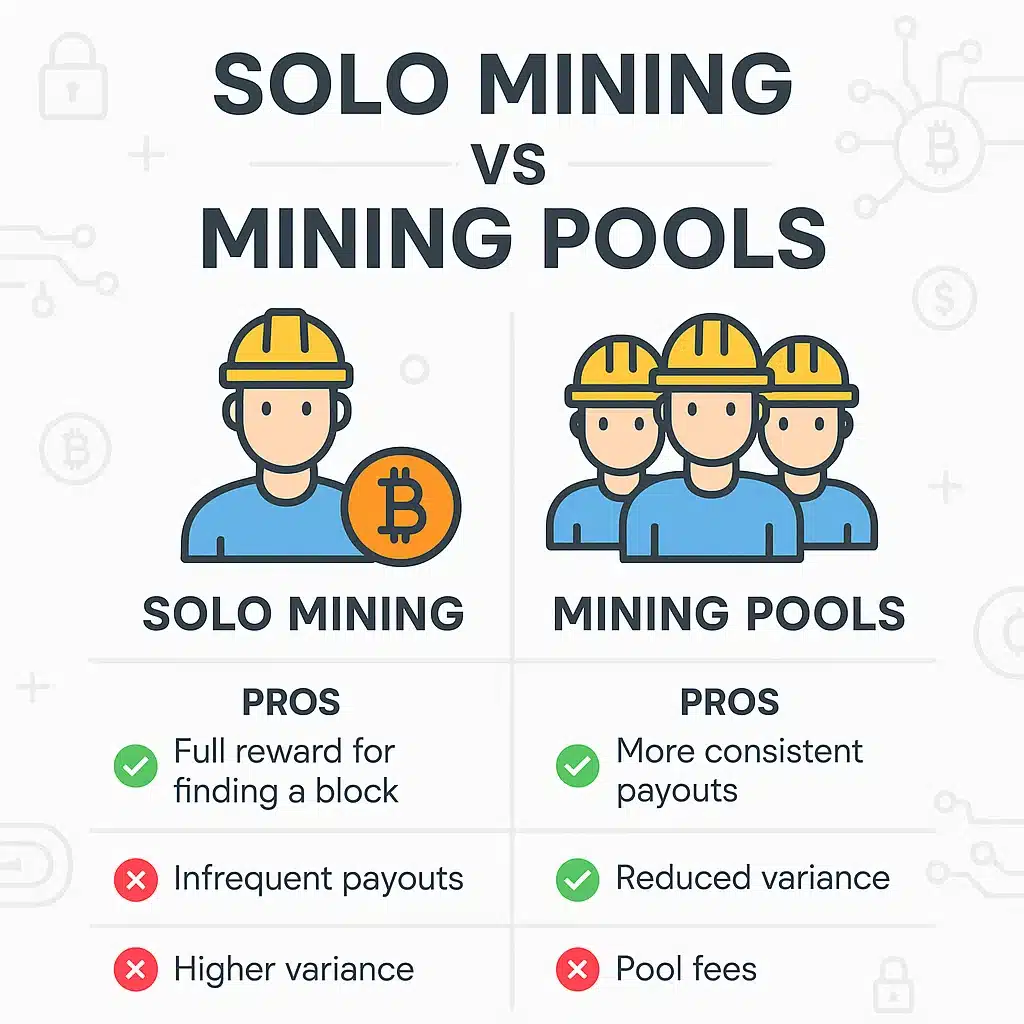
Understanding mining pool vs solo mining is crucial for evaluating which approach fits your goals.
Solo Mining
In solo mining, the miner uses their hardware to attempt to find blocks without external help. If successful, they keep the entire block reward. However, this is increasingly impractical for individuals because the computational difficulty of block discovery has risen dramatically. Solo mining requires enormous investments in ASIC hardware and access to very cheap electricity. Even then, success may take months or years.
Pool Mining
In contrast, pool mining allows individuals to contribute whatever computing power they have and receive smaller, but more frequent, payouts. While miners must share rewards and pay fees to the pool operator, the stability and predictability of income make it far more viable for most participants.
For newcomers, the choice is clear: Crypto Mining Pools offer a practical way to earn without requiring industrial-scale infrastructure.
For those who want to explore alternative opportunities to grow their holdings beyond mining, check out our Earn section for additional crypto income strategies.
How Crypto Mining Pools Work
Hash Rate and Shares
When miners connect their devices—ASICs, GPUs, or CPUs—to the pool, they receive smaller tasks derived from the proof-of-workalgorithm. Instead of solving entire blocks alone, they submit “shares,” partial solutions that prove their contribution.
The more valid shares a miner submits, the larger their cut of the mining pool rewards when the pool eventually mines a block. This system ensures fairness and reflects each participant’s share of work.
Pool Reward Schemes
Different payout models exist in Crypto Mining Pools. Some of the most popular include:
- PPS (Pay-Per-Share): Provides a fixed payment for every share submitted, regardless of whether a block is found. Earnings are stable but pool fees are higher.
- PPLNS (Pay-Per-Last-N-Shares): Rewards miners based on their contribution over the last N shares whenever a block is found. Encourages loyalty but involves higher variance.
- FPPS and PPS+: Advanced models that include both block rewards and transaction fees, offering a fairer distribution in high-fee environments.
These structures define the bitcoin mining pool structure and determine a miner’s potential income stream.
Why Join a Mining Pool? Benefits and Trade-Offs
Benefits
- Reduced Variance: Frequent small payouts instead of rare large ones.
- Lower Entry Costs: Anyone can contribute, even with minimal hardware.
- Shared Resources: Pools often provide monitoring tools, dashboards, and firmware support.
- Accessibility: Makes crypto mining open to more people.
Drawbacks
- Fees: Pools take a cut of rewards, usually 1–3%.
- Centralization Risks: If too few pools dominate hash power, the network becomes vulnerable.
- Trust Issues: Miners must rely on operators for fair payouts.
- Latency: Poor connection to servers can lead to stale shares and reduced earnings.
While the trade-offs are real, for most miners, joining Crypto Mining Pools is the only realistic way to participate profitably.
Security and Risks in Mining Pools
The importance of security in Crypto Mining Pools cannot be overstated.
- 51% Attack Risk: If one pool or a coalition controls more than half of the network’s hash rate, they could manipulate transaction confirmations or double-spend. This makes mining pool decentralization critical to blockchain security.
- Block Template Control: Pools decide which transactions are included in blocks, affecting fee markets. Decentralized pools like OCEAN are experimenting with giving miners more control.
- Server Vulnerability: Pools operate global infrastructure that may be targeted by hackers or disrupted by DDoS attacks.
- Regulatory Pressures: Mining pools often face legal scrutiny over energy consumption, taxation, or environmental regulations.
Security and decentralization remain among the biggest concerns in today’s mining environment.
Major Crypto Mining Pools in 2025
As of 2025, the mining landscape is highly concentrated. A handful of major pools dominate Bitcoin’s hash rate:
- Foundry USA Pool – Consistently above 30% of Bitcoin’s hash power.
- AntPool – Operated by Bitmain, one of the oldest and most powerful pools.
- ViaBTC, F2Pool, Binance Pool – Popular choices with global infrastructure.
- OCEAN Pool – A newer initiative focused on transparency and mining pool decentralization.
These pools demonstrate both the strength and the risks of the current ecosystem. While they ensure high uptime and stability, the dominance of a few operators raises questions about the future of decentralization.
How to Join a Mining Pool
For beginners, learning how to join a mining pool is straightforward:
- Purchase Hardware: ASIC miners are recommended for Bitcoin; GPUs for other PoW coins.
- Choose a Pool: Research based on fees, payout model, reputation, and server proximity.
- Configure Software: Enter the pool’s URL, port, and your worker credentials.
- Start Mining: Your machine submits shares, and you begin earning based on your contribution.
- Withdraw Rewards: Once you reach the payout threshold, the pool sends earnings to your wallet.
Following these steps, miners can easily start contributing to the network while earning rewards consistently.
To support educational projects and strengthen the ecosystem, miners can also contribute through our Donation page.
Economic and Environmental Impacts
Crypto Mining Pools are more than just technical collectives; they have significant economic and environmental effects.
- Network Security: High hash rates make PoW chains secure but centralization weakens resilience.
- Transaction Fees: As block rewards halve every four years, fees grow more important in determining miner profitability.
- Energy Usage: Mining consumes massive energy. Some pools are adopting renewable sources to counter environmental concerns.
- Global Distribution: Different regions offer varying electricity costs, regulations, and climates, shifting where miners operate.
Understanding these impacts helps put crypto mining explained into a broader context beyond just individual rewards.
Future Trends of Mining Pools
The future of Crypto Mining Pools is shaped by several key trends:
- Decentralization Efforts: Pools like OCEAN experiment with empowering miners directly.
- Greater Role of Fees: As Bitcoin rewards shrink, transaction fees will dominate mining pool rewards.
- Regulatory Oversight: Governments are increasingly scrutinizing mining due to its energy footprint.
- Geographic Shifts: Miners relocate to regions with cheap renewable energy and supportive regulation.
These dynamics will redefine both the profitability and security of the mining ecosystem.
Practical Example: A Miner’s Journey
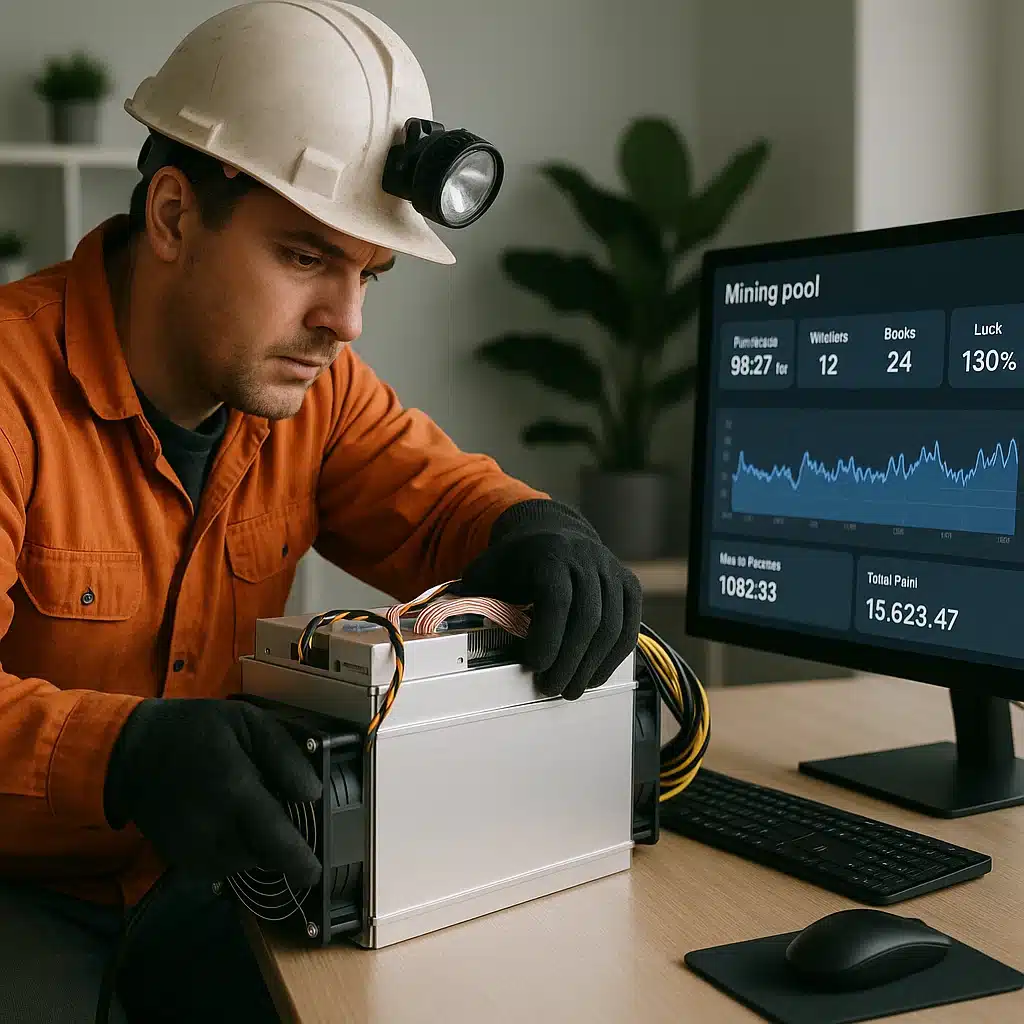
To illustrate, consider a new miner joining a Bitcoin pool. The miner buys an ASIC, sets it up with software like CGMiner, and configures it with pool credentials. Their machine begins submitting shares to the pool server. Over time, as the pool finds blocks, the miner earns payouts proportional to their contributions. While fees reduce total income, the miner receives steady returns, avoiding the uncertainty of solo mining. This simple walkthrough demonstrates how accessible mining has become thanks to Crypto Mining Pools.
Conclusion
Crypto Mining Pools play a central role in the cryptocurrency ecosystem, making mining accessible, reducing variance in income, and strengthening blockchain security. However, they come with trade-offs: fees, trust issues, centralization risks, and environmental concerns. For anyone deciding between mining pool vs solo mining, the pool option offers far more predictable and sustainable participation.
Before joining, evaluate each pool’s fee structure, reward model, payout frequency, and reputation. Miners must also consider security, mining pool decentralization, and global regulatory factors. By doing proper research and understanding how to join a mining pool, participants can make informed decisions that maximize rewards while minimizing risks.
As cryptocurrencies continue to evolve, so too will mining pools. Their future will be defined by how well they adapt to energy challenges, decentralization pressures, and the shift toward fee-dominated income. Ultimately, Crypto Mining Pools remain one of the most effective ways for individuals to take part in the security and growth of blockchain networks.
What is the minimum hardware I need to join a mining pool?
It depends on the cryptocurrency. For many tokens, even modest GPU or ASIC rigs can join, although with low hash rate your rewards will be small. Many pools have low payout thresholds so even small contributions matter.
Are there pools without fees?
Rarely fully free—most pools charge some fee (1‑3% is common) to cover running servers, infrastructure, etc. Some cloud mining services embed the cost in other charges. Also some private or smaller pools may have lower fees but higher variance.
Can I switch pools if I find another one better?
Yes. Many miners switch pools if they find better fees, closer servers, better payout schemes. Just be aware of payout thresholds and possible lock‑in periods (if any) before switching.
Will mining pools remain viable as block rewards decline?
Probably yes, but pools that adapt (share transaction fees fairly, optimize operations, reduce energy costs) will fare better. The rising share of transaction fees in miner income means that pools’ policies about fee distribution will matter more.
Guess what? When you click and buy via our links, you’re not just enhancing your experience you‘re also supporting our content creation for free, so we can keep sharing useful blockchain insights. It‘s a pump for both of us!
— Black