

Introduction
In the ever-evolving landscape of Web3, Crypto Staking Platforms are becoming a cornerstone of passive income strategies for both retail investors and seasoned crypto veterans. Rather than letting your digital assets sit idle in a wallet, staking allows users to earn rewards by helping to validate blockchain transactions and secure the network.
The year 2025 marks a major shift as staking moves beyond niche usage into a mainstream investment tactic. With dozens of platforms offering varying rates, conditions, and levels of flexibility, this detailed guide compares the best crypto staking platforms and helps you determine exactly where to stake Ethereum or other top assets for maximum yield and minimal risk. Today, investors are actively searching for reliable Crypto Staking Platforms to maximize their crypto earnings with minimal risk.
What Is Crypto Staking?
Staking is the process of locking your cryptocurrency in a blockchain protocol to support its operations, including transaction validation and governance. In return, users receive staking rewards, usually in the form of additional tokens.
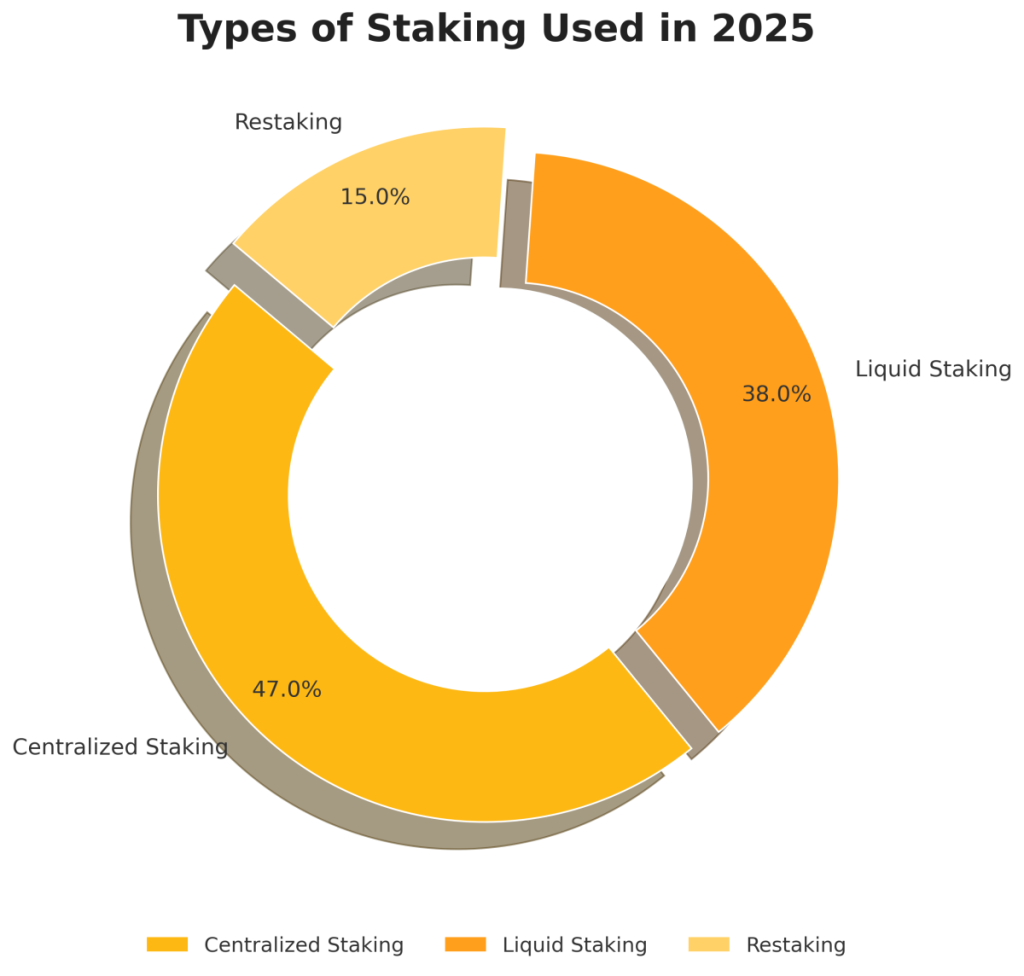
There are two dominant staking models in 2025:
- Centralized staking: Performed through exchanges like Binance, Coinbase, or Bybit, where the platform manages your assets and distributes rewards.
- Decentralized or liquid staking: Involves protocols such as Lido and EigenLayer that issue liquid staking tokens like stETH or stSOL, enabling users to stake while maintaining flexibility and access to DeFi.
Understanding these differences is essential when doing a staking rewards comparison between platforms and networks.
Key Benefits of Using Crypto Staking Platforms
Using dedicated Crypto Staking Platforms brings several advantages:
- Passive income: Earn regular staking rewards without active trading.
- Network contribution: Help secure and validate transactions on Proof of Stake networks.
- Liquidity options: Some platforms offer liquid staking, so your assets remain usable.
- DeFi integration: Use staking derivatives in farming strategies and lending pools.
When paired with proper wallet management and research, staking becomes a powerful strategy. Selecting the most suitable Crypto Staking Platform enhances these benefits and ensures long-term profitability. To explore other proven methods to earn crypto beyond staking—like DeFi yield farming, NFT creation, or blockchain jobs—visit our dedicated page: Earn Crypto.
What to Look For in a Staking Platform
When comparing the top staking platforms 2024, you should evaluate several key criteria:
- Supported assets: Ensure the platform supports Ethereum, Solana, Polkadot, Cardano, and any other tokens you plan to stake.
- Staking rewards: Always check the real Annual Percentage Yield (APY). For example, while Ethereum might offer 6% gross APY, fees can reduce this to 4%.
- Platform fees: These vary widely—some charge 0%, while others like Coinbase can take up to 35%.
- Lock-up duration: Some staking platforms require a lock-up period, while others offer flexible or liquid options.
- Security & audits: Look for platforms with third-party audits, insurance, and slashing protection.
- Regulatory availability: Some platforms restrict access based on your location (especially for U.S. and U.K. users). These elements define the reliability and profitability of Crypto Staking Platforms, especially for users staking large amounts over long periods.
A detailed comparison between different Crypto Staking Platforms helps investors make data-driven decisions based on rewards, fees, and token support.
Centralized Crypto Staking Platforms
Binance Earn
Binance remains one of the best crypto staking platforms thanks to its wide selection of supported assets (100+), zero fees, and flexible staking options. It offers locked, flexible, and DeFi staking, making it ideal for both beginners and advanced users. However, it’s worth noting that some services are geo-restricted in regulated jurisdictions.
Coinbase
Coinbase is known for compliance and ease of use. It offers staking for major tokens like Ethereum and Solana, but charges high commissions (25–35%). Still, it’s one of the most trusted names in the industry and a solid choice for regulated users.
Bybit
Bybit has rapidly gained popularity for its zero-fee staking on 190+ assets. It provides competitive yields and a user-friendly interface. For users outside the U.S., it represents one of the top picks in 2025.
“Ready to turn insights into action? Sign up to Bybit and get up to $30,050 in bonuses, including $50 free just for starting.”
Uphold
With low fees (0.2%–2.95%) and straightforward UI, Uphold appeals to beginner stakers looking for simplicity. It supports multiple assets and offers a clean dashboard for monitoring performance.
Nexo
Nexo provides daily rewards, no minimum stake, and a strong ecosystem that includes lending and crypto cards. While centralized exchanges dominate the entry-level market, many investors are now turning to Crypto Staking Platforms built on DeFi protocols for more flexibility and control. It’s suitable for users who want to combine staking with other crypto financial services.
Liquid and Decentralized Staking Platforms
Lido
Lido remains the leading liquid staking protocol for ETH, SOL, and other networks. It provides derivative tokens like stETH and stSOL, which can be used in lending protocols, liquidity pools, or even for collateral in yield farming.
EigenLayer
EigenLayer introduces restaking, a new model where ETH stakers secure multiple networks with the same tokens. It enhances yield while promoting modular blockchain architecture. It’s ideal for users looking to maximize returns in a composable DeFi environment.
Jito
Solana’s top liquid staking platform, Jito, offers enhanced rewards through MEV (Maximal Extractable Value) capture. With low fees and high uptime, it’s the best option for staking SOL in a liquid form.
KTON
Built on the TON blockchain, KTON offers unique features like instant liquidity, governance token integration, and a growing staking ecosystem. It’s perfect for early adopters of TON.
Staking Rewards Comparison by Token
Let’s take a quick look at average staking yields by token across top staking platforms 2024:
- Ethereum (ETH): 4–7% APY depending on the platform. Liquid staking via Lido or EigenLayer often delivers better net yields after fees.
- Polkadot (DOT): ~13% APY. Available on Binance, Kraken, and Lido for liquid staking.
- Solana (SOL): Base rewards ~8%. Jito offers MEV bonuses and enhanced uptime compared to standard validators.
- Cardano (ADA): ~3–6% APY on platforms like Nexo and Uphold.
- Toncoin (TON): Emerging staking option with KTON offering fast liquidity and on-chain governance rewards. For those looking to explore mining options instead of staking, check out our full guide: How to Mine Toncoin.
Comparing token yields across Crypto Staking Platforms helps users identify the best opportunities based on their risk tolerance and liquidity needs.
Fee Comparison
Here’s a quick summary of fees (percentages reflect staking commission on rewards):
- Binance: 0%
- Coinbase: 25–35%
- Bybit: 0%
- Uphold: 0.2–2.95%
- Nexo: Variable, often low
- Lido: ~10%
- EigenLayer: Protocol-based
- Jito: Validator-based MEV cut
- KTON: Smart contract fee structure
Lower fees mean higher net yield, so always include this in your staking rewards comparison. Understanding the fee structures across different Crypto Staking Platforms is essential for optimizing long-term returns.
Risks of Staking Crypto
Even the best crypto staking platforms come with risks:
- Volatility: If token prices fall, rewards may not cover the losses.
- Slashing: Validator misbehavior can lead to partial loss of staked funds.
- Smart contract risks: Liquid staking protocols rely on smart contracts, which may have bugs or vulnerabilities.
- Platform risk: Custodial platforms like exchanges may face outages or hacks. That’s why choosing well-audited and transparent Crypto Staking Platforms is critical to minimize operational and custodial risks.
- Liquidity delays: Some platforms enforce unbonding periods before withdrawals.
Due diligence and diversification are key. Always use secure wallets and understand the platform’s reputation.
“For serious HODLers, Ledger remains the gold standard in hardware wallet protection—your keys, your coins.”
How to Start Staking: A Simple Guide
- Choose your preferred platform.
- Create an account and complete KYC (if required).
- Deposit your crypto assets (ETH, SOL, DOT, etc.).
- Select the staking method: fixed, flexible, or liquid.
- Track your rewards over time and adjust your strategy accordingly.
If you use liquid staking, you’ll receive derivative tokens. These can be used across DeFi platforms like Aave or Uniswap—unlocking higher-level strategies. Most Crypto Staking Platforms offer dashboards where you can track your rewards, adjust allocations, and experiment with different staking models.
Best Platforms by Use Case
Here’s a quick breakdown of the best crypto staking platforms based on goals:
- Maximum rewards: Binance, Bybit
- Best for Ethereum: Lido, Coinbase
- Zero fees: Bybit, Binance
- Liquid staking: Lido, Jito, EigenLayer
- Best user experience: Uphold, Nexo
- Emerging ecosystems: KTON for TON
Trends to Watch in 2025
The future of staking is shaped by three core trends:
- Restaking: Platforms like EigenLayer unlock new revenue layers.
- LST composability: Liquid staking tokens (LSTs) are being integrated deeper into DeFi protocols.
- Multi-chain staking: Users are starting to stake across multiple blockchains using unified dashboards and aggregators.
Expect more innovation, automation, and risk management tools to emerge. As the ecosystem matures, so will the tools designed to help users earn more, safer. Future-ready Crypto Staking Platforms are expected to integrate AI-based optimizations, automated reward reinvestment, and personalized staking strategies.
Conclusion
Staking is no longer just a side strategy—it’s one of the most powerful earning tools in the crypto space. Whether you’re new to staking or looking to optimize your strategy, choosing the right Crypto Staking Platform is essential.
If you’re still unsure about the long-term benefits, our dedicated post “Is Crypto Staking Profitable” breaks down the financial potential of staking across different platforms and market conditions. From centralized giants like Binance and Coinbase to liquid staking leaders like Lido and EigenLayer, there’s an option for every type of investor. The variety of Crypto Staking Platforms available today makes it easier than ever to build a diversified, automated, and yield-optimized portfolio.
Always evaluate fees, liquidity, security, and potential yield before committing your assets. To keep learning and growing, join our newsletter and get access to 70+ free PDF guides, tutorials, and expert strategies to level up your blockchain knowledge. And remember—staking is most powerful when combined with proper research, wallet security, and a clear strategy. Start small, grow wisely, and keep building. If you found this article valuable and want to help us stay independent and ad-free, consider making a donation to support the BlockchainDudes mission.
What’s the difference between centralized and liquid staking?
Are staking rewards safe?
They’re relatively reliable, but risks include token volatility, slashing, platform security, and potential smart contract vulnerabilities—especially in DeFi protocols.
Do staking returns get taxed?
Regulations vary by country. In many jurisdictions, staking rewards are treated as ordinary income at the time of receipt and may also result in capital gains upon token sale. Check local tax rules.
How do I start staking?
1) Choose a platform; 2) Create an account and complete KYC if needed; 3) Deposit tokens; 4) Select staking option; 5) Monitor and reinvest rewards.
“Guess what? When you click and buy via our links, you’re not just enhancing your experience—you‘re also supporting our content creation for free, so we can keep sharing useful blockchain insights. It‘s a pump for both of us!”
— Sofi