

What Is Account Abstraction?
This revolutionary concept in the blockchain space that redefines how wallets function. Instead of being limited to the basic roles of holding assets and signing transactions, wallets under the Account Abstraction model become programmable and customizable entities. This shift allows users to benefit from advanced functionalities such as multi-factor authentication, custom fee payments, and smart recovery methods.
In traditional blockchain systems like Ethereum, there are two types of accounts: Externally Owned Accounts (EOAs) and contract accounts. EOAs are controlled by private keys and are commonly used by wallets such as MetaMask. Contract accounts, however, are governed by code and require EOAs to initiate actions.
This model merges the capabilities of both, creating an environment where wallets can execute logic like smart contracts while retaining user-friendly control.
How Does Account Abstraction Work?
This approach introduces a new architecture where users interact with the network through special smart contracts, rather than just EOAs. The key component here is the UserOperation, a data package that includes all the necessary information to perform a transaction.
The Role of the EntryPoint
A central smart contract called the EntryPoint receives and validates these operations. It checks things like the wallet’s signature, validation logic, gas payment method, and destination address. If the validation passes, the EntryPoint executes the transaction and processes the fee accordingly.
This structure allows wallets to include features such as:
- Biometric or two factor authentication
- Social recovery methods
- Fee payments in stablecoins like USDC or DAI
- Automatic execution of bundled transactions
This flexibility marks Account Abstraction as a major leap forward in smart wallet technology.
Why Account Abstraction Is Important
The traditional model of blockchain wallets often presents barriers to adoption. Users need to manage seed phrases, understand gas fees, and navigate clunky interfaces. The abstraction model directly addresses these issues.
Enhanced Security and Recovery
One of the biggest advantages of Account Abstraction is enhanced wallet security. Users can require multiple signatures or two-factor authentication before a transaction is approved. They can also implement social recovery by designating trusted guardians who can help recover access if the main key is lost.
Flexible Gas Payments
In standard EOAs, gas must be paid in the chain’s native token—ETH, MATIC, etc. With Account Abstraction, users can pay gas in other assets such as stablecoins, or even have the fee sponsored by the application itself using mechanisms like Paymasters.
Simplified User Experience
By abstracting away complexities like gas payments and recovery processes, Account Abstraction creates a much more intuitive and user-friendly experience. This is particularly valuable for onboarding non-technical users to Web3.
Real-World Examples of Account Abstraction
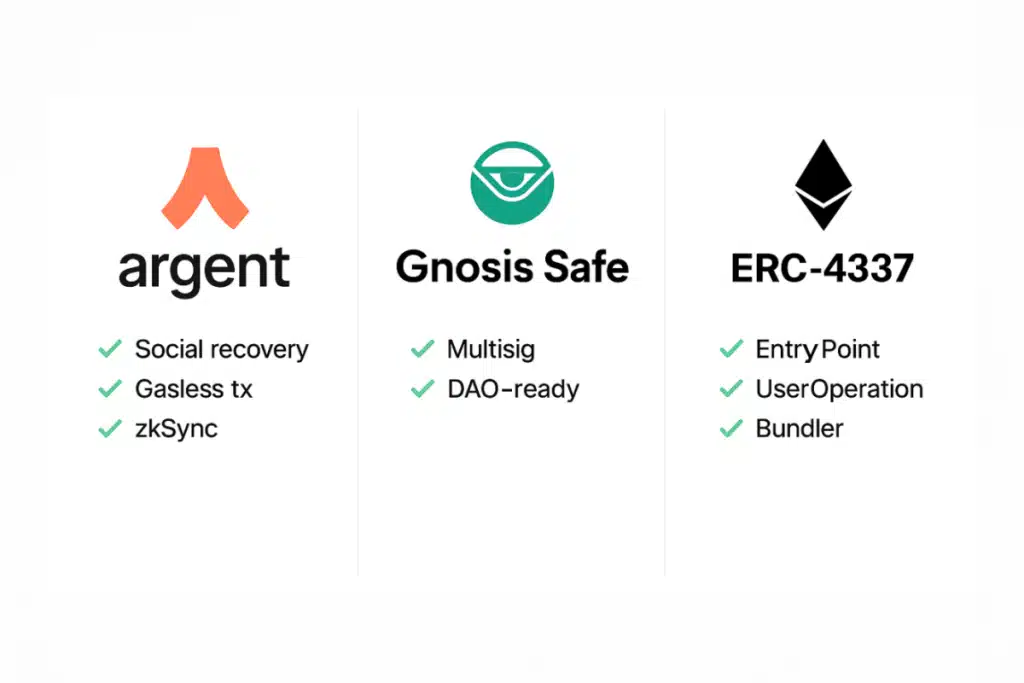
Several projects have already implemented aspects of Account Abstraction, proving its potential across various blockchain ecosystems.
Argent Wallet
Argent is a mobile wallet that uses smart contract accounts to enable social recovery, no-seed-phrase onboarding, and fee abstraction. It runs on Layer 2 solutions like zkSync, allowing fast and cheap transactions with added programmability.
Gnosis Safe
Originally built for multisig wallet functionality, Gnosis Safe introduced features that align with Account Abstraction principles. It allows users to define who must approve transactions and supports interaction with various DeFi protocols (if you want to know more read this article “DeFi: Decentralized Finance And How To Get Involved“)
ERC-4337
This Ethereum Improvement Proposal defines a standard for Account Abstraction implementation without requiring changes to Ethereum’s core protocol. It introduces the concept of UserOperation, EntryPoint contracts, and bundlers—paving the way for scalable, decentralized AA wallets.
Key Benefits of Account Abstraction
Account Abstraction introduces benefits for both users and developers. These advantages make it a cornerstone for future blockchain applications.
For Users
- No native token required for gas: Pay in DAI, USDC, or allow apps to sponsor transactions
- Multi-signature and biometric security
- Social recovery to regain access
- Faster and bundled transactions
For Developers
- Onboarding made easy: No need for users to buy ETH or learn crypto basics
- Customizable wallet flows: Create seamless in-app purchases or governance voting
- Cross-chain compatibility: Build logic that works across EVM-compatible networks
Want to start earning with blockchain tools like smart wallets and staking platforms? Explore our guide on how to earn crypto in 2025—packed with real strategies and case studies.
By eliminating the common pitfalls of wallet management, Account Abstraction offers a more robust and scalable infrastructure for mass adoption.
The Challenges of Implementing Account Abstraction
Despite its promise, Account Abstraction still faces a few key challenges that developers and users need to be aware of.
Technical Complexity
Creating smart contract-based wallets requires a deeper understanding of smart contracts, validation logic, and security considerations. Poorly written AA wallets can lead to vulnerabilities.
Gas Overhead
Using EntryPoint contracts can increase gas consumption. While this is less of an issue on Layer 2 networks, it’s something developers must optimize carefully.
Fragmentation and Standardization
Although ERC-4337 aims to standardize the implementation of Account Abstraction, different chains and developers may adopt varying approaches. This could slow down interoperability until consensus is reached.
Future Outlook: Programmable Wallets and Digital Identity
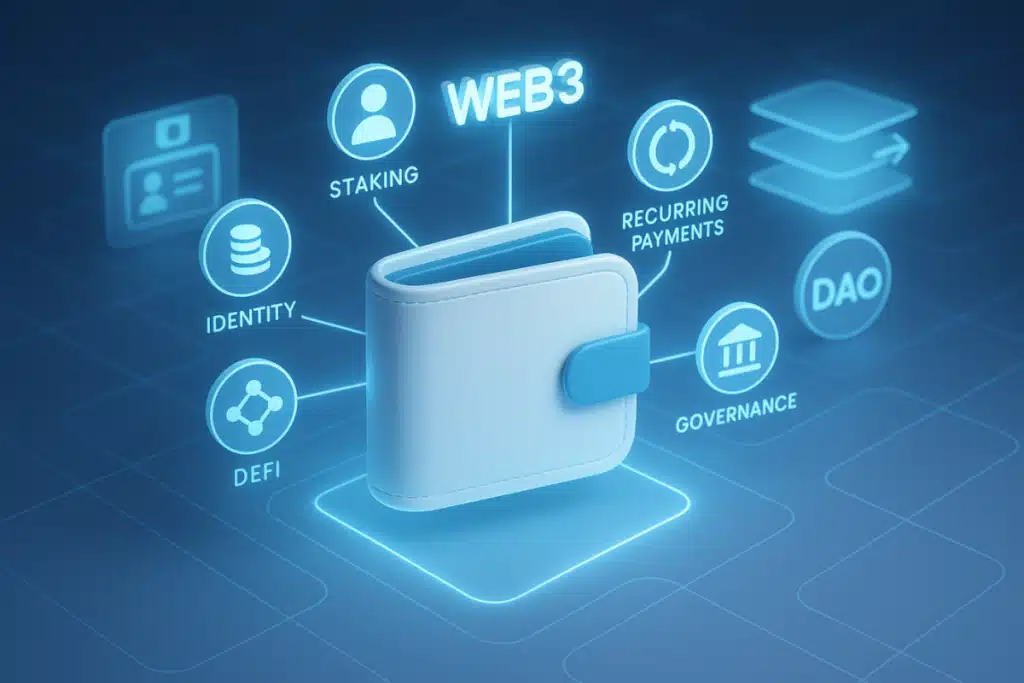
The vision behind Account Abstraction goes far beyond just making wallets smarter. It lays the foundation for programmable digital identity in Web3.
Automating Financial Interactions
Wallets can be programmed to:
- Automatically stake and restake assets
- Trigger recurring payments
- Renew subscriptions for services like ENS domains
- Rebalance DeFi positions based on market conditions
Web3 User Profiles
In the future, your wallet could act as a Web3 identity hub, storing your credentials, preferences, voting history, and more—all while ensuring privacy and self-custody. That’s why learning how to set up a secure crypto wallet for blockchain beginners is a crucial first step in taking control of your digital identity.
This shift could make Account Abstraction the engine behind everything from decentralized finance and gaming to healthcare and digital citizenship.
How to Get Started with Account Abstraction
Whether you’re a user or a developer, there are simple steps you can take to begin exploring Account Abstraction today.
For Users
- Try AA wallets like Argent, Safe, or Napoleon X Wallet
- Use testnets that support ERC-4337
- Explore Paymaster-sponsored dApps that cover your gas fees
Want beginner-friendly guides delivered straight to your inbox? Subscribe to the BlockchainDudes newsletter and unlock over 70 free guides to master crypto, from zero to expert.
For Developers
- Integrate with ERC-4337 using open-source tools
- Experiment with EntryPoint contracts
- Build recovery models, validation strategies, and gas abstraction into your dApp
- Follow upcoming EIPs like EIP-3074, EIP-5003, and new Paymaster APIs
These tools make it easier to build seamless, user-centric blockchain applications powered by Account Abstraction.
Why Account Abstraction Is the Key to Web3 Mass Adoption
At its core, Account Abstraction shifts the narrative from wallets as static tools to wallets as dynamic, intelligent agents. This change aligns with the vision of making blockchain accessible, safe, and useful for everyone—from DeFi enthusiasts and NFT collectors to everyday users and businesses.
As more developers adopt Account Abstraction and standards like ERC‑4337 mature, we can expect a future where:
- Web3 apps rival Web2 in usability
(if you want to read a little story about this i’ll leave you the post ”Building a Web3 Brand Is Nothing Like Web2. That’s Why Most Fail.”) - Users onboard without friction
- Security is customizable
- Gas fees are no longer a barrier
By combining usability with decentralization, Account Abstraction helps unlock the full potential of blockchain technology.
Like what you learned? We offer all our content ad-free and open to everyone. Make a donation to support the BlockchainDudes mission and help us keep education free and independent.
What is the difference between an EOA and AA account?
An EOA is a simple key-controlled account, while an AA account is a programmable smart contract account that can run validation logic and customize transaction behavior.
Can I pay gas fees in tokens other than ETH?
Yes—AA accounts can use “Paymasters” to subsidize gas or allow gas-payment in stablecoins or other ERC‑20 tokens.
Is Account Abstraction live on Ethereum mainnet?
Yes—ERC‑4337 has launched on mainnet since March 2024, with increasing wallet and protocol adoption.
Which wallets support AA today?
Argent, Gnosis Safe (with gas-relay setup), and NPX Wallet are early adopters; many others plan integration.
Is Account Abstraction hard for developers to adopt?
Not really—the ERC‑4337 standard provides entrypoint contracts and UserOperation templates, and libraries like OpenZeppelin offer ready‑made tooling.
“Guess what? When you click and buy via our links, you’re not just enhancing your experience—you‘re also supporting our content creation for free, so we can keep sharing useful blockchain insights. It‘s a pump for both of us!”
— Jihad