

The Evolution of Infrastructure in the Age of Blockchain
Over the last century, infrastructure has always been centralized—controlled by governments, multinational corporations, and utility monopolies. Whether it’s the internet, electricity grids, transportation networks, or data centers, the same top-down systems have prevailed. But today, a radical new movement is rising: DePIN.
This new model challenges traditional paradigms by merging blockchain technology with the deployment of real-world infrastructure. It introduces a decentralized, permissionless, and tokenized approach to building systems we rely on every day. Instead of relying on centralized authorities, anyone can now participate in operating essential infrastructure through economic incentives, smart contracts, and community governance.
What Is DePIN and Why It Matters
So, what is DePIN? The term stands for Decentralized Physical Infrastructure Networks. These are blockchain-based ecosystems where physical infrastructure—like Wi-Fi hotspots, EV charging stations, environmental sensors, or data storage devices—is owned and operated by individuals rather than centralized entities.
Participants in a DePIN system run hardware nodes that perform real-world services. Their contributions are verified through smart contracts or IoT sensors, and they earn tokenized rewards for uptime, service quality, and coverage. This creates a self-sustaining, incentive-aligned network that grows organically through participation.
In this model, infrastructure becomes not only a technical system but an economic opportunity. It empowers individuals to deploy and monetize infrastructure directly from their homes, farms, or communities. It’s a massive shift from centralized ownership to decentralized collaboration.
DePIN vs Traditional Infrastructure: A Paradigm Shift
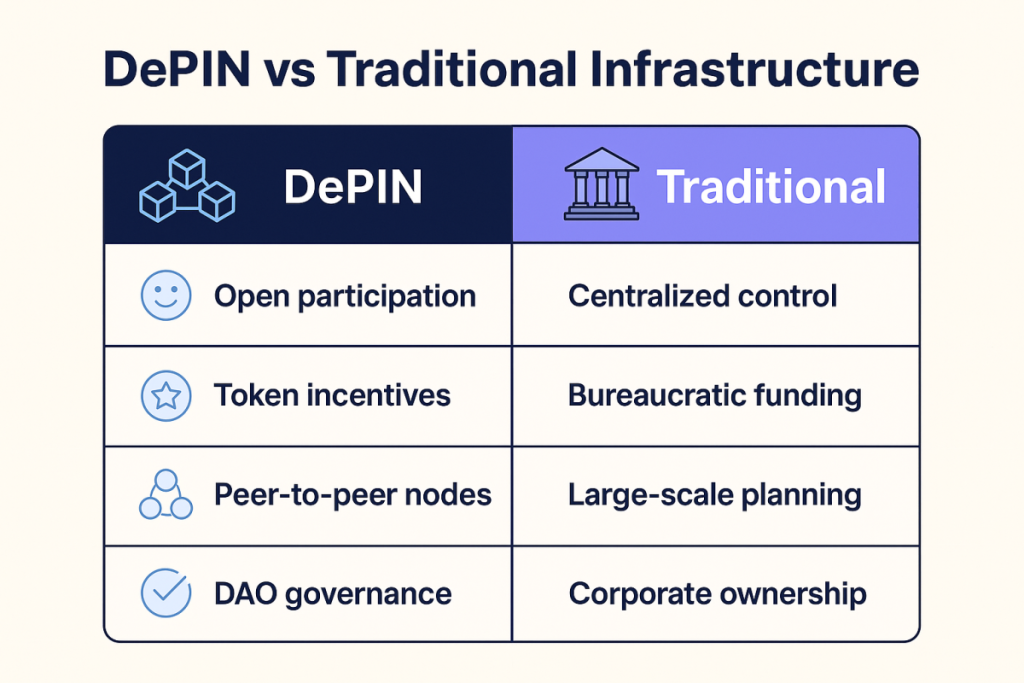
Let’s compare DePIN vs traditional infrastructure models.
Traditional infrastructure requires:
- Massive upfront capital
- Government licenses and regulatory approvals
- Centralized planning and deployment
- Long timelines and geographic limitations
In contrast, DePIN offers:
- Permissionless participation
- Token incentives and peer-based economics
- Real-time data verification and reward automation
- Decentralized governance via DAOs
DePIN enables infrastructure to grow where it’s needed most, especially in rural, underserved, or emerging markets. Anyone with compatible hardware and internet access can deploy a node, contribute services, and earn revenue.
This bottom-up model decentralizes power and builds resilience. It transforms infrastructure from a monopoly into an open, community-owned economy.
How DePIN Works: Layers and Mechanisms
To understand how DePIN works, it’s useful to break it down into three core layers:
Hardware Layer
This includes all physical devices used in the network, such as:
- Wi-Fi routers and low-power wide-area network hotspots
- EV charging points
- Weather and air quality sensors
- Solar panels and energy monitors
- Edge computing units and storage servers
These nodes are deployed by individuals or small operators. They are connected to the internet and collect real-time data.
Blockchain Layer
Each node is registered on a blockchain protocol. Smart contracts handle onboarding, reward distribution, and verification. Performance metrics (like uptime or coverage) are submitted on-chain using oracles or IoT integrations. This ensures rewards are earned fairly and transparently.
Governance Layer
Most DePIN projects use DAOs to manage upgrades, vote on incentive changes, allocate community funds, and resolve disputes.
Together, these layers create a fully decentralized infrastructure network that can grow without centralized oversight.
Tokenization of Real-World Assets
A key component of this ecosystem is the tokenization of real-world assets. This means infrastructure—like a solar panel, a weather sensor, or a hotspot—is digitally represented on the blockchain.
Tokenization allows for:
- Transparent ownership tracking
- Fractional ownership of infrastructure
- Automated usage-based billing
- Liquidity through DeFi platforms
For more detail, check out “Tokenizing Real-World Assets (RWA): The Next Big Trend in Blockchain.”
By bridging the physical and digital worlds, DePIN makes infrastructure more accessible, auditable, and financially integrated.
For serious HODLers, Ledger remains the gold standard in hardware wallet protection—your keys, your coins.
Popular DePIN Crypto Projects Leading the Way
Several DePIN crypto projects have emerged as leaders in this space, each focused on a specific type of infrastructure.
Helium Network
Helium allows individuals to deploy wireless hotspots and create decentralized mesh networks. Initially built for IoT devices, the network is now expanding into 5G coverage. Participants earn $HNT tokens for contributing reliable wireless service.
Filecoin
Filecoin is a decentralized storage marketplace. Users can rent out unused storage capacity and earn $FIL tokens. It supports redundancy, censorship resistance, and low-cost cloud services.
Akash Network
Akash is a peer-to-peer cloud computing platform. Operators host servers that provide computing power for websites, dApps, or machine learning tasks. They’re rewarded in $AKT tokens.
WeatherXM
This network rewards people for deploying weather stations and sharing local environmental data. It helps build a decentralized climate monitoring grid usable by scientists, agriculture platforms, and public institutions.
These projects prove that physical infrastructure on blockchain is already a reality—and growing fast.
Blockchain Use Cases Beyond Finance
DePIN exemplifies Blockchain Use Cases Beyond Finance. While blockchain began as a tool for peer-to-peer currency and DeFi, it’s now powering everything from agriculture to climate science, connectivity to data storage.
Use cases include:
- Pay-per-use storage systems
- Wireless networks without telecom providers
- Precision farming with on-chain sensor data
- Supply chain tracking with open access
- Energy monitoring and trading systems
By decentralizing real-world systems, DePIN brings the trustless, transparent nature of blockchain into everyday life.
Want to go deeper into the real-world use cases of blockchain?
Subscribe to our newsletter and unlock 70+ exclusive guides for free: Join the BlockchainDudes Newsletter
Real-World Applications of DePIN Infrastructure
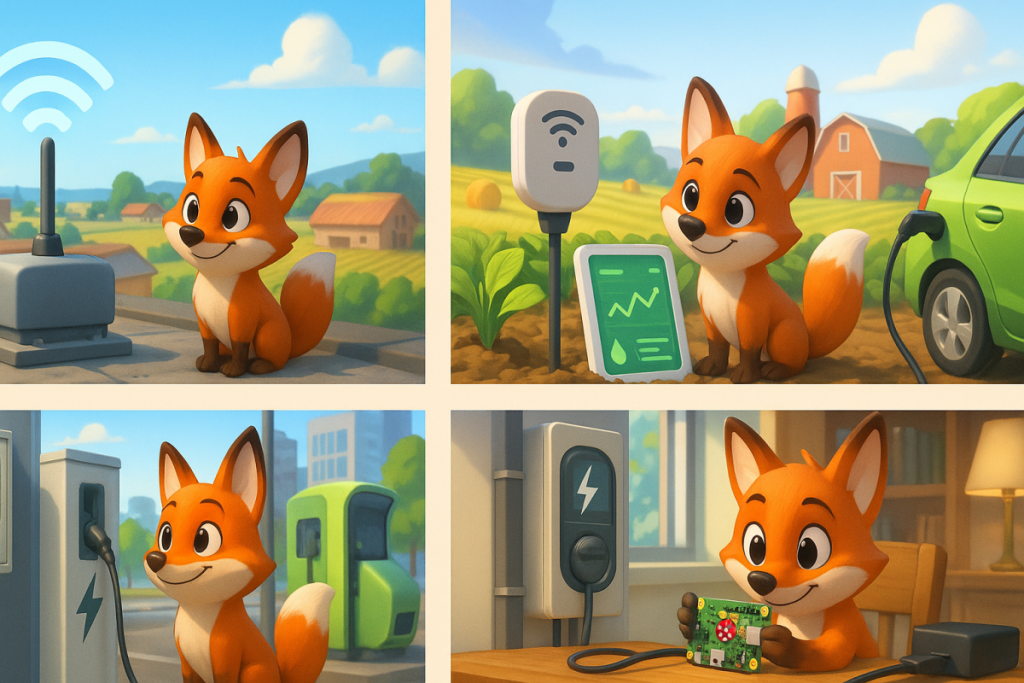
Let’s explore how Decentralized Physical Infrastructure is used across sectors:
Connectivity and Internet Access
Projects like Helium provide wireless coverage in urban and rural areas. DePIN enables communities to bypass telcos and build their own networks.
Agriculture and Supply Chain
Farms deploy soil sensors and weather monitors that collect data used for compliance, productivity, and transparency. Goods can be tracked from seed to shelf.
EV Charging and Energy
Individual operators install EV chargers or solar panels. Energy usage is recorded on-chain. Smart contracts manage billing and prevent fraud.
Data Storage and Computing
People offer unused hard drive space or processing power. Users pay for storage, apps, or machine learning training on a distributed, censorship-resistant network.
These applications reduce costs, improve access, and empower local participation.
Benefits of Decentralized Infrastructure Networks
Decentralized infrastructure networks offer a wide range of benefits:
- Inclusion: Anyone with a device can join and contribute
- Transparency: All transactions and metrics are auditable
- Resilience: Decentralization removes single points of failure
- Autonomy: Communities control their infrastructure directly
- Economic empowerment: Participants earn tokens for their contributions
These features create a more equitable and efficient way to manage physical systems.
Challenges and Limitations
Like any new technology, DePIN faces challenges:
- Hardware reliability: Devices must be correctly installed and maintained
- Tokenomics design: Poor incentives can lead to over-supply or poor service
- Technical onboarding: Some projects are still too complex for average users
- Privacy concerns: Data collected from physical environments must be secured
- Legal issues: Infrastructure often intersects with regulated industries
Successful DePIN projects address these risks through good governance, user education, and responsible innovation.
How to Get Involved in DePIN
You don’t need to be a developer or investor to join a DePIN network. Here’s how to start:
- Research the ecosystem: Explore different projects. Join their Discords. Read documentation.
- Choose a role: Most people become node operators, but you can also participate in governance or dev work.
- Buy compatible hardware: Many protocols sell starter kits or list approved devices.
- Install and onboard: Register your device on-chain, link your crypto wallet (if you want to know more about ”How to Set Up a Secure Crypto Wallet for Blockchain Beginners” read our article) and configure your setup.
- Optimize your node: Monitor uptime and performance to increase your rewards.
With the right setup, DePIN can become a passive income stream and a way to support Web3 infrastructure.
If you’re interested in real ways to earn crypto using Web3 tools, check out our full guide: How to Earn Crypto with Blockchain in 2025
Ready to turn insights into action? Sign up to Bybit and get up to $30,050 in bonuses, including $50 free just for starting.
How Success is Measured
To evaluate whether a DePIN project is succeeding, look at:
- Token price stability and utility
- Number of active nodes
- Data usage or service consumption
- Developer activity and protocol upgrades
- Partnerships and real-world integrations
Healthy DePIN networks exhibit balanced growth, transparent governance, and real economic utility.
The Future of DePIN
The next phase of Decentralized Physical Infrastructure will bring even more innovation:
- Infrastructure-as-a-Service models for businesses
- Cross-chain interoperability between DePIN protocols
- Decentralized finance for infrastructure (e.g. node-backed loans)
- Aggregator platforms bundling compute, storage, and bandwidth
- Public-private partnerships in smart cities and rural deployment
As more industries adopt decentralized models, DePIN will evolve into a foundational layer of the digital economy.
Final Thoughts
Decentralized Physical Infrastructure is more than just a trend—it’s a new framework for building the real world. By decentralizing ownership, validating data transparently through secure systems such as Public Key Infrastructure (PKI), and aligning economic incentives, DePIN opens the door to a future where infrastructure is community-owned, permissionless, and resilient.
Whether you’re a farmer, a developer, a student, or an entrepreneur, DePIN gives you the tools to participate in rebuilding the world—node by node, device by device.
We create all our content freely and without ads to support true blockchain education.
If this article was valuable to you, consider supporting our mission: Make a donation for BlockchainDudes
What makes DePIN different from regular infrastructure projects?
DePIN uses blockchain native incentives and token rewards to decentralize ownership and operations, while traditional projects are centralized and capital-heavy.
Can I install a DePIN node at my home?
Yes—many protocols support home-based setups such as Wi‑Fi, LoRaWAN hotspots, EV charger kits, or sensor nodes.
Do I need coding skills to participate?
Not necessarily. Many projects offer plug‑and‑play hardware with guided setup—though troubleshooting may require technical know‑how.
Is investing in DePIN hardware profitable?
It depends on location, network demand, and token economics. Success requires strategic deployment, ongoing monitoring, and reward rate awareness.
“Guess what? When you click and buy via our links, you’re not just enhancing your experience—you‘re also supporting our content creation for free, so we can keep sharing useful blockchain insights. It‘s a pump for both of us!”
— Sofi