A Complete Guide for Beginners in 2025
In the ever-evolving world of blockchain and cryptocurrencies, Toncoin is gaining significant traction in 2025 as one of the most promising and accessible tokens in the Web3 space. For those interested in getting involved, a comprehensive Toncoin mining guide can provide essential insights into this opportunity. Originally developed by Telegram’s team and now managed by the open-source community, The Open Network (TON) has become a decentralized ecosystem that supports ultra-fast transactions, smart contracts, NFTs, decentralized storage, and more.
If you’re new to the world of TON or curious about Toncoin mining, you might be wondering whether it’s still possible to mine this token. Or, if not, what alternatives exist to earn Toncoin in the current proof-of-stake (PoS) model?
This guide will walk you through the history of Toncoin mining, how it worked in its early phase, why it ended, and what you can do now to earn TON in 2025 through staking, DeFi, and ecosystem participation.
What Is Toncoin and Why It Matters
Toncoin (TON) è il token di utilità nativo di The Open Network, una blockchain decentralizzata di Livello 1 originariamente ideata dai creatori di Telegram. La blockchain è progettata per essere scalabile, veloce e intuitiva, con integrazioni che la rendono ideale per l’adozione di massa tramite applicazioni social ed esperienze mobile-first.
Some standout features of TON include:
- Lightning-fast transaction times with low fees
- A sharding-based structure that ensures the network can scale to millions of users
- Native support for decentralized services like DNS, storage, computing, and payments
- Wallet integration directly within the Telegram app for seamless onboarding
Users use Toncoin to pay transaction fees, take part in governance, stake in the network, interact with smart contracts, and access services built on TON.
TON’s infrastructure is designed with modularity and decentralization in mind, making it suitable not only for casual users but also for developers and institutions building scalable dApps and Web3 solutions.
Is Toncoin Mineable in 2025?
No — Toncoin is not mineable in the traditional sense anymore.
When The Open Network was first launched, the TON Foundation implemented a temporary proof-of-work (PoW) phase using a unique smart contract known as the “Giver.” This was not traditional mining like in Bitcoin or Ethereum, but rather a smart contract–driven puzzle-solving system that allowed users to earn Toncoin by computing cryptographic hash functions.
As a result, this mining phase was short-lived and ended officially in 2022. Since then, TON has transitioned fully to a proof-of-stake (PoS) consensus mechanism. In PoS, validators are chosen based on how many tokens they stake, not based on computational power. This transition was made to align with environmental goals, reduce energy usage, and increase scalability.
So, while Toncoin was once mineable, that window has closed — but there are still many ways to earn TON today.
How Toncoin Mining Worked: A Look Back
Understanding how mining worked can give insight into the early stages of TON’s development. The TON team intentionally designed the mining process to be accessible and energy-efficient. Here’s how it worked:
- Download and Install the Giver Client
Users interested in mining downloaded the TON Giver client, which allowed them to interact with the blockchain’s Giver smart contract.
This client was considered the best Toncoin mining software at the time due to its ease of use and direct integration with TON’s smart contract infrastructure. - Compute Cryptographic Puzzles
Each miner was assigned a cryptographic hash. Many users sought out a Toncoin GPU mining guide to improve performance, as using GPUs instead of CPUs often resulted in faster hash computations and higher reward frequency. The challenge was to find a valid nonce that solved the puzzle — a process similar to mining Bitcoin, but without the energy-intensive proof-of-work algorithm. - Submit Solutions and Get Rewarded
Once the correct hash was found, miners submitted it through the client. If valid, the Giver smart contract would automatically send a reward in Toncoin to the miner’s wallet.
During this phase, community-driven projects began circulating unofficial Toncoin mining pool lists to help solo miners combine computational power and improve their chances of solving hash puzzles. - Use a Secure Wallet for Storage
Most miners used TON Wallet or Tonkeeper, two secure and widely used wallets that allowed easy storage and transfer of Toncoin.
Unlike traditional PoW systems, this process didn’t require expensive mining rigs or high-end GPUs. Even average computers could participate, democratizing the token distribution in TON’s earliest days.
Despite its short duration, TON mining profitability during the 2021–2022 period was notable. Many early adopters were able to accumulate a meaningful amount of Toncoin with minimal setup and virtually no hardware investment.
Many users were able to mine TON on PC with standard desktop setups, thanks to the low system requirements and lightweight mining client.
The vast majority of users were mining Toncoin with Windows, since the official TON Giver client was optimized for Windows operating systems and required no advanced configuration.
Why the Mining Phase Ended
TON’s mining was never meant to be permanent. The goal of the initial mining phase was to distribute Toncoin in a fair and decentralized way, giving early adopters and contributors the opportunity to earn tokens without participating in a centralized sale or token offering.
However, for long-term sustainability, the network needed a consensus mechanism that was more energy-efficient and scalable. This is why TON moved toward a PoS system, where validators secure the network by locking up tokens, not by consuming electricity through computation.
In 2022, TON developers officially disabled the Giver contract in 2022, marking the end of Toncoin mining.
How to Earn Toncoin in 2025: Best Alternatives to Mining
Just because you can’t mine Toncoin doesn’t mean you can’t earn it. In fact, today’s alternatives are often more efficient, less costly, and accessible to a wider audience. Let’s explore the top options.
1. Become a Validator on the TON Network
Validators are the backbone of the PoS system. They confirm transactions, secure the blockchain, and earn rewards in return.
To become a validator, you’ll need:
- At least 300,000 TON tokens
- A high-uptime server (99.9%+ reliability)
- Strong technical knowledge (networking, server management, blockchain operations)
If you meet these requirements, running a validator node can be one of the most profitable ways to earn Toncoin long-term.
2. Join a Staking Pool
Not everyone has the funds to run a validator, and that’s where staking pools come in. These pools allow users to delegate smaller amounts of Toncoin to existing validators and share in the staking rewards.
Benefits of staking pools:
- Low entry threshold (even 10–50 TON is enough)
- No need to manage your own server
- Daily or weekly payouts
- Platforms like Tonstakers or Ton Whales simplify the process
This is currently the most popular way to earn passive income from Toncoin without taking on the responsibility of managing hardware.
Ready to turn insights into action? Sign up to Bybit and get up to $30,050 in bonuses, including $50 free just for starting.
3. Participate in DeFi Apps on TON
Decentralized finance (DeFi) is booming on TON, with a growing number of protocols offering yield farming, liquidity mining, swaps, and staking.
Some top platforms include:
- DeDust – For liquidity provision and token swaps
- Ston.fi – A decentralized exchange with incentives
- Tonstakers – Offers pooled staking and yield strategies
By providing liquidity or staking in these DeFi platforms, you can earn attractive APRs while contributing to TON’s financial ecosystem.
4. Use TON-Based Services (DNS, Storage, Compute)
TON isn’t just a financial network — it’s a complete Web3 infrastructure. Developers and users can earn TON by participating in decentralized services:
- TON DNS – Register blockchain domains (like .ton)
- TON Storage – Offer decentralized file storage and receive payments
- TON Compute – Rent out computation for smart contracts or dApps
These services are ideal for developers, advanced users, or node operators who want to contribute to the ecosystem’s growth while generating income.
5. Earn via Airdrops, Campaigns, and Social dApps
Many TON-based dApps offer incentives to attract users. These might include:
- Airdrops for signing up or completing tasks
- Social apps where active users are rewarded in TON
- Play-to-earn games using the TON blockchain
Stay active in the TON community, follow new projects, and participate in early-stage dApps to maximize your rewards.
Is TON Mining Hardware Still Useful?
Short answer: no.
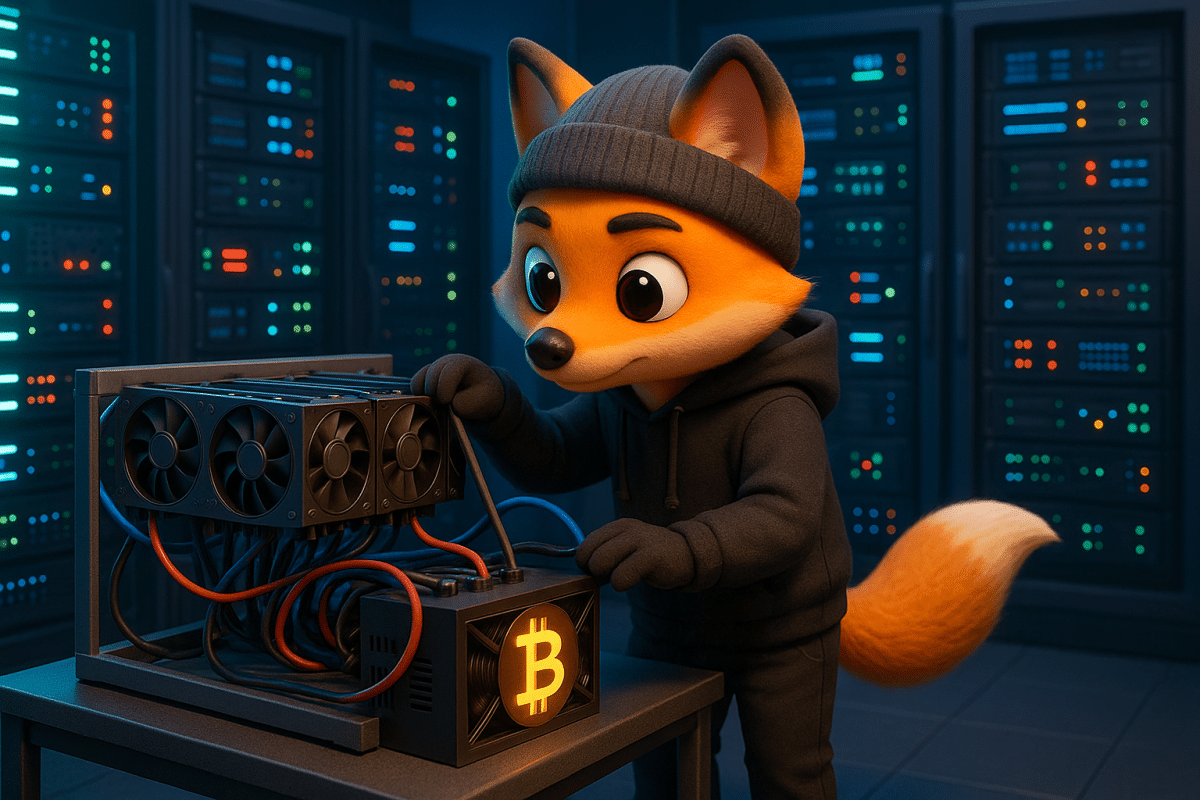
Because mining ended in 2022, no hardware setup today can mine Toncoin. During the brief PoW period:
- ASICs were not required
- Low energy usage was a design priority
- Standard laptops or desktops were sufficient
- The mining window was short — approximately one year
So if you’re considering buying hardware to mine TON, save your money — and stake it instead.
How to Buy Toncoin in 2025
If you’re looking to acquire TON, the easiest method is to buy it on a trusted exchange. Popular options include:
- Bybit
- KuCoin
- MEXC
- Gate.io
Create an account, verify your identity, and purchase Toncoin with fiat or another crypto like USDT, ETH, or BTC.
Once purchased, transfer it to a secure wallet for storage — don’t keep large amounts on centralized exchanges.
Secure Wallet Options for Toncoin
Wallet security is essential for anyone serious about holding TON. Here are your best choices:
- Tonkeeper – Mobile wallet with clean UI and staking support
- Tonhub – Secure and community-supported
- Telegram Wallet – Built-in Telegram integration for convenience
- Ledger (Hardware Wallet) – Ultimate protection for long-term storage
For serious HODLers, Ledger remains the gold standard in hardware wallet protection—your keys, your coins.
Pro tips for securing your TON:
- Never share your seed phrase
- Back it up offline in multiple locations
- Use two-factor authentication
- Be cautious when connecting wallets to unknown dApps
Final Thoughts: Mining Is Over, but the TON Revolution Is Just Beginning
While traditional Toncoin mining is now a thing of the past, the potential of the TON ecosystem is just getting started. The move to proof-of-stake has opened new doors for users, developers, and investors alike. Whether you’re interested in staking your tokens, participating in decentralized finance, building dApps, or simply holding for the future, TON offers a robust, secure, and scalable blockchain for the next generation of Web3 applications.
Don’t focus on what you missed — focus on what you can build today.
Is mining Toncoin worth it?
Can I still earn Toncoin without buying it?
Yes. You can stake in a pool, run a validator node, participate in DeFi platforms, or earn through dApps and TON-based services.
Was Toncoin mining profitable?
For many early adopters, yes. It was energy-efficient, required no specialized hardware, and provided a fair entry point. However, it was available only for a limited time.
Is staking Toncoin safe?
Generally, staking is safe if done through trusted validators or platforms. Always research the pool or service you’re using and never invest more than you can afford to lose.
“Guess what? When you click and buy via our links, you’re not just enhancing your experience—you‘re also supporting our content creation for free, so we can keep sharing useful blockchain insights. It‘s a pump for both of us!”
— Sofi