

In the fast-evolving world of blockchain technology, especially within Proof-of-Stake (PoS) networks, two central roles help secure, operate, and decentralize the ecosystem: validators and delegators.
Understanding the Validator vs Delegator dynamic is essential for those engaging in blockchain technology.
The roles of Validator vs Delegator significantly affect your approach to staking.
The distinction between Validator vs Delegator is crucial for anyone participating in blockchain technology.
Understanding Validator vs Delegator roles will ultimately guide your investment choices and staking strategy.
In the context of Validator vs Delegator, it’s important to consider your risk tolerance.
The ongoing discussion of Validator vs Delegator roles helps clarify their importance.
While both contribute to the network’s health and integrity, their responsibilities, technical requirements, levels of control, and exposure to risk are vastly different. Whether you’re an experienced crypto investor or someone just entering the world of Web3, understanding the validator vs delegator distinction is key to choosing your staking strategy and maximizing rewards.
Navigating the Validator vs Delegator landscape is crucial for staking success.
The Validator vs Delegator issue is critical for anyone looking to participate in staking.
In the ongoing debate of Validator vs Delegator, it’s important to weigh the pros and cons of each role.
Understanding the differences in Validator vs Delegator roles can lead to better strategies.
Evaluating the Validator vs Delegator framework is essential for making informed decisions.
The Validator vs Delegator comparison highlights distinct roles within the ecosystem.
What Is a Validator?
A validator is an individual or organization that actively participates in a Proof-of-Stake blockchain by validating transactions, producing blocks, and maintaining consensus across the network. Validators play a critical role in the infrastructure of the chain.
Choosing between a Validator vs Delegator can influence the outcome of your blockchain journey.
The responsibilities in the Validator vs Delegator framework are crucial for network functionality.
Responsibilities of a Validator
Understanding how Validator vs Delegator roles interact can enhance your strategy.
In the Validator vs Delegator equation, knowing the risks and rewards is vital for success.
The Validator vs Delegator comparison reveals the intricacies of blockchain participation.
When participating in the Validator vs Delegator roles, understanding is key to success.
Validators perform the following tasks:
- Transaction validation – Ensuring that every transaction added to the blockchain is legitimate, double-spend free, and signed properly.
- Block proposal – In many PoS systems, validators take turns proposing new blocks for addition to the chain.
- Consensus participation – Validators vote on the validity of blocks and help achieve network consensus.
- Network security – Validators prevent malicious attacks and manipulation by staying online and following protocol rules.
Requirements to Become a Validator
Investors should consider the Validator vs Delegator debate when making staking choices.
To become a validator, you typically need:
- A minimum stake – For example, Ethereum requires 32 ETH as the minimum deposit.
- Technical infrastructure – A high-uptime server, reliable internet, and monitoring systems.
- Security measures – Cold storage for keys, firewalls, anti-DDoS protection, and alert systems.
Rewards and Risks
The implications of Validator vs Delegator choices shape the blockchain landscape.
Validators earn rewards for their service in the form of newly minted tokens and transaction fees. Want to dive deeper? Subscribe to our newsletter for free guides, weekly insights, and staking tutorials from beginner to expert. However, they also face slashing risks: if a validator is offline too long, double-signs a transaction, or behaves maliciously, a portion (or all) of their stake may be confiscated.
Want more crypto knowledge? Join our newsletter for weekly insights, free guides, and tools.
When evaluating Validator vs Delegator, consider how each impacts network operations.
The role of a Validator vs Delegator can dictate the level of engagement in staking.
What Is a Delegator?
A delegator is a token holder who wants to earn staking rewards without managing the technical infrastructure of a validator node. Instead of running their own validator, they delegate their stake to one or more validators.
Advantages of Being a Delegator
In the Validator vs Delegator landscape, simplicity often appeals to newcomers.
Delegators benefit from:
- Simplicity – No need to run a server or understand node operations.
- Low entry threshold – Many networks allow delegation of even a small amount of tokens.
- Passive income – Delegators earn a share of the validator’s rewards, proportional to their stake.
- Diversification – Tokens can be spread across different validators to reduce risk.
As the Validator vs Delegator discussion continues, more people are getting involved.
Delegator Risks and Limitations
Understanding the Validator vs Delegator relationship helps in making informed decisions.
While the process is easier, delegators still face some risks:
- Shared slashing penalties – If your chosen validator is slashed, you lose part of your delegated stake too.
- Validator performance – Your rewards depend on the validator’s uptime and efficiency.
- Unbonding periods – Many networks require you to wait a few days or weeks to undelegate and withdraw your tokens.
Validator vs Delegator: Side-by-Side Comparison
| Feature | Validator | Delegator |
|---|---|---|
| Role | Actively validates blocks | Passively delegates tokens |
| Technical setup | Full node infrastructure required | None – uses wallet interface |
| Minimum stake | High (e.g., 32 ETH on Ethereum) | Often low or no minimum |
| Rewards | Full share (minus operating costs) | Partial share (after validator fee) |
| Risk | Slashing, downtime penalties | Indirect – depends on validator |
| Control | Full control of node and stake | Limited to delegation/undelegation |
| Responsibility | Very high | Relatively low |
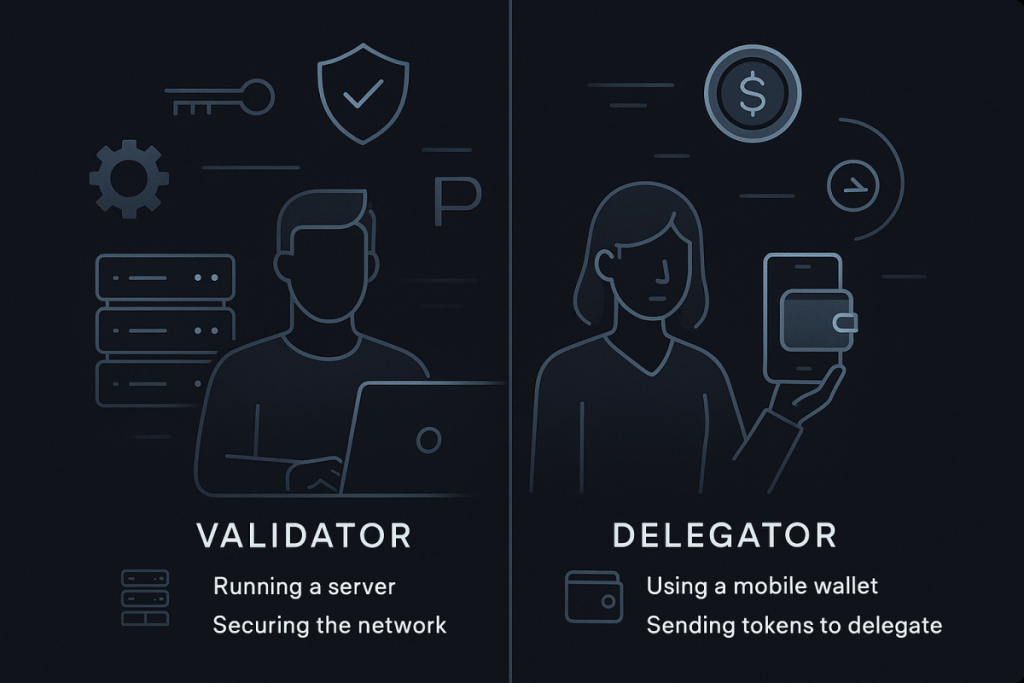
Choosing between Validator vs Delegator roles requires careful consideration of each.
Deep Dive: Validator Duties Explained
Validators are the backbone of any PoS chain. Their responsibilities go far beyond simply earning rewards:
- Transaction screening – Identifying and rejecting invalid or malicious transactions.
- Block creation and attestation – Depending on the network, validators either propose blocks or attest to the ones proposed.
- Maintaining uptime – Validators must operate 24/7 to remain eligible for rewards and avoid slashing.
- Participating in governance – In many blockchains, validators vote on protocol upgrades, funding proposals, and rule changes.
- Reputation management – A trustworthy validator gains more delegations, while a poorly performing one quickly loses credibility.
Deciding between being a Validator vs Delegator requires knowledge of both roles.
Delegator Strategy: Perks and Pitfalls
Delegators are crucial for decentralization, but the simplicity comes with trade-offs:
Benefits:
- No hardware or server needed
- Earn rewards automatically
- Support decentralization by spreading stake
Drawbacks:
- Validator dependency – You’re at the mercy of their performance.
- Commission fees – Validators take a cut (usually 5–20%) from the earned rewards.
- Exit delay – Once you undelegate, you may need to wait days or weeks before you can withdraw.
How to Choose a Reliable Validator
Each individual must evaluate their position in the Validator vs Delegator framework.
Choosing the right validator is critical. Here are key factors to evaluate:
- Slashing history – Avoid validators that have been penalized for downtime or double-signing.
- Uptime statistics – Consistent operation means consistent rewards.
- Commission rate – Low rates are tempting but make sure it’s enough to sustain validator operations.
- Delegated stake – Avoid overly centralized validators with too much stake.
- Transparency – Look for validators with active communication channels (Telegram, Discord) and community engagement.
Which One Should You Be: Validator or Delegator?
Choose to be a Validator if:
- You have the minimum stake (e.g., 32 ETH)
- You’re comfortable with running and maintaining a node
- You can handle slashing risks and infrastructure costs
- You want full control and high responsibility
Choose to be a Delegator if:
- You prefer a hands-off, passive approach
- You don’t meet the minimum staking requirement
- You want to earn from staking without technical setup
- You’re comfortable relying on validator performance
Ledger is the gold standard for hardware crypto wallets. Store your coins offline, safely.
Best Practices to Maximize Your Staking Rewards
- Diversify your delegation – Spread your stake across multiple validators to reduce exposure.
- Regularly monitor performance – Track validator status, uptime, and rewards.
- Re-delegate when necessary – If your validator underperforms, move your stake.
- Balance commission and risk – Extremely low commission may signal an unsustainable operation.
- Stay informed – Delegators sometimes gain indirect governance exposure—know what you’re supporting.
Ultimately, the choice of Validator vs Delegator shapes your staking experience. And if you’re ready to take the next step, check out how real users earn crypto through staking, NFTs, DeFi, and other blockchain strategies.
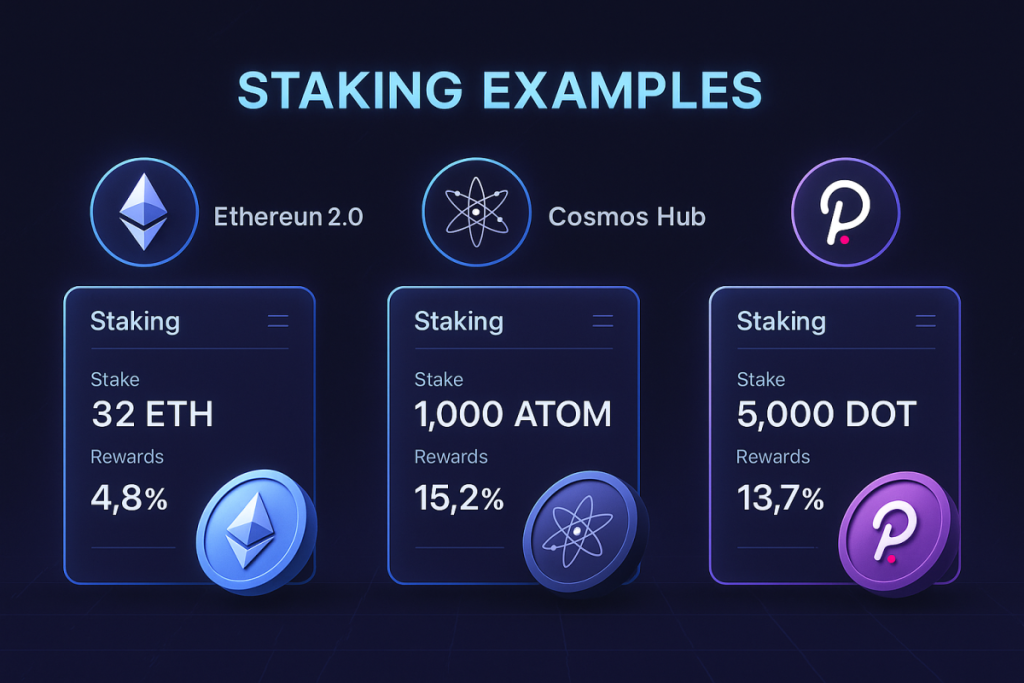
Real-World Examples: Staking in Practice
Ethereum 2.0
Ethereum requires 32 ETH to become a validator. However, delegators can participate through staking pools like Lido or Rocket Pool, which allow small holders to earn rewards without managing nodes.
Cosmos Hub
Validators display detailed uptime and commission stats. Delegators bond tokens and earn staking yields, while still being subject to validator performance and governance dynamics.
Polkadot
Validators on Polkadot validate blocks, while delegators—called nominators—support them by staking DOT. Nominators share in the validator’s rewards after commission and help determine who gets selected to validate.
Final Thoughts: Validator or Delegator—Both Matter
Both validators and delegators play vital roles in the Validator vs Delegator debate, contributing to the overall health of Proof-of-Stake networks.
Whether you choose to take an active role or a passive one, participating in staking helps secure the future of blockchain—and allows you to earn in the process.
If this article helped clarify your strategy, consider supporting our mission with a donation—we’re 100% ad-free and community-powered.
Can a validator also delegate tokens?
Yes. Validators can usually self-delegate their own tokens, adding to the total stake they control. This boosts their weight in block selection.
How long is the unbonding period?
It varies by chain. Ethereum takes ~14 days, Cosmos ~21 days, and others differ. Always check your network’s specific rules.
What happens if my validator is slashed?
Both the validator and its delegators lose funds. Choosing reliable validators and monitoring performance is key to minimizing risk.
Can I change validators easily?
Yes. You can undelegate and re-delegate after the unbonding period. Some blockchains allow instant redelegation without waiting.
Are staking rewards taxable?
Often yes. In many countries, staking rewards are taxed as income when received. Always consult a local tax expert for accurate guidance.
Guess what? When you click and buy via our links, you’re not just enhancing your experience—you‘re also supporting our content creation for free, so we can keep sharing useful blockchain insights. It‘s a pump for both of us!
— Andre