

What Is a Whitepaper and How to Read It
A whitepaper is more than just a document it’s the DNA of a blockchain project. For investors, developers, or curious readers in the crypto world, learning how to understand one of these documents can mean the difference between spotting a revolutionary protocol and falling for vaporware. This guide will walk you through what a whitepaper is, how to read one effectively, and the signals that indicate trust or risk.
What Is a Whitepaper?
A Strategic Blueprint for Crypto Projects
This document outlines a blockchain project’s purpose, technology, and vision. It is often published before a product is launched especially during Initial Coin Offerings (ICOs), Token Generation Events (TGEs), or DeFi protocol deployments.
The main purpose of this technical document is to:
- Identify the problem a project aims to solve.
- Present a unique solution via blockchain technology.
- Describe the token structure and economic incentives.
- Outline the technical architecture and governance model.
- Offer timelines, milestones, and team background.
Why Whitepapers Matter
Trust, Transparency, and Evaluation
In a decentralized world where code is law, a whitepaper is your legal brief. It explains not just what the project claims to do but how. When well-written, it allows you to:
- Understand the project’s core mechanisms.
- Evaluate the long-term value proposition.
- Detect flaws in tokenomics or technology.
- Compare projects objectively before investing.
Investors use whitepapers to gauge risk and legitimacy. Developers study them for protocol design and architecture. Even regulators look at them to assess compliance.
Different Types of Whitepapers
Not All Whitepapers Serve the Same Purpose
There are several types of whitepapers depending on the goal and stage of the project.
- ICO Whitepapers
Focus on token utility, distribution, and fundraising goals. These are marketing-heavy and aim to attract early investors. - Protocol Whitepapers
Dive into blockchain architecture, consensus mechanisms, scalability solutions, and security models. - Governance Whitepapers
Detail voting structures, DAO systems, and decentralized decision-making frameworks. - Technical Whitepapers
Include cryptographic proofs, mathematical models, and code-level logic often created for developer communities.
Understanding which type you are reading helps tailor your analysis.
Anatomy of a Standard Whitepaper
Know the Core Sections to Navigate With Confidence
While each whitepaper is unique, most follow a similar structure:
- Abstract – A concise overview of the entire project.
- Introduction – Defines the problem and the project’s motivation.
- Technology – Describes how the protocol functions, including consensus and architecture.
- Tokenomics – Explains token supply, distribution, vesting, and incentives.
- Roadmap – Lists past achievements and future milestones.
- Team – Backgrounds of the founders, developers, and advisors.
- Legal – Includes disclaimers and jurisdictional notes.
- Appendix/Glossary – Extra technical details or academic references.
Skimming these sections first gives a strategic overview.
How to Read a Whitepaper Like a Pro
Step-by-Step Breakdown for Critical Analysis
Reading a whitepaper can feel overwhelming, but here’s a proven process to get the most out of it.
Skim the Structure
Start by reading the abstract, headings, and conclusion. Note the project’s scope, goals, and tone. This helps you decide whether the project deserves deeper analysis.
Identify the Core Problem
What real-world issue is being solved? Is it a tangible pain point, or just a marketing ploy with buzzwords like “revolutionary,” “future of finance,” or “disruptive”?
Legit whitepapers outline clear, measurable problems such as:
- High transaction costs in DeFi
- Limited scalability in Layer 1 chains
- Lack of data privacy in existing protocols
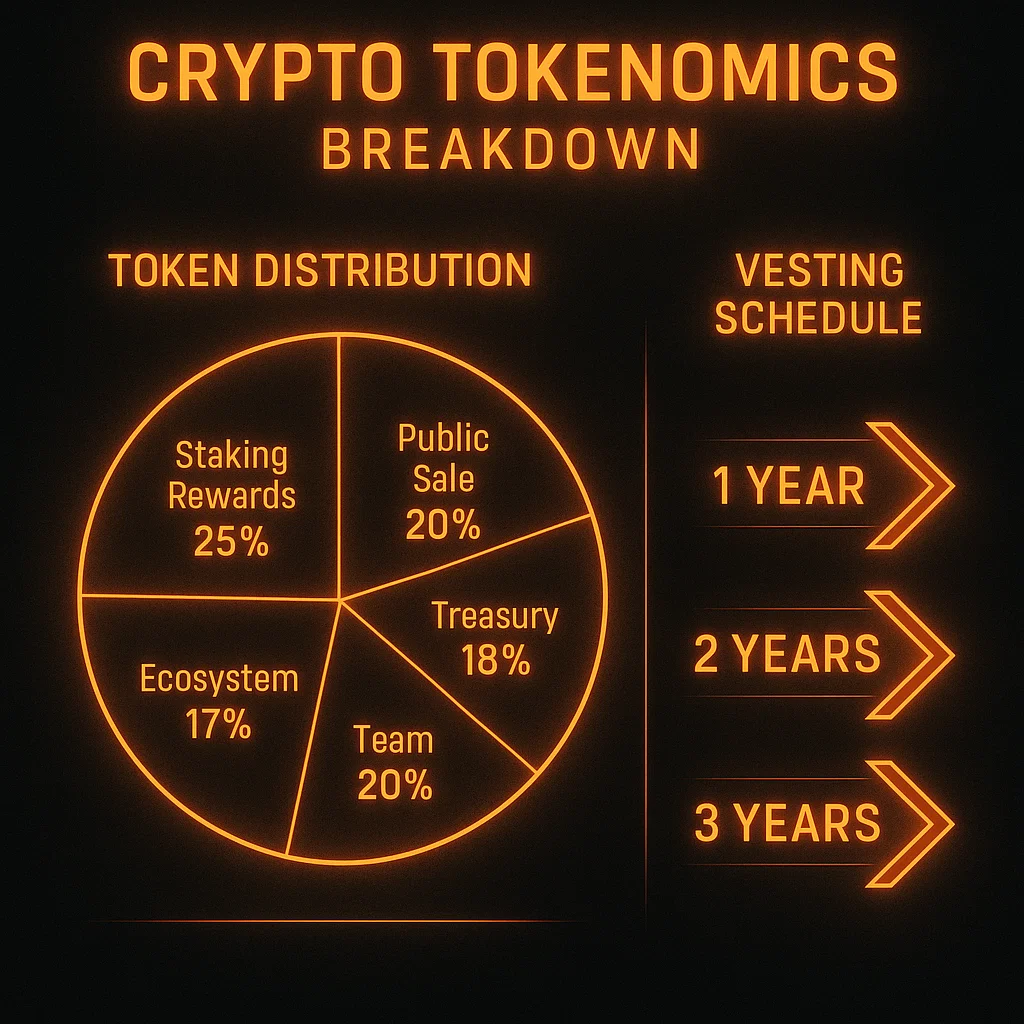
Analyze the Tokenomics
This is where many projects reveal their weaknesses. Look for:
- Total token supply and inflation model
- Distribution model (team, investors, treasury, airdrops)
- Vesting schedules and unlock timelines
- Utility and demand mechanics (staking, gas, governance)
If the token exists only for fundraising, that’s a red flag.
Verify the Technology
Don’t take technical claims at face value. A trustworthy whitepaper should clearly describe:
- Consensus mechanism (PoS, PoW, BFT, etc.)
- Scalability approach (sharding, rollups, Layer 2s)
- Security measures (audits, formal verification, bug bounty programs)
- Trade-offs and limitations
Bonus: Check GitHub or documentation links. Public code = transparency.
Investigate the Team
Are the founders and developers known? Look them up on LinkedIn or GitHub. Do they have relevant experience? Avoid anonymous teams with unverifiable credentials.
Look for partnerships, previous startups, and industry credibility.
Read the Roadmap
Is the project timeline realistic? Are milestones specific and time-bound? Watch out for vague phrases like “community growth” or “global expansion.”
A solid roadmap has:
- Product release dates
- Development sprints
- Audit schedules
- Partnership announcements
Legal Disclosures
Especially in ICOs or token launches, legal sections matter. Look for:
- Regulatory jurisdictions
- Risk warnings
- Licensing notes
- Anti-money laundering compliance
Projects that avoid legal clarity may be hiding risk.
Not sure what certain crypto terms mean? Check out our Blockchain Glossary for clear definitions of technical jargon used in whitepapers.
Green Flags vs. Red Flags
What to Trust and What to Avoid
Knowing how to filter signals can help you avoid scams or weak projects.
✅ Green Flags
- Open-source repositories and documentation
- Third-party audits with links to reports
- Transparent tokenomics and vesting
- Active, known development teams
- Academic citations or peer-reviewed research
- Community involvement and clear governance
❌ Red Flags
- Anonymous teams or unverifiable profiles
- Lack of token utility or real-world use case
- No mention of audits or code reviews
- Overpromising with vague language
- No clear token vesting or unlock info
- Skipped legal disclaimers
Use this mental checklist to reduce emotional bias.
Why Learning to Read a Whitepaper Is Essential
Gain Financial and Technical Literacy in Web3
Whether you’re holding for the long term or building a portfolio across chains, reading a whitepaper gives you superpowers.
It allows you to:
- Spot early-stage gems before they trend
- Avoid rug pulls, pump-and-dumps, and exit scams
- Understand Layer 1 vs. Layer 2 architectures
- Judge whether token models are sustainable
Every project has marketing. But only serious projects have good whitepapers.
Ledger is the gold standard for hardware crypto wallets. Store your coins offline, safely.
Tips for Beginners
Don’t Worry About Understanding Everything
Not a developer? No problem. Focus on the big-picture questions:
- Does this solve a real problem?
- Is the roadmap feasible?
- Is the token necessary?
- Can I trust the team?
Read 3–5 whitepapers to train your eyes. The patterns become easier to recognize.
If you appreciate educational content like this, you can support our mission and help us keep delivering value to the Web3 community.
Keep Going Deeper
Mastering whitepapers is only the beginning. To really understand Web3, expand into areas like:
- DAO governance models
- Cross-chain bridges and oracles
- Tokenomics game theory
- Regulatory trends (MiCA, SEC, etc.)
The more you understand whitepapers, the better you navigate crypto risk.
Final Thoughts
A whitepaper isn’t just a technical document. It’s a gateway to understanding blockchain at its core. Whether you’re an investor, builder, or researcher, learning how to read and interpret whitepapers empowers you to make smarter decisions in a decentralized world.
By following the structure outlined in this guide skimming, verifying claims, analyzing tokenomics, and identifying red flags you’ll move from passive reader to informed evaluator.
Use this article as your go-to checklist every time you encounter a new whitepaper. It will sharpen your due diligence and keep you steps ahead in the fast-paced world of Web3.

Want more crypto knowledge? Join our newsletter for weekly insights, free guides, and tools.
What’s the difference between a whitepaper and a litepaper?
A litepaper is simply a shorter and more accessible version of a whitepaper. It usually skips deep technical explanations and focuses on the project’s vision, goals, and tokenomics. It’s meant for quick reading and easier understanding, especially for non-technical users.
Do all crypto projects have a whitepaper?
Not always. Serious blockchain projects especially those launching a new token or protocol usually publish a whitepaper. However, smaller projects or centralized platforms sometimes skip it or release documents that are more like marketing brochures than real technical papers.
Do I need a technical background to read a whitepaper?
Not necessarily. While it helps to know the basics of blockchain, consensus models, and smart contracts, you don’t need to be a developer. By following a structured reading approach, even non-technical readers can understand the core ideas and evaluate projects wisely.
Can I trust a project with an anonymous team?
Usually, no. Unless the project is a fully decentralized DAO with open-source code, verified audits, and strong community governance, an anonymous team is a red flag. Transparency is one of the most important trust signals in Web3.
How can I tell if a whitepaper is trustworthy?
Look for signs of transparency: open-source code, third-party audits, detailed tokenomics, realistic roadmaps, and clear legal disclosures. A trustworthy whitepaper should also explain trade-offs, not just hype the benefits. If everything sounds too good to be true, it probably is.
Guess what? When you click and buy via our links, you’re not just enhancing your experience you‘re also supporting our content creation for free, so we can keep sharing useful blockchain insights. It‘s a pump for both of us!
— Black