Blockchain-Powered Loyalty Programs: The Future of Customer Engagement
In a loyalty economy overwhelmed by stale point systems, Blockchain-Powered Loyalty Programs offer a powerful alternative to engage modern customersToday’s most innovative companies are not just experimenting they’re building entire ecosystems around Blockchain-Powered Loyalty Programs to gain long-term strategic advantage. These programs blend tokenized loyalty, smart contracts, and decentralized infrastructure to unlock transparent, secure, and gamified customer journeys. This shift not only enhances user experience but significantly reduces operational inefficiencies and opens new revenue streams.
More and more businesses are exploring Blockchain-Powered Loyalty Programs to escape the limitations of outdated point systems.
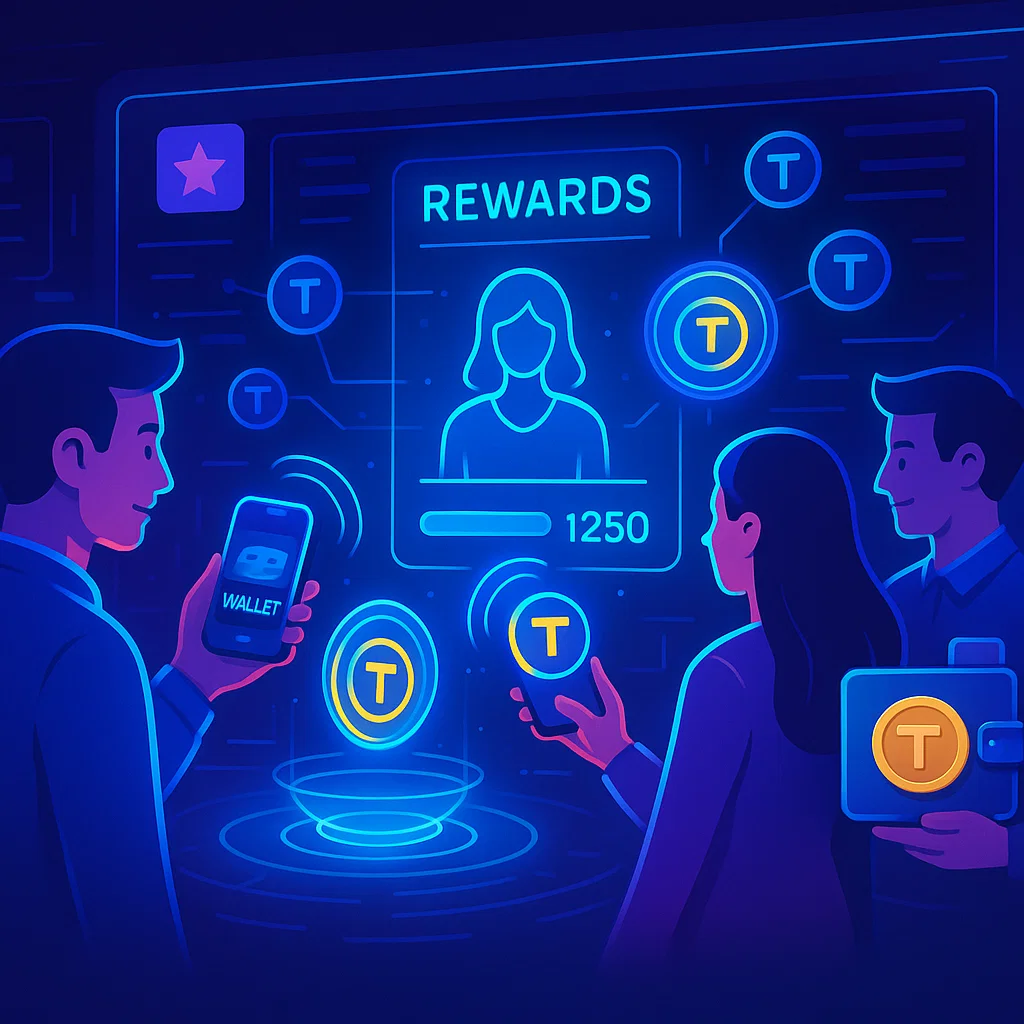
Why Traditional Loyalty Systems Are No Longer Enough
Despite billions invested globally into rewards programs, customer retention rates remain low. Why? Because legacy systems are plagued by:
- Data silos that restrict cross-brand redemptions
- Expired or unredeemed points that lose perceived value
- Manual accounting, which leads to fraud and inefficiencies
- Limited ability to personalize or gamify customer experiences
Customers often abandon programs due to lack of flexibility, unclear redemption rules, or a poor digital experience. Meanwhile, brands struggle to track engagement across platforms, wasting resources without measurable ROI.
This has led to the rise of Web3 loyalty solutions systems that decentralize control, reward users instantly, and connect experiences across digital and physical environments.
How Blockchain Disrupts the Loyalty Landscape
Interoperability Through Tokenized Loyalty
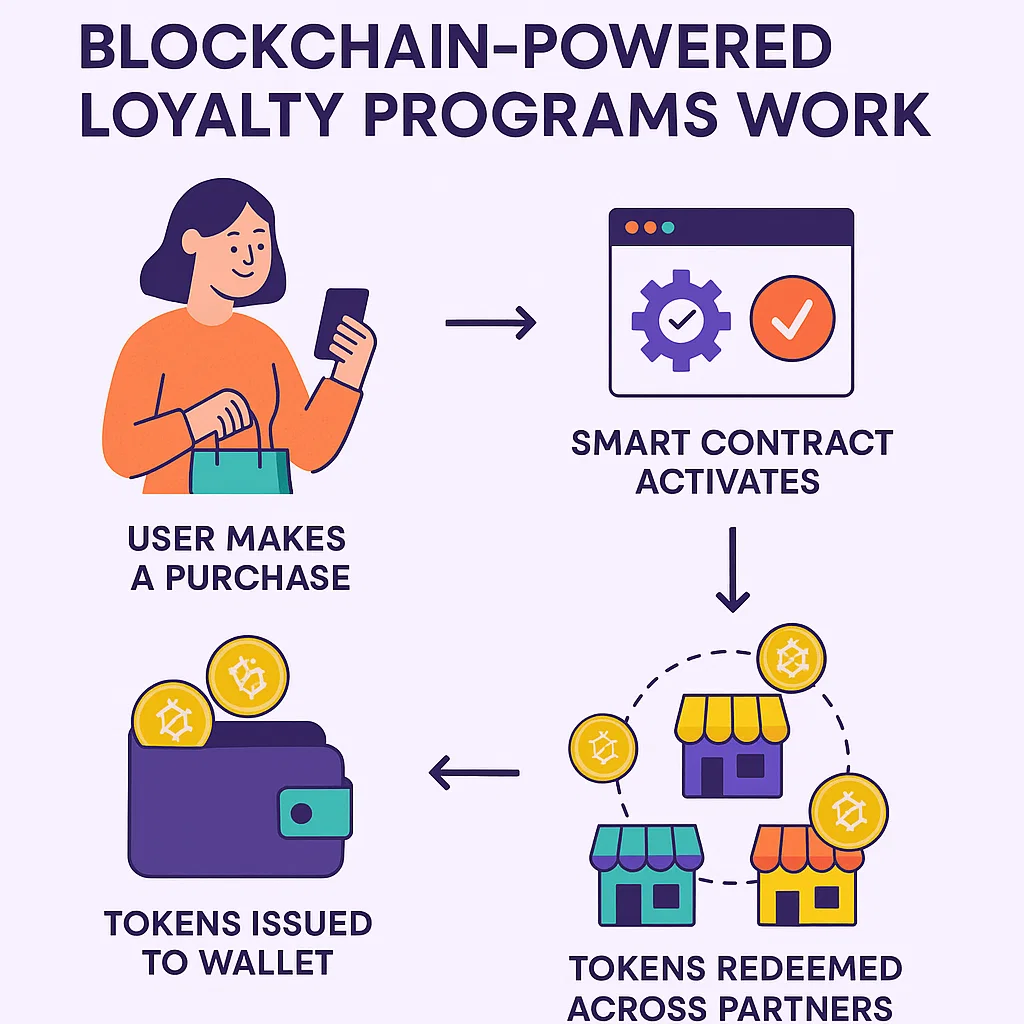
At the core of Blockchain-Powered Loyalty Programs lies the concept of interoperability. Instead of each brand having its own closed system, blockchain loyalty points can be issued as fungible tokens usable across an entire network of partners.
For example, imagine earning points at a retail store and redeeming them for concert tickets or travel upgrades—all managed through a single wallet. This model not only enhances user value but also encourages multi-brand collaboration.
This idea echoes innovations explored in our article on [Web3 Use Cases].
By using Blockchain-Powered Loyalty Programs, brands can offer real-time, secure, and interoperable experiences that outperform legacy systems.
Real-Time Trust with Smart Contracts
Smart contracts are the rule engines behind decentralized loyalty. They automate:
- Point issuance after purchase
- Real-time redemption during checkout
- Expiry logic based on behavior or tier
This removes friction and human error while boosting transparency. Each action is immutable and verifiable on-chain, eliminating disputes and fraud.
NFT-Based Customer Rewards and Gamification
A major evolution in loyalty programs is the introduction of NFT-based customer rewards. These digital assets are more than collectibles they’re programmable, tradable, and can unlock:
- Access to events
- Early product drops
- Personalized experiences
Brands like Lacoste and Starbucks have already launched NFT loyalty programs. Users engage not just for discounts, but for digital ownership, status, and exclusivity.
Gamified mechanics such as seasonal quests, leaderboards, and achievement-based rewards create emotional stickiness and social buzz. Combined with on-chain transparency, loyalty becomes part of a lifestyle.
For further context, see our breakdown on [NFT Utility Beyond Art].
Examples of Blockchain Loyalty in Action
Starbucks Odyssey
One of the first mainstream launches of a Web3 loyalty solution, Starbucks Odyssey offers NFT stamps that track customer actions and grant tiered perks. These can be resold on marketplaces or redeemed for curated experiences.
Lacoste’s Undw3
Through its Undw3 Card NFTs, Lacoste rewards community engagement, co-creation, and event participation. Loyalty becomes interactive and brand-driven not just a transactional function.
World Chess – The Tower on Algorand
Launched in August 2025, this platform tracks chess players’ progress using decentralized loyalty systems. Players earn blockchain loyalty points as “Progress Points” to unlock ranks, prizes, and carry their identity across games.
This echoes our analysis of [Tokenizing Real-World Assets].
Blackbird’s Crypto Rewards Program
New York’s Blackbird app is pioneering a crypto rewards program in the food sector. Diners earn $FLY tokens upon check-in, which can be redeemed or used in-app. Though adoption is still maturing, the model proves that tokenized loyalty is not limited to digital-native brands.
Key Benefits for Businesses and Users
1. Reduced Costs
By automating issuance, redemption, and validation, companies reduce human errors and lower operational costs. No need for centralized databases or redundant reconciliation.
2. Higher Engagement
With gamification, NFTs, and crypto incentives, users interact more frequently and emotionally with the brand, leading to longer retention and deeper loyalty.
3. True Ownership & Transparency
Users own their points, NFTs, or tokens and can verify balances in real time. No more wondering “did my reward go through?” it’s on-chain and immutable.
4. Cross-Brand Synergies
By embracing tokenized loyalty, brands can form alliances just like airline partnerships to increase reward value without cannibalizing revenue.
5. New Revenue Streams
NFTs can be sold, resold, or offered with limited editions. Brands can also monetize API access to their loyalty programs or partner activations.
To dive deeper into crypto monetization strategies, explore more ways to earn with blockchain.
Challenges to Consider Before Implementing
Scalability & Network Effects
The value of interoperable rewards increases only when enough brands and users participate. Early programs may face friction due to low adoption and limited redemptions.
Regulation and Privacy
Handling crypto wallets, personal data, and cross-border tokens requires deep understanding of GDPR and financial regulations. Partnering with legal experts is a must.
Bot Abuse and Over-Gamification
Programs offering crypto rewards or quests may attract bots or exploitative behavior. Anti-farming logic, whitelisting, and behavioral analytics are crucial.
User Experience and Wallet Adoption
Many consumers are still unfamiliar with blockchain wallets. Creating Web2-style onboarding such as email login or in-app wallets is essential to minimize drop-off rates.
How to Launch Your Own Blockchain-Powered Loyalty Program
Step 1: Start with a Pilot
Test your concept with a closed group. Focus on one use case (e.g., NFTs for early access) and measure engagement.
Step 2: Define Your Token Ecosystem
Will you use fungible tokens (like points) or non-fungible ones (like loyalty cards)? Establish clear logic for rewards, expiry, and exchange.
Step 3: Partner Strategically
Identify adjacent brands or verticals (e.g., food + fashion) for interoperable rewards. A shared ecosystem amplifies impact and retention.
Step 4: Focus on UX
Build mobile-first, simple interfaces. Avoid overcomplicating with private keys or MetaMask offer seamless wallet creation and redemption flows.
Step 5: Integrate Gamification
Quests, surprise drops, collectible badges tie them to real customer behavior like reviews, purchases, or referrals.
Step 6: Track KPIs Religiously
Monitor:
- Wallet activation
- Token redemption rates
- Bot activity
- Fraud cases
- Customer satisfaction
These metrics will guide the next iterations of your Web3 loyalty solution.
Conclusion: The Future of Loyalty Is On-Chain
Blockchain-Powered Loyalty Programs aren’t a passing trend they’re the next chapter in how brands build trust, deliver value, and cultivate long-term relationships.
By integrating decentralized loyalty systems, brands shift from one-way incentives to two-way, value-based ecosystems where customers are participants, not just buyers. The mix of crypto rewards, NFTs, and transparent smart contracts fosters deeper engagement, lower churn, and higher lifetime value.
And the best part? It’s already happening. From Starbucks to chess leagues, the world is embracing on-chain loyalty. Brands that take the leap now stand to become pioneers in a tokenized, trustless, loyalty-driven economy.
Blockchain-Powered Loyalty Programs are reshaping the future of customer retention, brand engagement, and on-chain utility.
Found this guide helpful? Support our mission by visiting our Donation Page every contribution helps us keep creating high-quality Web3 education for all.
What exactly are blockchain-based loyalty programs?
They use blockchain to issue and manage tokenized rewards (NFTs or tokens) that are secure, transparent, and can be exchanged or redeemed across multiple brands using smart contracts.
Are blockchain loyalty programs only for crypto-savvy users?
Not necessarily. Many brands provide simplified wallet onboarding or custody solutions users don’t need deep crypto knowledge to participate.
Can rewards tokens be exchanged or sold?
Yes tokens on public chains can be tradable peer-to-peer, but brands can restrict or gate transferability as required by design or regulation.
What industries suit blockchain loyalty the most?
Travel, dining, retail, sports/entertainment, NFTs & digital content. Industries with partnerships benefit especially from cross‑brand exchange.
What are the biggest risks?
Key challenges include regulatory compliance, data privacy, risk of bots or abuse, user UX friction, and achieving sufficient scale.
Guess what? When you click and buy via our links, you’re not just enhancing your experience you‘re also supporting our content creation for free, so we can keep sharing useful blockchain insights. It‘s a pump for both of us!
— Black