
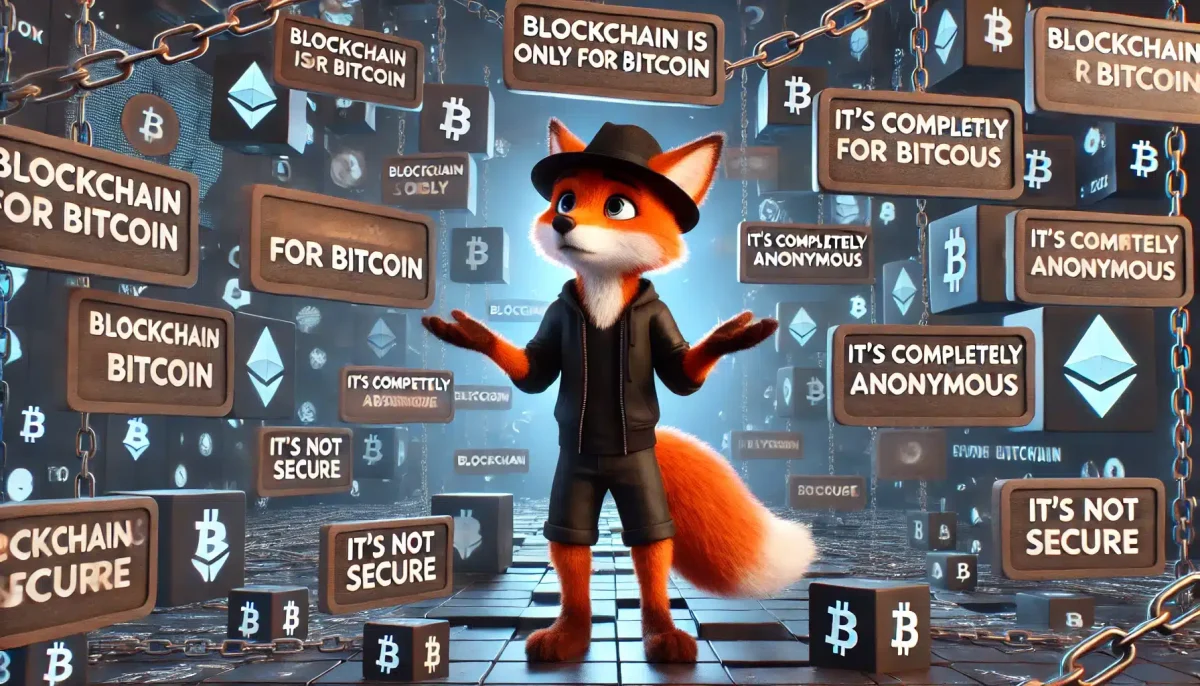
Blockchain is often misunderstood, leading to a variety of myths. This article debunks some of the most common misconceptions, providing clarity on what blockchain is and isn’t. Below, we will address some common myths about blockchain and separate fact from fiction.
Blockchain technology has been making waves across various industries, from finance to supply chain management. As its popularity grows, so does the spread of misinformation and myths surrounding it. While blockchain is indeed a revolutionary technology, the buzz around it has led to several misunderstandings that need to be cleared up.
In this article, I’m going to debunk some of the most common myths about blockchain. Whether you’re new to the concept or have been following it for a while, separating fact from fiction is crucial to understanding what blockchain can and cannot do. So, let’s dive into these myths and uncover the real story behind blockchain technology.
Myth 1: Blockchain and Bitcoin Are the Same
Explanation of the Myth
One of the most prevalent myths about blockchain is the belief that it’s synonymous with Bitcoin. Given that Bitcoin was the first application of blockchain technology to gain widespread attention, it’s easy to see why people might conflate the two. However, this misunderstanding oversimplifies the capabilities and scope of blockchain.
Reality
In reality, blockchain is the underlying technology that powers Bitcoin, but it is not limited to Bitcoin alone. Blockchain is essentially a decentralized digital ledger that records transactions across multiple computers in a way that ensures data integrity and transparency. This technology can be used for a wide range of applications beyond cryptocurrencies.
For instance, blockchain can be used in supply chain management to track the provenance of goods from origin to destination, ensuring transparency and reducing fraud. In the healthcare industry, blockchain can securely store and manage patient records, providing a tamper-proof history that can be accessed by authorized parties. Another exciting application is in voting systems, where blockchain could help create more secure and transparent electoral processes.
Bitcoin is just one application of blockchain technology there are countless others. Ethereum, for example, uses blockchain to enable smart contracts, which automatically execute and enforce agreements when certain conditions are met. Ripple uses blockchain for faster, more efficient cross-border payments. The potential uses of blockchain are vast and varied, far beyond what Bitcoin alone can offer.
Myth 2: Blockchain Is Completely Anonymous
Explanation of the Myth
Another common misconception is that blockchain transactions are entirely anonymous, which is part of the reason why some people believe blockchain is only used for illicit activities. The idea here is that because blockchain operates independently of a central authority, users can transact without revealing their identities.
Reality
While it’s true that blockchain offers a level of privacy, it’s more accurate to describe it as pseudonymous rather than anonymous. On most blockchains, transactions are recorded on a public ledger that is accessible to anyone. Each transaction is linked to a unique alphanumeric address rather than a user’s real identity, which provides a layer of privacy. However, with the right tools, such as blockchain explorers and forensic analysis, it is possible to trace transactions back to individuals.
For example, if someone uses an exchange to buy cryptocurrency and then transfers it to their wallet, the exchange could be compelled by law enforcement to provide details about the owner of that wallet. From there, transactions linked to that wallet can be traced on the blockchain, potentially revealing the individual’s activities.
There are, however, certain privacy-focused blockchains that aim to provide enhanced anonymity. Monero and Zcash (i wrote a complete article about privacy coins) are two examples of cryptocurrencies that use advanced cryptographic techniques to obscure transaction details, making it significantly more difficult to trace them. But even these privacy coins are not entirely untraceable, especially as regulatory scrutiny increases and new forensic tools are developed.
The takeaway here is that while blockchain offers more privacy than traditional financial systems, it is not a guarantee of complete anonymity. Users should be aware of the limitations of blockchain privacy and understand that their transactions can potentially be traced.
Myth 3: Blockchain Is Only for Financial Transactions
Explanation of the Myth
Blockchain’s origins are deeply rooted in the financial sector, particularly with the creation of Bitcoin. This has led many to believe that blockchain is only useful for financial transactions and cryptocurrencies. While this was blockchain’s first major use case, it’s far from its only application.
Reality
Blockchain technology is incredibly versatile and is being applied across a wide range of industries beyond finance. One of the key strengths of blockchain is its ability to create a secure, immutable record of transactions, which can be useful in any situation where data integrity is critical.
Take supply chain management, for example. Companies can use blockchain to track the movement of goods through every stage of the supply chain. This not only enhances transparency but also helps prevent counterfeiting and fraud. For instance, Walmart has been using blockchain to track the origin of food products, ensuring that they can quickly trace the source of contamination in case of a foodborne illness outbreak.
In healthcare, blockchain is being used to securely store patient records, ensuring that sensitive information is protected and only accessible by authorized individuals. Blockchain’s ability to provide a tamper-proof record is also being leveraged in clinical trials, where it’s important to maintain the integrity of data collected.
Blockchain is even making its way into voting systems. Several projects are exploring how blockchain can be used to create secure and transparent voting platforms, which could help reduce fraud and increase trust in the electoral process. By providing a verifiable and immutable record of votes, blockchain could revolutionize how we conduct elections.
These examples are just the tip of the iceberg. Blockchain’s potential applications are vast (and you know what? i wrote a lot of articles about blockchain, so give a shoot to my blockchain articles), and its use is expanding into new areas every day. From digital identity verification to intellectual property management, the possibilities for blockchain technology are virtually limitless.
Myth 4: Blockchain Is Immutable and Unhackable
Explanation of the Myth
Blockchain is often touted as being immutable and unhackable, leading some to believe that it is completely secure and free from vulnerabilities. This myth has contributed to a perception that blockchain can do no wrong and that any data stored on a blockchain is safe forever.
Reality
While blockchain does offer significant security advantages, it is not entirely immune to hacking or tampering. The immutability of blockchain refers to the fact that once data is recorded on a blockchain, it is difficult (but not impossible) to alter. This immutability is maintained through the consensus mechanisms that blockchains use, such as Proof of Work (PoW) or Proof of Stake (PoS).
However, there are vulnerabilities that can be exploited. For example, a 51% attack is a situation where a single entity or group gains control of more than 50% of a blockchain’s computing power or staking power. This would allow them to manipulate the blockchain, potentially reversing transactions or double-spending coins. While such attacks are difficult and expensive to carry out on large, well-established blockchains like Bitcoin, they are more feasible on smaller or less decentralized blockchains.
There have been instances of blockchains being compromised. In 2016, the Ethereum blockchain experienced a high-profile hack known as “The DAO Hack,” where an attacker exploited a vulnerability in a smart contract, siphoning off about $50 million worth of Ether. This led to a controversial hard fork that split Ethereum into two separate blockchains: Ethereum and Ethereum Classic.
Blockchain’s security largely depends on the integrity of its consensus mechanism and the decentralization of its network. While it is more secure than many traditional systems, it is not invincible. Understanding the limitations and potential risks is essential for anyone working with or investing in blockchain technology.
Blockchain technology is a powerful tool with the potential to transform industries and redefine how we manage data and transactions. However, as with any emerging technology, it’s surrounded by myths and misconceptions that can lead to misunderstandings. By debunking these common myths, I hope to have provided you with a clearer understanding of what blockchain is and isn’t.
It’s important to approach blockchain with a critical eye, recognizing both its strengths and its limitations. As the technology continues to evolve, staying informed and discerning about the information you encounter will be key to navigating the blockchain space effectively.
FAQs
What is the difference between blockchain and Bitcoin?
Blockchain is the underlying technology that powers Bitcoin, but it has many other applications beyond cryptocurrencies.
Can blockchain transactions really be anonymous?
Blockchain transactions are pseudonymous, meaning they are linked to alphanumeric addresses rather than real identities, but they can be traced with the right tools.
Is blockchain secure from hackers?
While blockchain is generally secure, it is not entirely immune to hacking or tampering, especially in the case of 51% attacks or vulnerabilities in smart contracts.
How does blockchain impact the environment?
Blockchain technology, particularly Proof of Work systems like Bitcoin, has a significant environmental impact due to high energy consumption. However, more eco-friendly alternatives like Proof of Stake are being developed.
What are the different types of blockchains?
There are several types of blockchains, including public, private, consortium, and hybrid blockchains, each serving different purposes and use cases.
To secure your cryptocurrency, grab a Ledger hardware wallet today at this link.
Looking to start trading? Sign up with my Bybit referral to get up to $30,050 in Welcome Rewards, plus a $50 sign-up bonus and exclusive VIP trading perks. Join my Discord community with an exclusive “Supporter” role too! Start here: Bybit Affiliate Link.
“Guess what? When you click and buy through our links, you’re doing more than improving your journey. You’re supporting us in a way that doesn’t cost you extra but helps us keep bringing you the best blockchain posts. It’s a pump for both of us!”
-0xteumessia