

What Is a Crypto Bear Market?
A crypto bear market refers to a prolonged period of declining cryptocurrency prices, typically defined by a fall of 20% or more from recent highs. However, in the crypto space, this drop is often much steeper ranging from 70% to even 90% for certain altcoins. These phases are part of a natural cycle in financial markets and have historically paved the way for major innovation and long-term gains. While emotionally challenging, understanding how to navigate a bear market can offer investors powerful opportunities and financial resilience.
Recognizing the Signs of a Crypto Bear Market
Historical Patterns
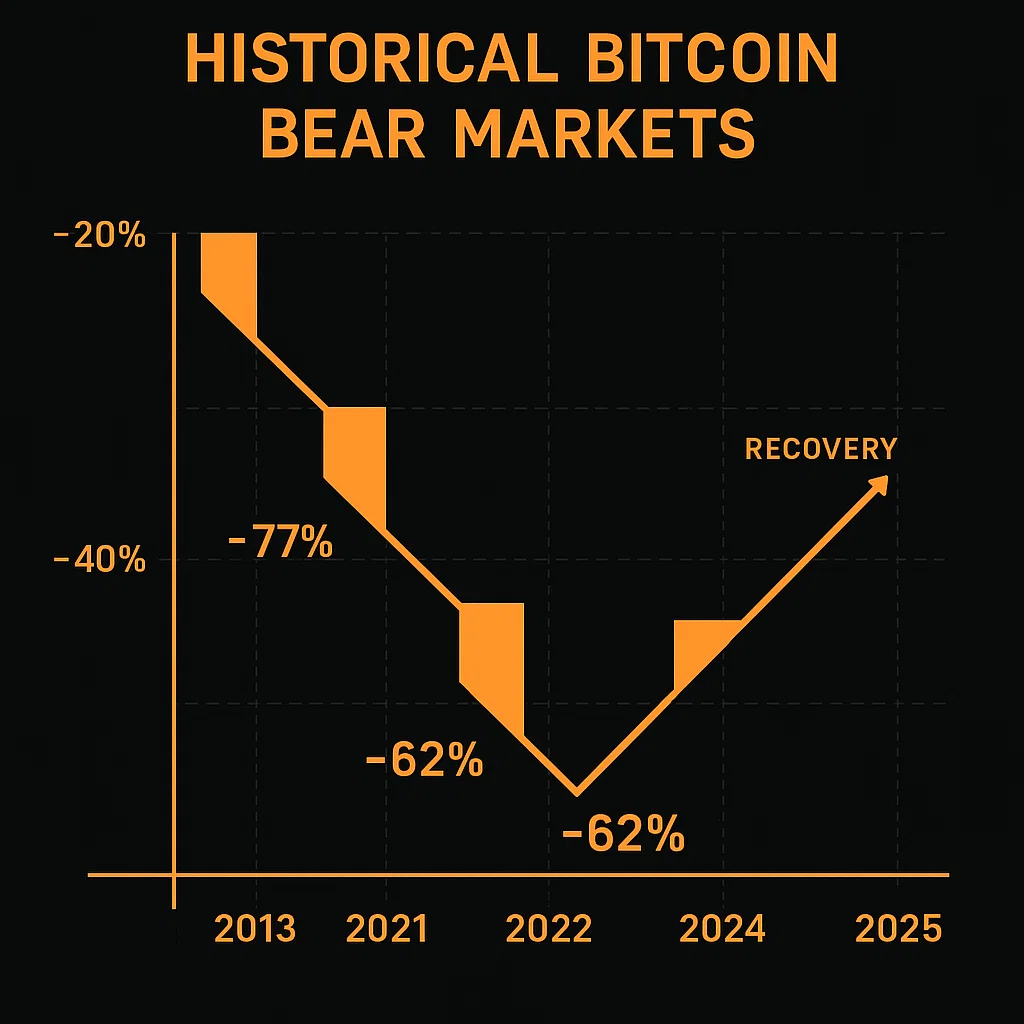
The crypto bear market is not a new phenomenon. Since Bitcoin’s inception, there have been multiple bear phases. For instance, after the 2013 bull run, Bitcoin dropped over 85%. Similar declines happened in 2018 and 2022. Each time, the market eventually recovered, reaching new highs and rewarding those who held through the storm. Recognizing that these cycles repeat can help investors detach from short-term emotions and develop long-term conviction.
Market Sentiment Shifts
One of the key characteristics of a crypto bear market is a shift in sentiment. Optimism and hype turn into fear and skepticism. Social media becomes quiet, influencers stop posting, and the mainstream media publishes negative headlines. These signs usually indicate that the market is deep in a bear phase. Savvy investors understand that such signals often present hidden opportunities to accumulate assets while others exit.
Emotional Management During a Crypto Bear Market
Overcoming Fear, Uncertainty, and Doubt (FUD)
Emotions run high during a crypto bear market. Fear of losing money, uncertainty about the future, and doubt in the fundamentals of the technology can cloud judgment. One effective way to combat this is to zoom outlook at long-term charts and realize how previous crashes eventually led to recovery. Remembering why you entered the market in the first place helps you stay grounded.
Limiting Screen Time and News Exposure
It’s easy to spiral into anxiety when constantly checking prices or consuming bearish news. To preserve your mental health, consider deleting trading apps temporarily or setting daily screen-time limits. The goal is to create mental space to think clearly, instead of reacting emotionally to every price movement.
Securing Your Crypto Assets
Move Funds to Cold Storage
During a crypto bear market, platform failures are common. Centralized exchanges may halt withdrawals, go bankrupt, or get hacked. The safest move is to transfer your long-term holdings to a hardware wallet like Ledger or Trezor. Cold storage eliminates third-party risk and keeps your assets in your control.
Reduce Custodial Risk
Avoid keeping large amounts of crypto on custodial platforms. If you’re trading actively, only leave a small amount on exchanges and store the rest offline. Security must be a top priority during turbulent markets.
Ledger is the gold standard for hardware crypto wallets. Store your coins offline, safely.
Adjusting Your Investment Strategy
Focus on Quality Over Quantity
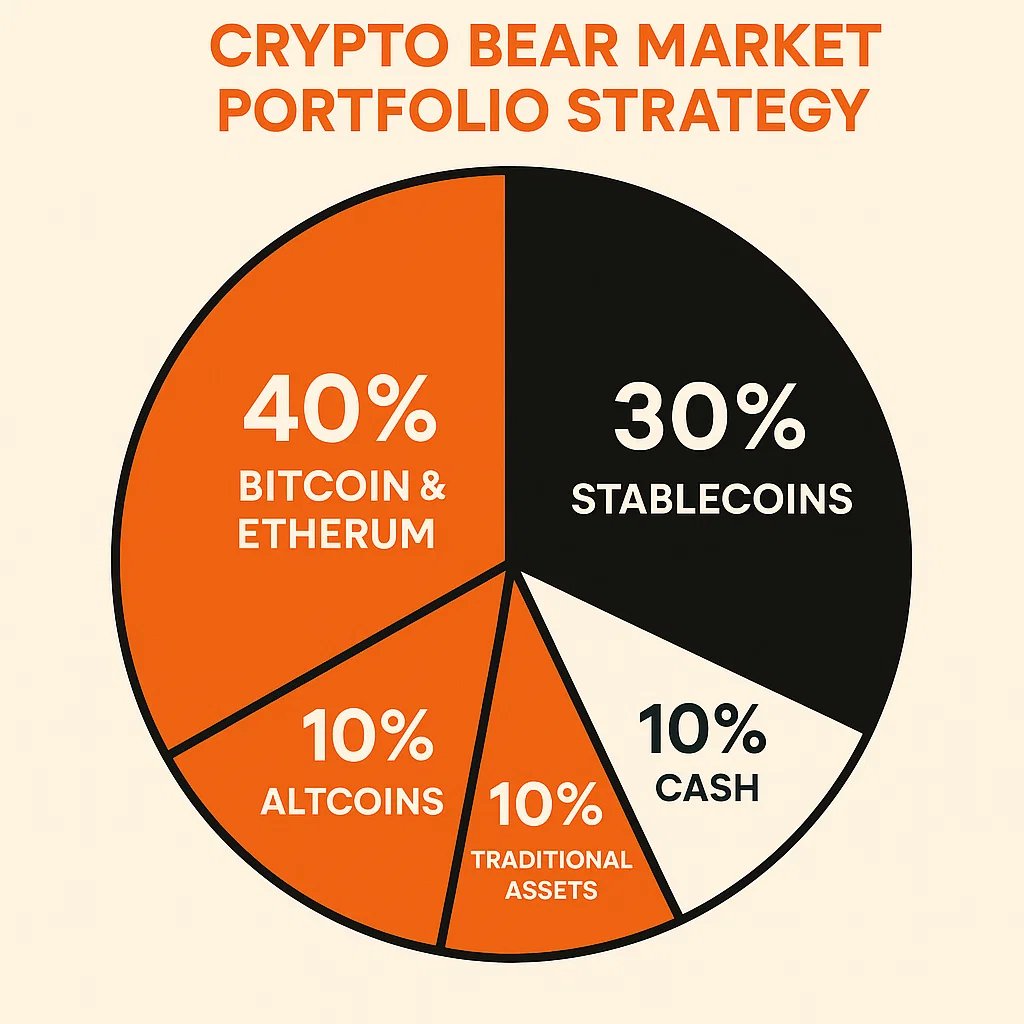
In a crypto bear market, capital preservation becomes more important than high returns. Shift your portfolio toward blue-chip cryptocurrencies like Bitcoin and Ethereum. These assets have proven track records, strong communities, and higher survival odds.
Maintain Stablecoin Liquidity
Holding stablecoins like USDC or USDT can reduce volatility and give you flexibility. With prices down, having dry powder allows you to take advantage of sharp dips without needing to sell at a loss.
Diversify Beyond Crypto
Overexposure to crypto can be dangerous in a downtrend. Consider allocating some funds to traditional assets like stocks, ETFs, or even physical commodities. Diversification helps reduce portfolio-wide risk and provides a safety net.
Smart Accumulation Techniques
Dollar-Cost Averaging (DCA)
DCA involves investing a fixed amount at regular intervals, regardless of the asset’s price. This strategy is especially effective in a crypto bear market, as it spreads out entry points and lowers the average cost basis over time. It also removes the emotion from investment decisions.
Tactical Buying on Dips
For more advanced investors, it can be useful to accumulate during sharp pullbacks in blue-chip assets. This requires conviction and research, but the rewards can be significant when the market recovers.
Generating Passive Income During a Bear Market
Explore Staking and Yield Options
Your crypto doesn’t have to sit idle during a crypto bear market. Consider staking coins like ETH, ATOM, or SOL to earn passive income. DeFi platforms also offer yield farming opportunities, though it’s important to assess risk and avoid overleveraging.
Consider Hedging Strategies
Advanced users can use tools like futures contracts, options, or inverse ETFs to hedge their positions. These instruments can offset losses but also come with higher complexity and risk. Use them only if you understand how they work.
Use Automated Trading Bots
Bots like Bitsgap or Pionex offer DCA and Buy-the-Dip strategies that can automate your trades with discipline. These tools are useful for emotion-free accumulation during extended downturns.
Education and Networking in Bear Markets
Invest Time in Learning
Bear markets are the best time to level up. Take courses on blockchain technology, DeFi protocols, tokenomics, and technical analysis. When markets are quiet, learning is louder. Education now pays dividends in the next bull cycle.
Build Industry Relationships
Join communities on Twitter, Telegram, Discord, and Reddit. Engage with builders, investors, and educators. These relationships can lead to early insights, partnerships, and even job opportunities in crypto.
Stay on Top of Innovation
Bear markets don’t halt innovation. In fact, many legendary crypto protocols were born during downturns. Track developer activity, project roadmaps, and on-chain metrics to stay updated on what’s being built behind the scenes.
Planning for the Next Bull Run
Set Profit-Taking Targets
Once the market recovers, emotions shift rapidly from fear to greed. Have your targets ready know when to exit positions partially or fully. Setting alerts and sticking to your plan prevents FOMO from ruining gains.
Prepare Deployment Strategies
Create a checklist of assets you want to buy, and the price levels at which you’ll take action. Whether you use limit orders or manual entries, having a clear plan ensures you don’t miss out when the reversal happens.
Expect and Embrace Volatility
Just as drawdowns are part of the crypto bear market, violent recoveries are part of the bull cycle. Embrace the chaos but stay disciplined. Don’t overleverage, don’t chase pumps, and remember the hard lessons learned during the bear phase.
Why Surviving a Crypto Bear Market Matters
The investors who thrive long term are not those who panic during downturns, but those who remain calm, calculated, and committed. A crypto bear market is a test of patience, discipline, and strategy. It weeds out speculation and rewards those who focus on fundamentals. By securing your assets, maintaining mental clarity, and preparing for the future, you position yourself not only to survive but to thrive when the next cycle begins.
Final Thoughts
Every crypto bear market eventually ends. Historically, the most aggressive bull runs follow the deepest drawdowns. The time you invest now in learning, in restructuring your portfolio, in networking becomes your unfair advantage when the market sentiment flips. Stay consistent, stay safe, and treat this period as your training ground. This is not the end. It’s the setup.
Want more crypto knowledge? Join our newsletter for weekly insights, free guides, and tools.

Is it safe to stake crypto during a bear market?
Yes, staking can still generate passive income. Just make sure to use trusted platforms and avoid taking on too much risk or leverage.
How long do crypto bear markets usually last?
Major crypto bear markets typically last between 4 and 13 months, with an average duration of around 9 months.
Should I sell everything in a bear market?
No. Trying to time the exact bottom is extremely difficult. It’s better to focus on secure storage, selective accumulation, and long-term goals.
Can I profit during a bear market?
Absolutely. With the right strategies like hedging, shorting, staking, or using automated trading bots there are real opportunities to earn even during downturns.
What should I focus on during a crypto bear market?
During a crypto bear market, focus on protecting your assets, improving your knowledge, and preparing for the next cycle. It’s the best time to build long-term strategies and stay disciplined.
Guess what? When you click and buy via our links, you’re not just enhancing your experience you‘re also supporting our content creation for free, so we can keep sharing useful blockchain insights. It‘s a pump for both of us!
— Black