

Introduction
The Rise of Digital Nations is no longer a distant theory. It’s happening now, reshaping how humans define belonging, governance, and economic participation. These new blockchain-based entities challenge the traditional concepts of statehood and citizenship. As decentralized technologies mature, these digital nations are becoming functional ecosystems, offering services and governance structures through transparent, on-chain methods. They are not confined to any territory but are governed by shared protocols and community consensus.
Understanding the Rise of Digital Nations
A digital nation is a blockchain-native community that simulates the core functions of a traditional nation-state but operates entirely online. These communities leverage blockchain to create digital identities, economic models, voting systems, and public goods distribution all governed by code rather than centralized authority. The Rise of Digital Nations signifies a global movement toward permissionless societies that rely on transparency, autonomy, and collective ownership.
Digital nations differ from standard online communities. They are economically self-sustaining, politically participatory, and built on shared values. Powered by tokens and smart contracts, they offer real governance power to their citizens. As more people seek alternatives to outdated systems, this shift grows more significant.
Why Digital Nations Are Gaining Traction
The Technology Is Ready
The infrastructure enabling The Rise of Digital Nations has matured. Platforms like Ethereum, Cosmos, and Polkadot offer powerful toolkits to launch decentralized systems. Smart contracts now support everything from DAO treasuries to governance proposals and identity management. The technology no longer limits innovation; it’s the cultural and political willingness to adopt it that matters now.
Cultural Disillusionment with Legacy Systems
Citizens around the globe are increasingly disillusioned by the inefficiency, opacity, and corruption in traditional governance. Digital nations, by contrast, offer systems built from the ground up with accountability, transparency, and immutability. This trustless foundation makes the model more appealing, especially to younger generations.
Global Connectivity and Shared Purpose
The internet has enabled people to organize around shared values rather than shared geography. The Rise of Digital Nations embodies this: communities based on purpose, not passports. Whether it’s a collective of artists, developers, activists, or investors, digital nations provide infrastructure for aligned people to co-create.
Core Characteristics of Digital Nations
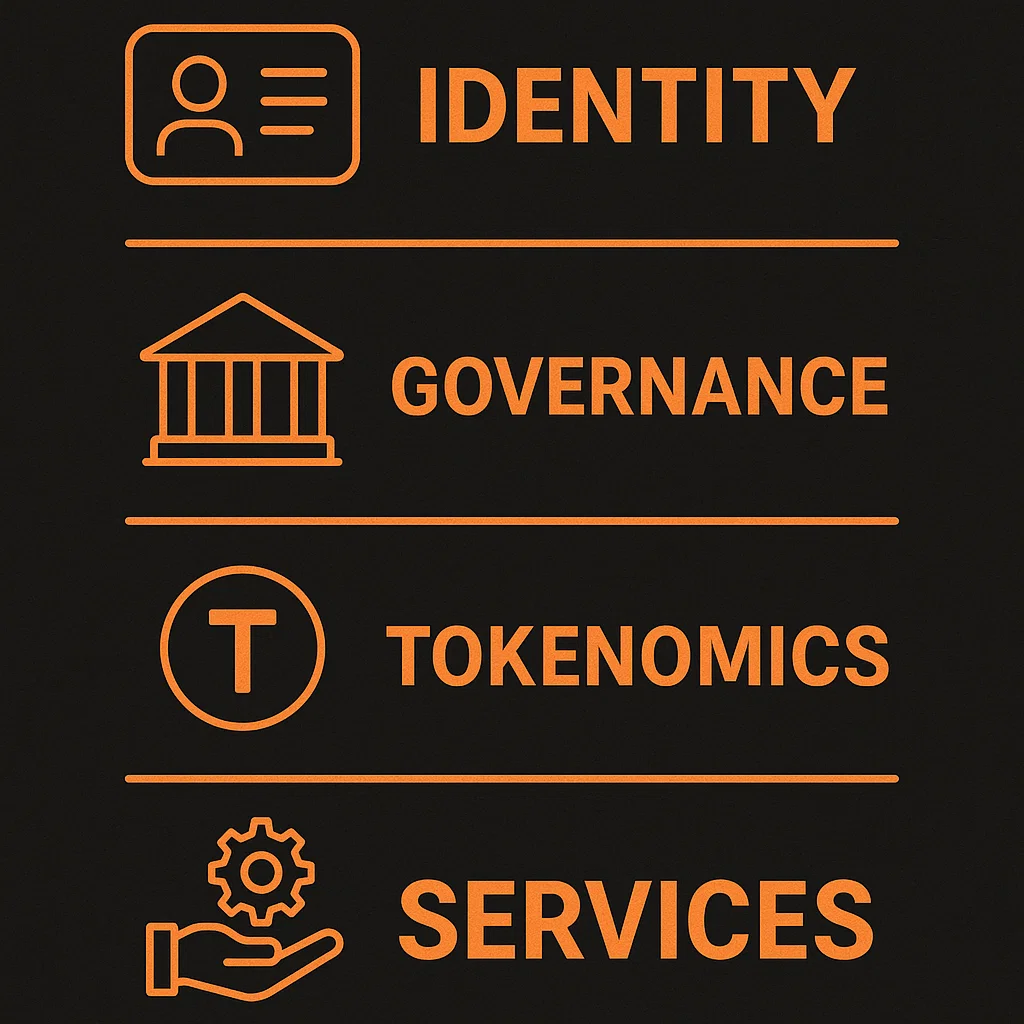
1. Digital Identity Systems
Identity is fundamental to any society. Digital nations use blockchain-based credentials like Soulbound Tokens or Verifiable Credentials to establish identity and reputation. These systems allow individuals to prove participation, achievements, and affiliations without relying on centralized institutions.
2. Decentralized Governance
Instead of centralized bureaucracies, digital nations use DAOs to make decisions. Token holders can vote on proposals, funding allocation, or rule changes. Every action is visible and verifiable on-chain. The Rise of Digital Nations reflects a world where every member can influence direction, not just elected officials.
3. Tokenized Economic Structures
Digital nations run their own economies. Their native tokens serve as governance tools, access passes, incentives, and economic assets. Members can earn tokens by contributing labor, knowledge, or capital. These tokens, often tradable, create a robust incentive layer that rewards participation.
4. Distributed Services and Infrastructure
Digital nations offer a variety of services:
- Education through peer-to-peer academies.
- Insurance via community-funded risk pools.
- Justice systems through on-chain arbitration protocols.
- Public goods like open-source software or funding DAOs.
This distributed architecture reimagines what public service delivery looks like autonomous, global, and inclusive.
Key Examples Illustrating the Rise of Digital Nations
Bitnation
One of the earliest attempts to provide voluntary digital governance. While it had a limited lifespan, Bitnation was a conceptual milestone in The Rise of Digital Nations narrative.
Decentraland
This virtual metaverse operates with a governance DAO, allowing landowners and participants to shape the future of the platform. It shows how digital sovereignty can extend into entertainment and commerce.
Friends With Benefits (FWB)
A cultural and social DAO where community membership requires holding a token. FWB offers events, education, and grant programs, showcasing a softer but still structured form of digital citizenship.
The LAO
An investment DAO where decisions are made collectively, and capital is deployed transparently. It’s an example of economic sovereignty within digital nations.
DisCO
A feminist and cooperative digital community that combines blockchain with human-centered economics. It emphasizes care work, fair compensation, and participatory governance.
Benefits of Joining a Digital Nation
Real Stake in Governance
Unlike traditional systems, where power is centralized, citizens of digital nations can directly influence governance. Voting is often proportional to token holdings or community reputation. The Rise of Digital Nations democratizes influence and creates aligned incentives.
Economic Participation and Equity
Participants don’t just receive services they own part of the system. Token distribution and on-chain labor markets make the economic model equitable. The potential for financial upside makes these communities more than ideological experiments.
Flexibility and Accessibility
There are no border controls in digital nations. Anyone with internet access can join. This inclusiveness makes them more adaptive to a global, digital-first world.
Challenges to Address
Scalability
On-chain voting, identity, and reputation systems can face congestion and high costs. Layer 2 solutions and off-chain computation may help digital nations scale.
Legal Uncertainty
Governments still don’t recognize most digital nations. This raises questions around taxation, liability, and legal standing. As The Rise of Digital Nations continues, regulatory frameworks will need to evolve.
Plutocracy Risks
Token-weighted voting can lead to power concentration among wealthy individuals or early adopters. To avoid plutocracy, many communities are experimenting with quadratic voting, time-locked staking, or weighted reputation systems.
User Experience
Many platforms are still too technical for mainstream users. Simplifying onboarding, improving UI/UX, and offering educational content are crucial to expanding participation.
The Future of Digital Nationhood
As The Rise of Digital Nations accelerates, we can expect to see new forms of hybrid governance and economic coordination. Some possible developments include:
- Cross-DAO alliances and “diplomatic” agreements between digital nations.
- On-chain UBI models, funded by DAO treasuries and distributed to citizens.
- Public infrastructure DAOs, managing digital commons like open-source tools, decentralized storage, or knowledge bases.
- Recognition by traditional states, either through e-residency, partnerships, or regulatory sandboxes.
These advancements will blur the lines between real-world institutions and blockchain communities. Future generations might grow up as dual citizens one physical, one digital.
How to Get Involved
If you’re intrigued by The Rise of Digital Nations, here’s how to begin:
- Learn about DAOs, tokens, and blockchain through platforms like BlockchainDudes, Gitcoin, or Bankless.
- Set up a wallet (e.g., MetaMask) and join community Discords or Telegrams.
- Earn tokens through contribution, not just purchase write, code, moderate, or design.
- Vote and participate in proposals to shape the community.
- Use the services attend events, take courses, apply for grants, and give feedback.
Want more crypto knowledge? Join our newsletter for weekly insights, free guides, and tools
Conclusion
The Rise of Digital Nations represents a fundamental reimagining of how humans organize, participate, and govern. These communities built on blockchain principles offer a glimpse into a world where sovereignty is programmable, citizenship is earned, and value is co-created. While technical, legal, and cultural challenges remain, the momentum is undeniable.
Digital nations are no longer theoretical. They are functioning, growing, and innovating in real time. As more people seek freedom, fairness, and purpose, these communities will become more than fringe experiments. They will shape how the next generation thinks about nationhood itself.
Start trading crypto securely with ByBit trusted by millions worldwide.
What is a digital nation?
A digital nation is an online community that works like a country, but without borders. It uses blockchain technology to manage things like governance, identity, and its own economy.
How do DAOs govern digital nations?
Digital nations are often run by DAOs, which let members vote on decisions using tokens. This voting happens on the blockchain and is fully transparent.
Are digital nations legally recognized?
Not yet. Most digital nations aren’t officially recognized by governments. Their legal status depends on local laws, and regulations are still evolving.
Can anyone join a digital nation?
In many cases, yes. Some digital nations are open to everyone, while others require an invitation or owning specific tokens to join.
What are the main risks?
The biggest risks include technical bugs, unclear regulations, power imbalances in voting, and a steep learning curve for new users.
Ledger is the gold standard for hardware crypto wallets. Store your coins offline, safely.
Guess what? When you click and buy via our links, you’re not just enhancing your experience you‘re also supporting our content creation for free, so we can keep sharing useful blockchain insights. It‘s a pump for both of us!
— Black