What Are Blockchain Indexers?
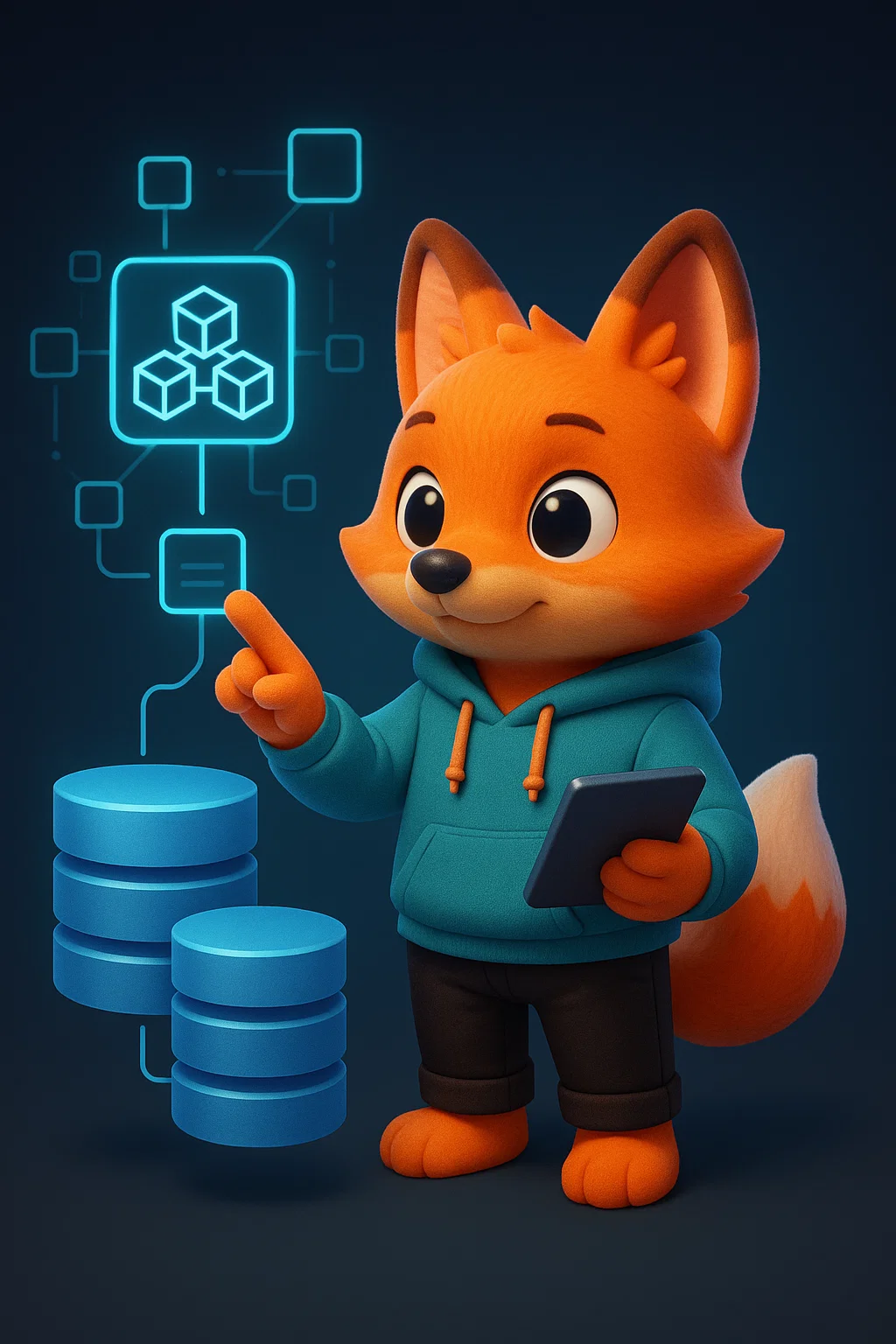
Blockchain Indexers are specialized tools or protocols designed to transform raw blockchain data into structured, queryable formats. While all blockchain data is publicly available and technically accessible, it’s extremely inefficient to extract specific information directly from on-chain storage. Indexers solve this problem by enabling fast, efficient querying of decentralized data, becoming a cornerstone of the modern Web3 stack.
Why Raw Blockchain Data Is Not Enough
Blockchains like Ethereum, Solana, and Avalanche store data sequentially in blocks, which are cryptographically linked. This design ensures security and immutability, but not searchability. For example, retrieving all transactions involving a specific wallet address requires scanning every block—an operation that’s not only slow but also computationally expensive.
That’s why Blockchain Indexers are essential. They continuously monitor the blockchain, extract relevant data (like events, logs, or transactions), and reformat it into databases optimized for quick and flexible queries.
How Blockchain Indexers Work
From Raw Chain to Fast Queries
At a high level, Blockchain Indexers work by:
- Connecting to a full node via providers like Infura, Alchemy, or QuickNode.
- Listening for new blocks and parsing relevant on-chain activity.
- Storing the extracted data in a database (PostgreSQL, MongoDB, or graph-based structures).
- Exposing the data through APIs (usually REST or GraphQL) for easy integration.
This process allows developers and applications to access specific blockchain data—like token balances, historical transactions, or smart contract events—without interacting directly with the chain.
Examples of Popular Blockchain Indexers
Several leading solutions dominate the market:
- The Graph: A decentralized protocol where developers build and deploy subgraphs, custom APIs that define how data should be indexed from smart contracts.
- Covalent: Offers a unified API across dozens of blockchains. Ideal for multi-chain applications.
- Dune Analytics: Enables custom SQL-based queries and interactive dashboards for real-time blockchain analysis.
- QuickNode: Combines RPC infrastructure with advanced indexing tools for dApps and analytics platforms.
- Custom Indexers: Large-scale enterprises or analytic firms may opt to build their own indexers using tools like Elasticsearch, Apache Kafka, and PostgreSQL for total control.
Use Cases of Blockchain Indexers
Blockchain Indexers are used in a wide range of applications across Web3:
- DeFi Platforms: Track metrics like TVL, APY, swap volumes, lending/borrowing stats, and user activity.
- NFT Marketplaces: Monitor minting events, ownership history, and secondary sales.
- Wallets: Fetch real-time balances, portfolio values, token metadata, and transaction history.
- DAOs: Visualize proposal data, track voter turnout, and display governance analytics.
- Trading Dashboards: Provide insights on price trends, whale movements, gas fees, and arbitrage opportunities.
These use cases would be nearly impossible—or extremely inefficient—without indexing services.
Benefits of Using Blockchain Indexers
There are numerous advantages to using Blockchain Indexers in any blockchain-based application:
- Performance: Fast queries save time and computational resources.
- Scalability: Applications scale more efficiently when they query pre-indexed data.
- Developer Experience: Teams can focus on the frontend or logic layer without worrying about parsing blockchain internals.
- Historical Access: Analyze long-term trends, backtest trading strategies, or audit smart contracts.
- Security & Reliability: Many indexers ensure data integrity with redundancy and error handling.
Without indexing, apps would be stuck manually scanning blocks—something infeasible in high-performance environments.
Centralized vs Decentralized Indexers
There are two broad categories of Blockchain Indexers:
Centralized Indexers
Services like Covalent and QuickNode operate in a traditional SaaS model. You get:
- Rapid integration.
- Maintenance-free infrastructure.
- Enterprise-level support.
However, centralized solutions introduce concerns like vendor lock-in, rate limits, and censorship risks.
Decentralized Indexers
Platforms like The Graph take a Web3-native approach, distributing indexing responsibilities across a network of indexer nodes. This promotes:
- Censorship resistance.
- Token-based incentives.
- Community governance.
Choosing between centralized and decentralized depends on your project’s values and technical needs.
When Should You Build Your Own Indexer?
Building your own Blockchain Indexer might be the right move if:
- You require custom data parsing logic.
- You need complete control over infrastructure.
- Your app has unique latency or privacy requirements.
- You’re managing sensitive or proprietary datasets.
However, building from scratch involves significant effort:
- You’ll need to handle block parsing, database design, and API development.
- Infrastructure must scale and remain secure.
- Maintenance becomes an ongoing cost.
In most cases, using an existing service saves time and resources.
“Want more crypto knowledge? Join our newsletter for weekly insights, free guides, and tools.”
Key Factors When Choosing a Blockchain Indexer
If you’re evaluating indexers for your project, consider these aspects:
1. Data Coverage
- Does the indexer support your blockchain (Ethereum, Solana, BNB, etc.)?
- Does it offer archive node access for historical queries?
2. Query Flexibility
- Can it handle filtering, pagination, aggregation?
- Does it support GraphQL, REST, or SQL?
3. Performance & Reliability
- What’s the average latency?
- Does the service offer uptime guarantees or SLAs?
4. Pricing & Scalability
- Is there a free tier?
- How does pricing scale with volume or number of queries?
5. Documentation & Community
- Is there a large developer ecosystem?
- Are the docs clear and up-to-date?
Good documentation drastically shortens development time and reduces errors.
“Ledger is the gold standard for hardware crypto wallets. Store your coins offline, safely.”
Future Trends in Blockchain Indexing
The landscape of Blockchain Indexers is evolving rapidly:
- Modular blockchains like Celestia will require dynamic, pluggable indexers.
- Sovereign rollups and Layer 2s add complexity to data synchronization.
- Decentralized indexing networks will likely grow, reducing reliance on single-point services.
- AI-powered indexers could eventually detect transaction patterns, fraud, and even sentiment from on-chain activity.
- Semantic indexing may allow richer, context-aware blockchain analytics.
As blockchains become more complex, the role of indexers will only become more vital.
Common Pitfalls to Avoid
When working with or building Blockchain Indexers, avoid the following:
- Underestimating infrastructure needs (indexing requires high I/O performance).
- Lack of error handling (e.g., chain reorganizations or orphaned blocks).
- Ignoring data normalization, which is essential for cross-chain compatibility.
- Using one-size-fits-all APIs, when your project requires custom logic.
Careful planning ensures the indexer becomes a performance boost—not a bottleneck.
Final Thoughts
Blockchain Indexers are not just convenience tools—they’re mission-critical infrastructure in the Web3 world. Without them, developers would struggle to build usable products. Whether you’re a solo builder, a DeFi startup, or an enterprise analytics team, mastering the use of indexers will dramatically enhance what you can build, monitor, and scale.
Choosing the right indexer—centralized or decentralized, off-the-shelf or custom—is a foundational decision. It affects performance, development speed, and even your app’s long-term viability. As Web3 evolves, those who understand indexing at a deep level will be better positioned to innovate and lead.
What’s the difference between an indexer and a blockchain node?
A node stores and validates all blocks in the blockchain network. An indexer, on the other hand, adds a structured layer that parses, organizes, and categorizes this raw data so that it can be queried efficiently using APIs.
How is The Graph decentralized?
The Graph operates using community-run indexers, often called “indexer nodes.” These participants are incentivized through staking mechanisms and earn query fees. Anyone in the ecosystem can create and deploy subgraphs, which are custom indexing schemas, making the data layer open and decentralized.
Can I index multiple blockchains with one tool?
Yes. Platforms like Covalent and QuickNode provide APIs that let you query across multiple blockchains simultaneously. Popular networks supported include Ethereum, Binance Smart Chain (BSC), Polygon, and Avalanche.
Should I build my own or use a service?
If your project demands full customization and autonomy, building your own indexer is the best route. However, if you prioritize fast deployment, reliable infrastructure, and minimal maintenance, using a third-party indexing service will save time and operational hassle.
Is indexing expensive?
It depends on the approach. Building and maintaining your own indexer involves expenses like cloud servers, databases, and full nodes. Third-party services often offer free tiers for small usage, but can charge based on query volume, storage needs, or API throughput.
“Guess what? When you click and buy via our links, you’re not just enhancing your experience—you‘re also supporting our content creation for free, so we can keep sharing useful blockchain insights. It‘s a pump for both of us!”
— Edo