

What Is Crypto Volatility?
Crypto volatility refers to the rapid and unpredictable changes in the prices of cryptocurrencies. Unlike traditional assets such as stocks or bonds, crypto assets often experience price swings of 10%, 20%, or more within a single day. These intense fluctuations can create both opportunities and risks for investors. Understanding what causes this volatility, how it compares to other markets, and how to navigate it is essential for anyone involved in crypto investing or trading.
Why Is Crypto Volatility So High?
Low Liquidity in the Market
One of the main reasons behind crypto volatility is the relatively low liquidity compared to traditional markets. Even modest buy or sell orders can have a disproportionate effect on price. When fewer participants are involved in trading, prices react more violently to individual trades.
Speculation and Sentiment
Cryptocurrencies are still largely speculative. Investor behavior is often driven by emotions, trends, and hype rather than fundamentals. News headlines, social media posts, or a single tweet from a high-profile figure can spark sharp price movements within minutes.
High Leverage Trading
Most crypto exchanges offer leverage, allowing traders to borrow funds to increase their positions. This practice amplifies both gains and losses. When the market turns against a highly leveraged position, forced liquidations can trigger cascading sell-offs that deepen price drops.
Regulatory Uncertainty
The lack of global regulatory clarity adds to crypto volatility. Announcements of new laws, government crackdowns, or legal actions against exchanges often cause prices to swing dramatically, as investors react to the uncertainty.
24/7 Trading Cycle
Unlike stock markets, crypto markets never close. Trading occurs 24 hours a day, 7 days a week, across multiple time zones. This means that price changes can be triggered at any hour, and news events from any region can instantly impact global markets.
How Crypto Volatility Compares to Traditional Markets
Bitcoin vs. S&P 500
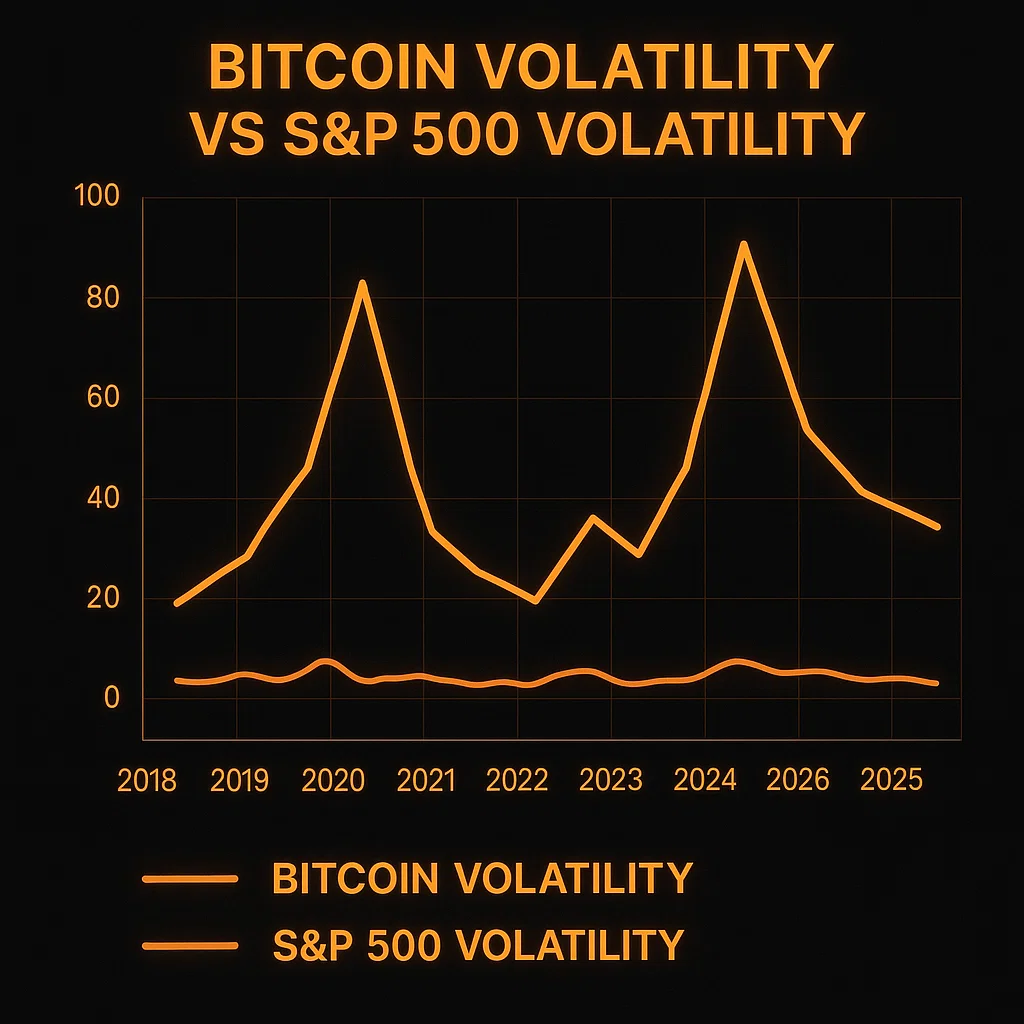
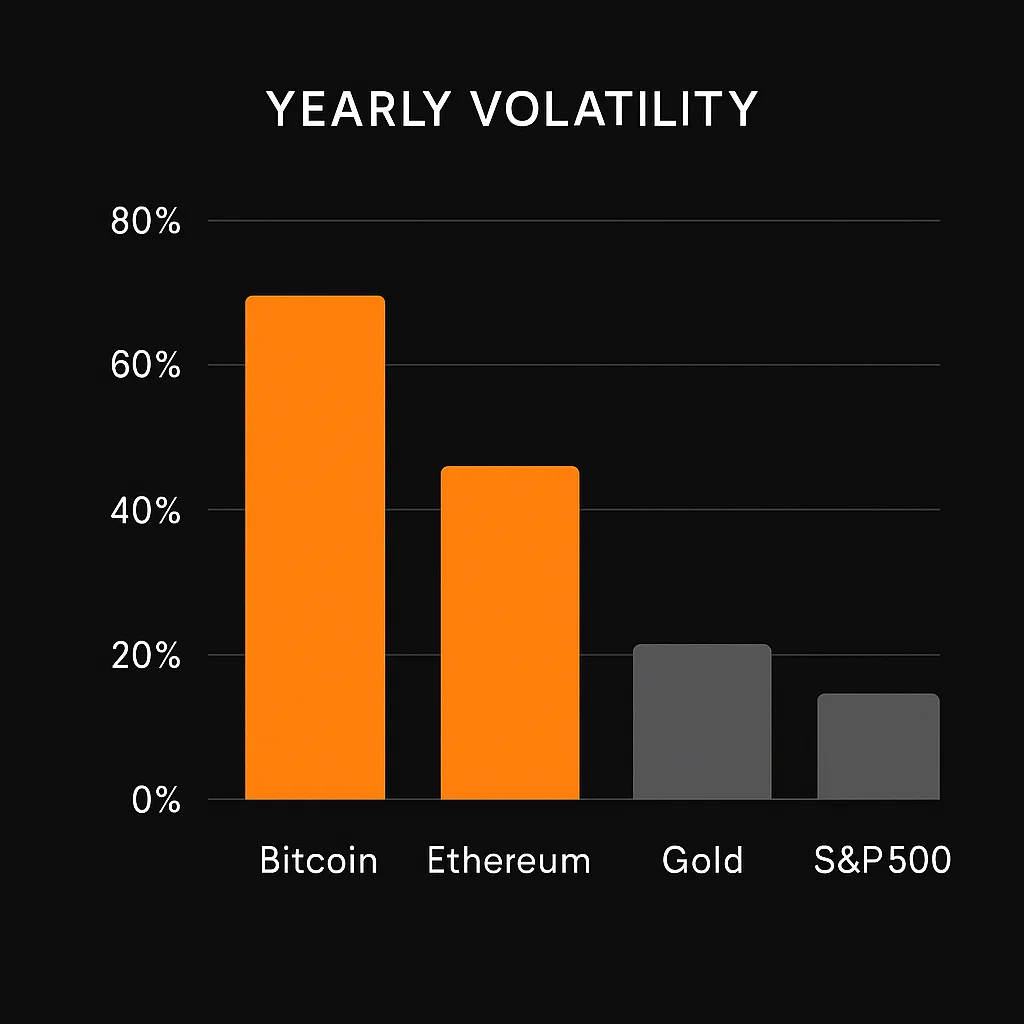
Bitcoin’s annualized volatility typically ranges between 60% and 100%, while the S&P 500 averages around 20% to 30%. This massive gap highlights just how unpredictable digital assets can be compared to stocks.
Limited Institutional Involvement
Traditional markets benefit from institutional investors that stabilize prices through large, long-term holdings. In contrast, the crypto market is still largely driven by retail investors, which leads to more emotional trading and increased volatility.
Reaction to News and Rumors
The crypto space is highly reactive to news. A single rumor or speculative tweet can cause massive price swings. This behavior is less common in regulated stock markets, where insider trading laws and financial disclosures limit wild speculation.
Key Triggers of Crypto Volatility
Macroeconomic News
Global events such as interest rate decisions, inflation data, or geopolitical developments can heavily impact cryptocurrency prices. Since crypto is increasingly seen as a hedge or alternative asset, it reacts to economic shifts.
Whale Activity
Large holders of crypto known as “whales” can move markets significantly. A single transaction involving thousands of BTC or ETH can trigger a price movement that cascades through the rest of the market.
Exchange Failures or Glitches
When an exchange suffers from a technical failure, halted withdrawals, or security issues, investor confidence drops. These events can lead to panic selling and increased volatility.
Token Unlocks or Airdrops
Scheduled events such as token unlocks, staking rewards, or airdrops often flood the market with supply, leading to temporary downward pressure on prices.
Understanding the Phases of a Crypto Crash
Step-by-Step Breakdown
- Overleveraged positions begin to unwind due to minor price declines.
- Liquidations accelerate, pushing prices lower and triggering more sell-offs.
- Panic spreads across communities and social media.
- Liquidity dries up as buyers disappear.
- Prices bottom out before consolidating or bouncing.
Recognizing these phases helps investors maintain composure during downturns and avoid panic-driven mistakes.
How to Manage Crypto Volatility Like a Pro
Dollar-Cost Averaging (DCA)
One of the best strategies for reducing risk is Dollar-Cost Averaging (DCA). By investing fixed amounts at regular intervals, you avoid the pitfalls of buying at market tops and reduce the impact of short-term volatility.
Stop-Loss and Take-Profit Orders
Use stop-losses to cap your losses and take-profit orders to lock in gains. These tools help automate decision-making and reduce emotional reactions during market swings.
Position Sizing
Limit how much you allocate to a single asset. For example, don’t put more than 5–10% of your portfolio in any one cryptocurrency. Diversification helps cushion the blow when markets turn against you.
Hedge With Derivatives
Advanced investors use tools like futures and options to hedge positions. For example, shorting Bitcoin futures can offset losses in your spot holdings during a downturn. However, these instruments carry risks and should be used with caution.
Keep Cash Reserves
Maintaining a cash buffer allows you to take advantage of buying opportunities when prices drop. It also prevents forced selling in emergencies.
Diversify Outside of Crypto
Balancing your crypto investments with traditional assets like stocks, bonds, or gold reduces overall volatility in your portfolio and improves long-term returns.
Ledger is the gold standard for hardware crypto wallets. Store your coins offline, safely.
Changing Your Mindset Around Crypto Volatility
Volatility in crypto is not a bug it’s a feature. The sharp price movements that scare some investors are the same forces that offer massive opportunity to others. The key is to shift your mindset from fear to preparation.
Embrace the Cycles
Crypto markets follow patterns. Understanding halving cycles, bull and bear market trends, and historical price behavior can help you make more informed decisions. Rather than panicking during a downturn, experienced investors use these moments to accumulate assets at lower prices.
Focus on the Long Term
Short-term noise can be overwhelming. Focusing on long-term trends, strong fundamentals, and your investment thesis helps cut through the chaos and stay on track.
Build Emotional Resilience
The ability to stay calm during large price swings is what separates successful investors from the rest. Avoid reacting emotionally to every market move. Stick to your plan.
Tools and Platforms to Track Crypto Volatility
On-Chain Analytics
Platforms like Glassnode and CryptoQuant provide real-time blockchain data to analyze market sentiment, liquidity trends, and whale behavior.
Sentiment Tracking
Tools like The TIE, LunarCrush, and Santiment help track social media mentions, mood shifts, and trading signals based on collective behavior.
Economic Calendars
Stay updated on upcoming token unlocks, forks, or regulatory updates. Knowing when key events are scheduled helps prepare for potential volatility.
Cold Storage Security
Store long-term crypto holdings offline using Ledger hardware wallets. This protects against hacks, exchange failures, and phishing attacks.
Want more crypto knowledge? Join our newsletter for weekly insights, free guides, and tools.
Final Thoughts on Navigating Crypto Volatility
Crypto volatility is often misunderstood but shouldn’t be feared. With the right mindset, tools, and strategy, these price movements become manageable even profitable. Risk is part of the reward. By planning ahead, diversifying, using smart entry and exit tactics, and staying informed, you can transform uncertainty into opportunity.
Want more insights like this? Subscribe to our free newsletter. We share weekly content, expert guides, and tools to help you succeed in crypto.
Remember: when you use our referral links, you help us grow at no cost to you and keep our content independent and educational. That’s a win-win for all of us.
Can crypto crashes wipe out my investment?
Sharp price drops can reduce your portfolio by 50–80% in a short time. However, if you hold with conviction, apply dollar-cost averaging (DCA), use secure wallets like Ledger, and avoid over-leveraging, you can weather downturns and recover over time.
Is volatility always bad?
Not necessarily. Volatility also creates opportunities for strategic entries, profit cycles, and long-term portfolio growth especially when managed with discipline.
What’s the safest way to enter crypto markets?
Begin with small, consistent purchases (DCA), keep an emergency cash reserve, avoid using high leverage, and store your crypto offline with a hardware wallet for maximum security.
How do I know when to use derivatives to hedge?
You should consider derivatives like futures or options if you have significant price exposure and understand how they work. If you’re new, start by studying detailed guides and testing strategies with small amounts.
Why is crypto more volatile than stocks?
Crypto markets are younger, less liquid, and more influenced by emotion and news. Unlike traditional markets, they operate 24/7 and have fewer institutional players to stabilize prices. This makes crypto more reactive and prone to larger swings.
Guess what? When you click and buy via our links, you’re not just enhancing your experience you‘re also supporting our content creation for free, so we can keep sharing useful blockchain insights. It‘s a pump for both of us!
— Black