
Introduction to Quantum Computing and Blockchain Security
Quantum Computing is no longer a distant theoretical concept it’s a fast-approaching technological breakthrough that promises to revolutionize the way we process information. But with this power comes significant risk, especially for blockchain systems that rely on classical cryptographic principles. While blockchains were initially considered unhackable, the rise of quantum computers could change that forever. In this article, we’ll explore the intersection of quantum computing and blockchain, assess the vulnerabilities, and examine the emerging field of post-quantum cryptography to determine if blockchain is quantum safe or dangerously exposed.
Want to dive deeper into blockchain fundamentals, DeFi, or Web3 trends?
Browse our full collection of educational categories and discover the topics that matter most.
What Is Quantum Computing?
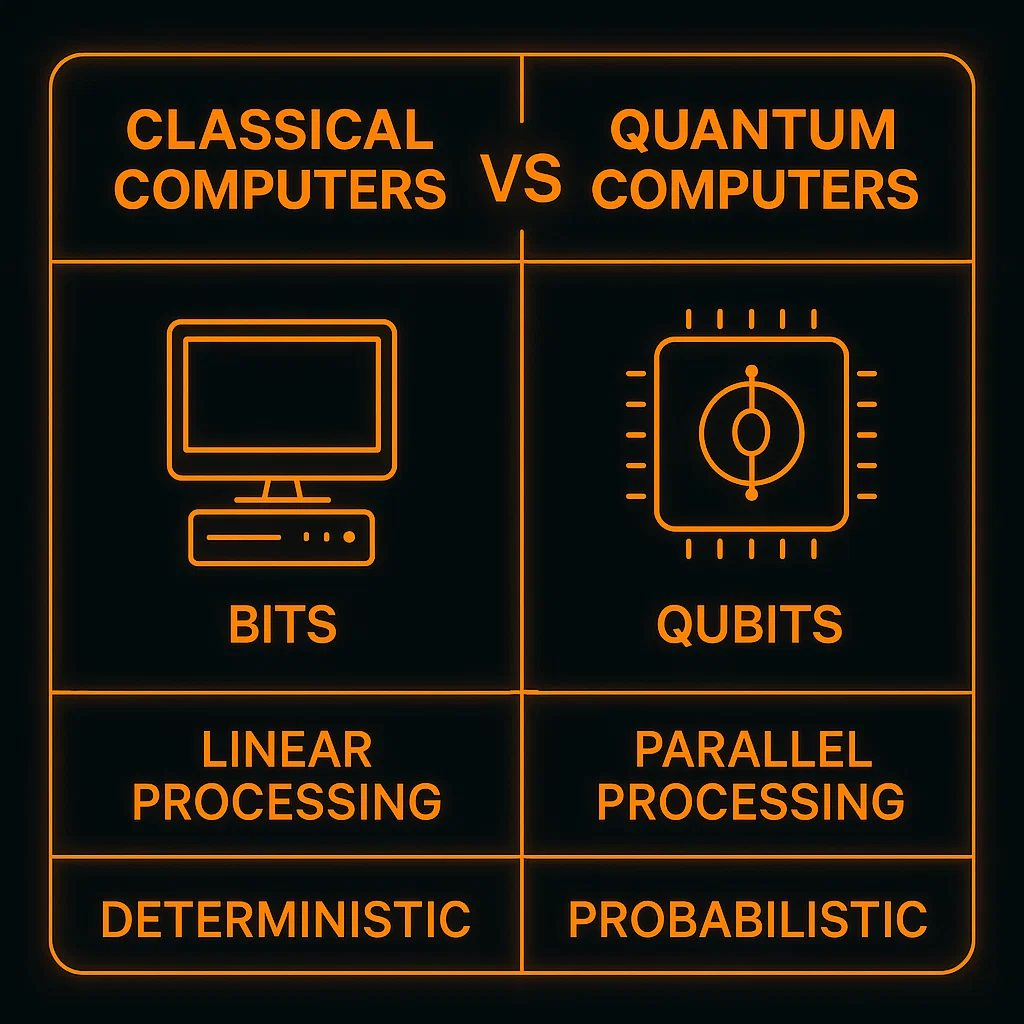
Quantum computing leverages quantum mechanical phenomena like superposition, entanglement, and quantum interference to solve problems that are practically unsolvable for classical computers. Instead of using bits (0 or 1), quantum computers use qubits, which can exist in multiple states simultaneously. This means they can compute an enormous number of possibilities in parallel.
This level of computational power has vast implications across various domains, including drug discovery, logistics optimization, climate modeling and most relevant here, cryptography. According to IBM’s report “Quantum Computing and Cybersecurity”, even state-of-the-art encryption methods used today may be rendered obsolete once quantum systems reach maturity.
Why Blockchain’s Cryptography Is at Risk
Blockchain security is built on two pillars: asymmetric cryptography (e.g., RSA, ECDSA, EdDSA) and hashing algorithms (like SHA-256). The first is used to create digital signatures and verify transactions; the second to link blocks and secure consensus mechanisms like proof of work.
Asymmetric Algorithms Are Vulnerable
Quantum algorithms such as Shor’s algorithm can efficiently factor large integers and compute discrete logarithms. These are the mathematical foundations of RSA and elliptic-curve cryptography core components of blockchain security. This means that once a quantum computer becomes powerful enough, it could derive a private key from a public key.
Hashing Is More Resilient (But Not Immune)
Grover’s algorithm, another quantum tool, can be used to search hash functions more efficiently, providing a quadratic speedup. For SHA-256, this effectively reduces its strength from 256 bits to 128 bits. While this can be mitigated by simply doubling key lengths, it still demands action from blockchain developers.
How Quantum Computing Can Break Blockchain
The impact of quantum computing on blockchain can be broken into three key vulnerabilities:
1. Private Key Extraction
Once a user sends a transaction, their public key is visible on-chain. A sufficiently powerful quantum computer can reverse-engineer the associated private key, thus gaining control over that wallet.
2. Transaction Forgery
With the private key in hand, attackers can forge valid transactions, draining funds and rewriting transaction history. In Proof of Stake systems, attackers could even take over validator roles.
3. Long-Term Data Exposure
Even if a chain remains uncompromised today, all historic data recorded on public blockchains is vulnerable in the future. As described in the MIT Tech Review article “Post-Quantum Cryptography and the Blockchain”, quantum computers may one day decrypt past data, undermining assumptions of long-term immutability.
When Will This Happen?
Estimates vary, but many experts believe cryptographically relevant quantum computers those capable of breaking RSA or ECDSA may arrive between 2030 and 2040. While building thousands of stable, fault-tolerant qubits is an enormous challenge, quantum computing is advancing quickly.
As such, the threat window is considered to be between 7–15 years. This might seem far off, but from a security planning perspective, that’s dangerously close. The sooner protocols begin preparing, the more graceful the transition can be.
This brings us to a critical question: How Secure Is Blockchain Technology in 2025? The answer depends entirely on how early and aggressively blockchain ecosystems adopt quantum-resistant technologies.
If you believe in our mission to educate and prepare the Web3 community for the future, you can support our work with a donation and help us spread quantum-safe knowledge globally.
What Is Post-Quantum Cryptography?
Post-Quantum Cryptography (PQC) refers to cryptographic systems that are secure against both classical and quantum computers. Unlike classical encryption, PQC algorithms rely on mathematical problems that are believed to be hard for quantum computers to solve.
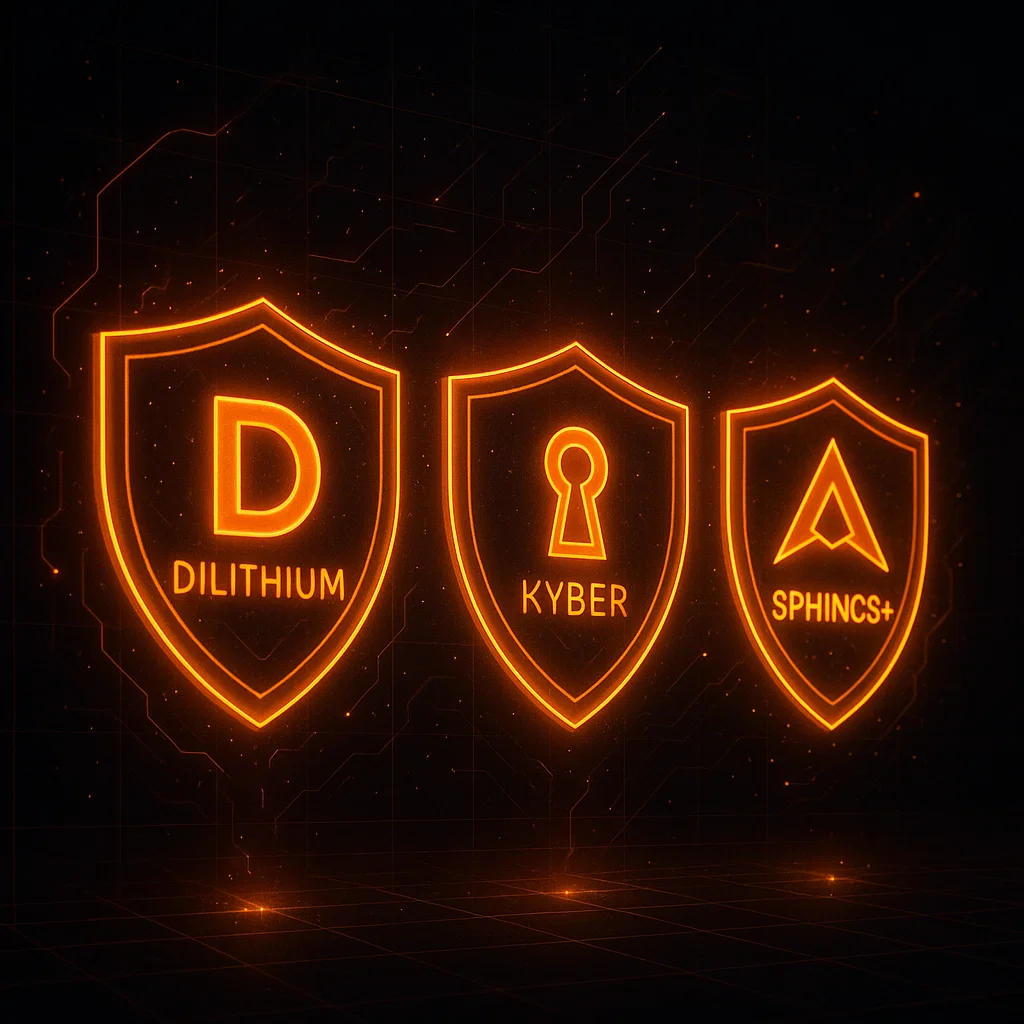
NIST (National Institute of Standards and Technology) has already selected a group of quantum-resistant algorithms that are being standardized. These include:
- CRYSTALS-Kyber (for key exchange)
- CRYSTALS-Dilithium, Falcon, and SPHINCS+ (for digital signatures)
These algorithms are designed to replace existing ones like RSA and ECDSA in a post-quantum world.
How Blockchain Projects Are Responding
Leading blockchain developers are beginning to take quantum risks seriously. A notable example is ConsenSys’ study “Is Ethereum Ready for Quantum Computers?”, which highlights early efforts to prepare Ethereum’s protocol for the upcoming shift.
Hybrid Protocols and Sidechains
Ethereum and other projects are experimenting with hybrid signature models, allowing users to sign with either classical or PQC-based keys. Other platforms are deploying quantum-safe sidechains and layer-2 rollups that implement post-quantum algorithms ahead of mainnet upgrades.
Multi-Signature Wallets
Wallet providers are starting to offer multi-signature configurations that include a mix of legacy and post-quantum keys. This provides an added layer of protection for users who want to future-proof their crypto assets.
Developer Tooling
New SDKs and libraries are being built for post-quantum cryptography blockchain integration, allowing developers to begin testing and integrating quantum-safe functions into dApps and smart contracts.
Challenges of Quantum Migration
Despite growing awareness, migrating an entire blockchain ecosystem to quantum-safe algorithms is a monumental task.
Performance and Efficiency
Post-quantum algorithms often come with trade-offs: longer key lengths, larger signatures, and slower performance. For instance, Dilithium signatures are much larger than ECDSA, which can increase transaction size and blockchain bloat.
Compatibility With Existing Infrastructure
Replacing cryptography across existing chains, wallets, and smart contracts requires seamless migration strategies. Many existing wallets don’t support the new key types, and upgrading nodes and contracts must be coordinated globally to avoid forks and inconsistencies.
What Users and Developers Can Do
Preparing for quantum computing is not just the responsibility of blockchain foundations. Developers and users alike should start taking practical steps today:
- Follow NIST and track developments in standardized post-quantum cryptographic algorithms.
- Adopt multi-signature wallets that include quantum-resistant options.
- Experiment in testnets with PQC-enabled wallets and dApps.
- Participate in governance discussions to support roadmaps that prioritize quantum migration.
These actions can help bridge the knowledge gap and empower communities to act before the threat becomes real.
Why Blockchain Governance Is Key
If there’s one lesson from the last decade of blockchain evolution, it’s this: protocol governance matters. The question “What Is Blockchain Governance and Why It Matters” becomes even more pressing in the face of existential risks like quantum computing. Upgrades to a protocol’s core cryptography can only happen through well-structured, community-backed decision-making processes.
Clear governance frameworks, funding for quantum-related research, and a consensus-driven approach to migration will define which chains survive the quantum threat.
Blockchain in Cybersecurity: A Growing Partnership
As Web3 integrates deeper into industries like finance, supply chain, and identity verification, the relationship between blockchain and cybersecurity becomes inseparable. Zero-knowledge proofs, secure enclaves, and decentralized IDs are increasingly standard features but without quantum resistance, they’re fundamentally flawed.
The ongoing partnership between blockchain and cybersecurity must evolve in tandem with the quantum era. Companies that invest in quantum-secure solutions today will not only protect their users but also lead the next phase of trustless innovation.
The Road Ahead: A Quantum-Resilient Web3
To survive in a quantum future, blockchain systems must adopt a mindset of proactive innovation, not reactive patching. The adoption of post-quantum cryptography should be considered a critical upgrade much like the shift from HTTP to HTTPS was for web infrastructure.
The coming years will likely see the rise of native quantum-safe blockchains, designed from scratch with post-quantum assumptions. Until then, hybrid solutions and sidechains will serve as transitional tools.
Developers, founders, and investors should treat quantum computing as a top-priority risk factor. By beginning the journey now before the first real quantum computer comes online Web3 can evolve into a future that’s not just decentralized, but also quantum-secure.
Join BlockchainDudes’ Newsletter and get weekly alpha on crypto security, airdrops, and post-quantum strategies.
Subscribe now it’s free, no spam, just pure signal, thank you!
What exactly is Shor’s algorithm, and why is it dangerous for blockchain?
Shor’s algorithm is a quantum algorithm that can efficiently factor large numbers or compute discrete logarithms both foundational to RSA and ECDSA systems so a sufficiently powerful quantum computer could derive private keys from public keys revealed in transactions.
What is the expected timeline for quantum computers to break blockchain?
Experts estimate that by the early 2030s, large-scale, error-corrected quantum machines might exist. This gives blockchain systems a window of approximately 7–15 years to transition to quantum-safe cryptography.
How can users protect themselves today?
Users can preemptively adopt multi-signature wallet setups combining legacy and post-quantum algorithms, and choose services or wallets offering PQC support or trajectory towards hybrid or fully post-quantum key infrastructure.
Are all blockchains equally vulnerable to quantum attacks?
No. Blockchains that minimize public key exposure or use alternative consensus mechanisms may be less vulnerable. However, most major blockchains today (like Bitcoin and Ethereum) use cryptography that could be broken by quantum computers.
Will hash-based functions like SHA-256 be safe in a quantum future?
While Grover’s algorithm can weaken hash functions by halving their effective security, doubling the hash length (e.g., moving from SHA-256 to SHA-512) is a viable countermeasure. Thus, hash-based functions are less urgently threatened than public-key systems.
Guess what? When you click and buy via our links, you’re not just enhancing your experience you‘re also supporting our content creation for free, so we can keep sharing useful blockchain insights. It‘s a pump for both of us!
— Black